

 2121
 Share




Abstract
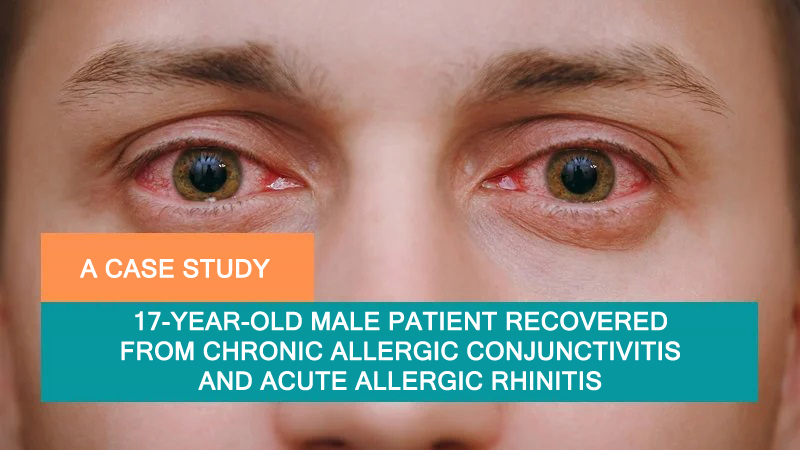
Allergic Conjunctivitis is the most common form of ocular allergy. It is a hypersensitivity reaction to specific airborne antigens. Although serious sequels due to corneal involvement are rare, the distressing signs and symptoms cause extreme discomfort to the patients. The management of eye allergy in modern ophthalmology is unsatisfactory and it should be followed lifelong but Ayurvedic treatment may offer a supportive approach to managing such manifestations and improving patient comfort.
A 17-year-old Indian boy took online consultation from IAFA®, India. He presented a history of continuous redness, itching and dryness in eyes from last one year. As per patient’s clinical history, he was also suffering with sneezing in the early morning once a week. He had taken allopathic treatment but there was no comfort. This case study explores the Ayurvedic approach adopted by IAFA® in managing chronic allergic conjunctivitis and acute allergic rhinitis. It also highlights the potential for further research into traditional Ayurvedic ophthalmic formulations and their role in supporting eye health.
Keywords: Eye Allergy, Eye drops, Allergic Conjunctivitis, Vataj Abhishyanda
Introduction
Allergic Conjunctivitis is the most common form of ocular allergy. It is a hypersensitive reaction to specific airborne antigens. In Ayurveda, it is said that Abhishyanda is the root cause of almost all eye disorders. Based on the similarities of signs and symptoms, Vataj Abhishyanda can be correlated with simple allergic conjunctivitis.
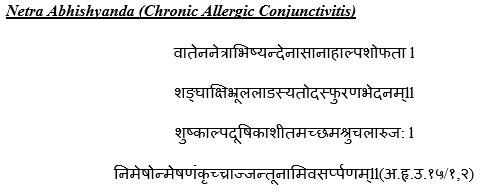
The above shloka is the Ayurvedic correlation of Allergic conjunctivitis. Ayurveda has explained this condition under the term Abhishyanda which is caused mainly by the vitiation of Vata Dosha. As per Ayurveda, chronic allergic conjunctivitis symptoms are:
- Itching
- Watering
- Mild inflammation
- Dryness
- Foreign body sensation etc. is the symptoms of Abhishyanda.
Allergic rhinitis is also a common allergic condition mainly affecting the nasal mucosa (rhinitis) and the eyes (conjunctivitis). In modern medicine, besides desensitization, there is no treatment of allergic rhinitis. Therefore, the modern treatment of allergic rhinitis is symptom-related.
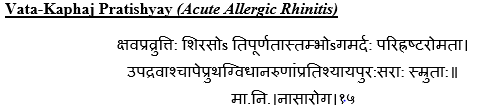
The above shloka of Ayurveda explains signs and symptoms of vata kapha pratishyaya (acute allergic rhinitis symptoms) as:
- Sneezing,
- Headache,
- Nasal Congestion,
- Nasal Discharge,
- Itching in Nose and Oral part,
- Fatigue, Fever,
- Loss of Taste etc.
Chief Complaints
Frequent attacks of eye allergy and its associated symptoms and acne on face, history of continuous redness, itching and dryness in eyes from last one year and sneezing in morning time once a week.
Treatment Plan
The following line of treatment was initiated by IAFA® on July 14, 2021. The patient showed improvement in their allergic condition after just one month of treatment. Considering the positive response to the medication, IAFA® advised the patient to continue the same treatment for another month.
After two months of treatment, the patient reported satisfaction with the noticeable improvement in his condition. Treatment was continued with an additional month of follow-up to monitor progress and assess the sustainability of the outcomes. At the end of three months, no recurrence was observed during the follow-up period. These observations suggest that the Ayurvedic approach adopted by IAFA® may have potential benefits.
External Procedure:-
- Pratimarsha Nasya: with Anu Thailam
- Akshi Tarpana Grutham
- Netra Prakashalana / Eye wash: with Triphala Kashaya
- Netra Tarpana Karma / Netra Basti (Eye Nourishment Treatment): with Maha Triphaladi Ghritam
Internal Medications
- Shirish Tablet
- Capsules Curcumin with Piperine
Method of Usage/Dosage
- Pratimarsha Nasya: with 2-4 drops of Anu Thailam twice a day.
- Akshi Tarpana Grutham: Instill 1 drop in each eye once a day at bedtime.
- Netra Prakshalana/Eye Wash: Do eye wash regularly with Triphala Kashaya (decoction of Triphala) once a day in the morning.
- Netra Tarpan Karma/Netra Basti: Do Tarpana of both eyes with Maha Triphaladi Ghritam once a week in the morning.
- Shirish Tablet: 2 tablets to be taken twice a day early morning and early evening with lukewarm water.
- Capsule Curcumin with Piperine: 2 capsules to be taken once a day with lukewarm water early morning on an empty stomach.
Diet and Lifestyle
Do’s (Pathya):
- Light and easily digestible food
- Frequent intake of small amounts of lukewarm water
- More fiber-containing fruits and vegetables
- Take green stuff once a day
- Include herbs like fennel, cumin and curry leaves regularly.
- Fresh fruits like pomegranates and apples on a daily basis.
- Use sunglasses while going out.
- Keep surrounding clean
- Use of cold compress
- Practice eye exercises
Don’ts (Apathya)
- Insoluble fiber foods that are hard to digest, fruits with skin and seeds, raw green vegetables.
- High lactose diet such as sugar found in dairy such as milk, cream, cheese and soft cheese.
- High fat food such as butter, coconut, margarine and cream as well as fatty, fried or greasy food, spicy and sour food.
- Yeast-fermented food and fermented beverage items
- All nuts except walnuts and almonds
- Spicy food
- Exposure to dust, smoke and other allergens
- Close contact with pets
- Continuous use of computers, mobile phone and television.
Conclusion
Allergies may significantly affect a patient’s quality of life. Therefore, appropriate treatment for chronic allergic conjunctivitis and acute allergic rhinitis is important. The Ayurvedic system of medicine offers a range of traditional therapeutic approaches, encompassing both internal and external measures. IAFA® incorporated these Ayurvedic measures, with the observed outcomes being promising and encouraging. No adverse effects were observed during or after the Ayurvedic treatment prescribed by IAFA®.

IAFA® treats allergies of various etiologies through Ayurvedic approaches. To receive personalized Ayurvedic treatment, you can call us or book an online consultation. Since every individual is different, Ayurvedic treatments are always formulated on a personalized basis.