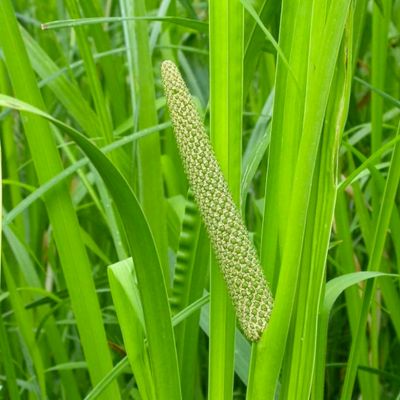
Vaca (Acorus Calamus)
Explore Vaca (Acorus calamus), a renowned Ayurvedic herb known for its benefits in allergies, digestion, memory, voice improvement, and skin health, along with its medicinal uses and dosage.
On This Page


-
 2229
2229
 2229
2229
 Share
ShareSummarise this article using AI




Introduction
Vaca, commonly known as sweet flag, is well known for its ability to improve the voice. The name Vaca itself signifies that the plant can be used to enhance vocal quality. It is one of the commonly cultivated herbs in India due to its numerous medicinal properties. The name sweet flag is given to the plant because of its reputed ability to promote a sweet and pleasant voice. The word calamus indicates that the plant mainly grows in marshy areas.
Dr. Gupta’s IAFA primarily aims to alleviate allergic conditions by using naturally available herbs prepared according to the methods described in ancient Ayurvedic texts. Our experts have studied Vaca and documented its therapeutic properties, including vermifuge, tranquilizing, carminative, and sedative activities. Vaca can be used to help manage conditions such as insanity, epilepsy, indigestion, piles, fever, abdominal pain, and hoarseness of voice. When used along with honey, it is believed to improve voice quality.
The saponin-rich extract of Vaca contributes to the plant’s analgesic properties. These saponin extracts also exhibit multiple pharmacological activities, including anti-inflammatory, antioxidant, and neuroprotective effects. Additionally, the rhizomes of the plant have been found to possess anticonvulsant properties.
Action of Vaca (Acorus Calamus) in Allergies
IAFA experts have successfully demonstrated the antiallergic properties of the plant Vaca. The plant contains phytoconstituents such as volatile oil, starch, resin (2.5%), and tannins (1.5%). The volatile oil contains compounds including asaraldehyde, asarone, and eugenol. Other constituents include β-asarone, calamenol, calamenene, calamenone, methyl eugenol, α-pinene, and camphene. These phytoconstituents contribute to the antiallergic and anthelmintic properties of Vaca. A paste or powder prepared from the rhizome of Vaca can be effectively applied to the skin to help alleviate allergic skin conditions.
Vernacular Names
| Sanskrit Name | Vaca, Aruna, Jatila |
| Hindi Name | Bach |
| English Name | Sweet flag |
| Malayalam Name | Vayambu |
| Kannada Name | Baje |
| Marathi Name | Vekhand |
Botanical Name
Acorus Calamus
Family
Araceae
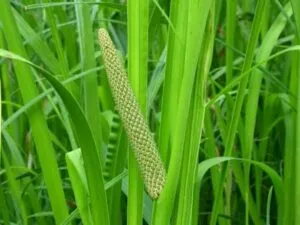
Morphology of Vaca – Acorus Calamus
- Perennial terrestrial herb
- Stems are stout and creeping
- Rhizomes are aromatic
- Leaves are two ranked, sword shaped
- Inflorescence is spadix
- Fruits are turbinate
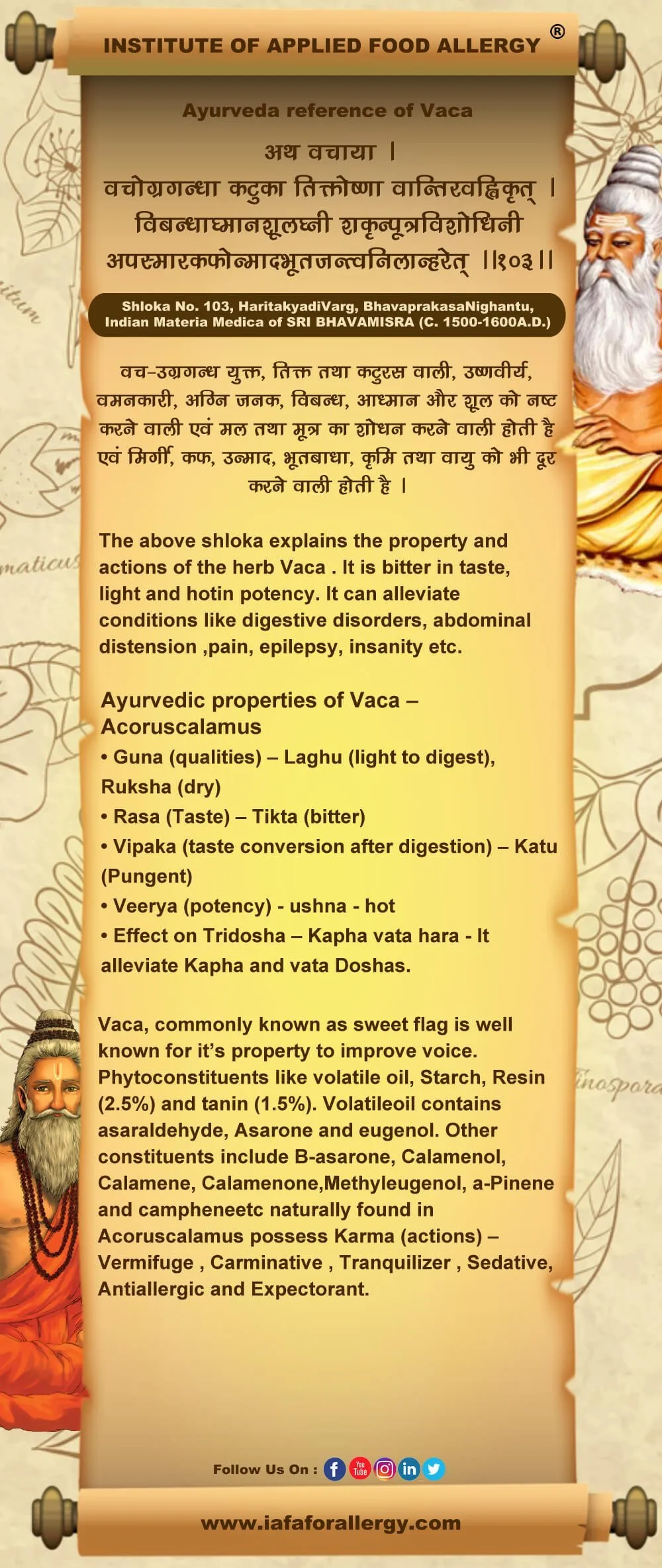
Ayurveda Reference of Vaca (Acorus Calamus)
Geographical Distribution of Vaca (Acorus Calamus)
Cultivated through out India especially in South Indian states like Kerala and Tamil Nadu.
Phytoconstituents of Vaca (Acorus Calamus)
The plant contains phytoconstituents like volatile oil, Starch, Resin (2.5%) and tanin (1.5%). Volatileoil contains asaraldehyde, Asarone and eugenol. Other constituents include B-asarone, Calamenol, Calamene, Calamenone, Methyleugenol, a-Pinene and camphene.
Parts Used of Vaca (Acorus Calamus)
- Rhizome
Dosage of Vaca (Acorus Calamus)
- Powder (churna) – 3-6 g
Medicinal Properties of Vaca (Acorus Calamus)
- Medhya – promotes intelligence
- Pramehahara – cures diabetes
- Sulaghna – alleviates pain
- Swasahara – relieves asthma
- Dipana – as carminative
- Krimighna – useful in worm infestations
- Kushtaghana – relieves skin diseases
- Jwaraghna – useful in fever
- Arsoghna – useful in treating piles

Have A Health Issue?
Consult Online
- Dr. Sahil Gupta (B.A.M.S., M.H.A.)
Ayurvedic Allergy Specialist
CEO & Founder of IAFA®
Home Remedies of Vaca (Acorus Calamus)
Ayurveda is not only a treatment system popular in India which uses commonly seen herbs for medicinal purpose. Vaca is one of the most widely used herb. Due to its high medicinal value it is used in treating many diseases like,
- In Fever (Jwara) – Decoction prepared from Vaca and Tulasi is taken internally at a dose of 60ml per day.
- In Epilepsy (Apasmara) –Vaca powder is taken with honey in case of epilepsy. The dose is a pinch.
- In voice improvement (Swarasada) – daily usage of Vaca and honey will improve voice.
- In oedema (Sotha) – Paste of Vaca and Sarsapa is applied on the body part. It will cure oedema.
- In Diabetes (Prameha) – Decoction of Vacaand Gooseberry is taken to cure diabetes.
- In improving memory (smrithivardhaka) – Regular usage of Vaca will improve memory capacity.
- As a rejuvenating agent (Rasayana) – Daily usage of Vaca will improve sound quality, skin complexion and promotes strength.
- In Cough (Kasa) – Rhizomeof Vaca is powdered and taken along with honey.

Ayurveda is an Indian system of medicine which is popular from ancient times. It uses different plants and plant products as medicine. Dr. Gupta’s IAFA have been conducting research studies to find out different phytoconstituents of herbs and their action in body. The knowledge acquired through these researches are used to make different medicines. IAFA is the provider of safe and effective treatment for a wide range of diseases, mainly allergic diseases all based on Ayurveda.
Reach IAFA for safe herbal remedies for all your ailments!!!


Was this Page Helpful?
Read More Articles
-

Kasini (Cichorium intybus)
Know about the uses, benefits, and medicinal properties of Chicory, Kasini (Cichorium…
-
-