


 117
117
 Share
Share



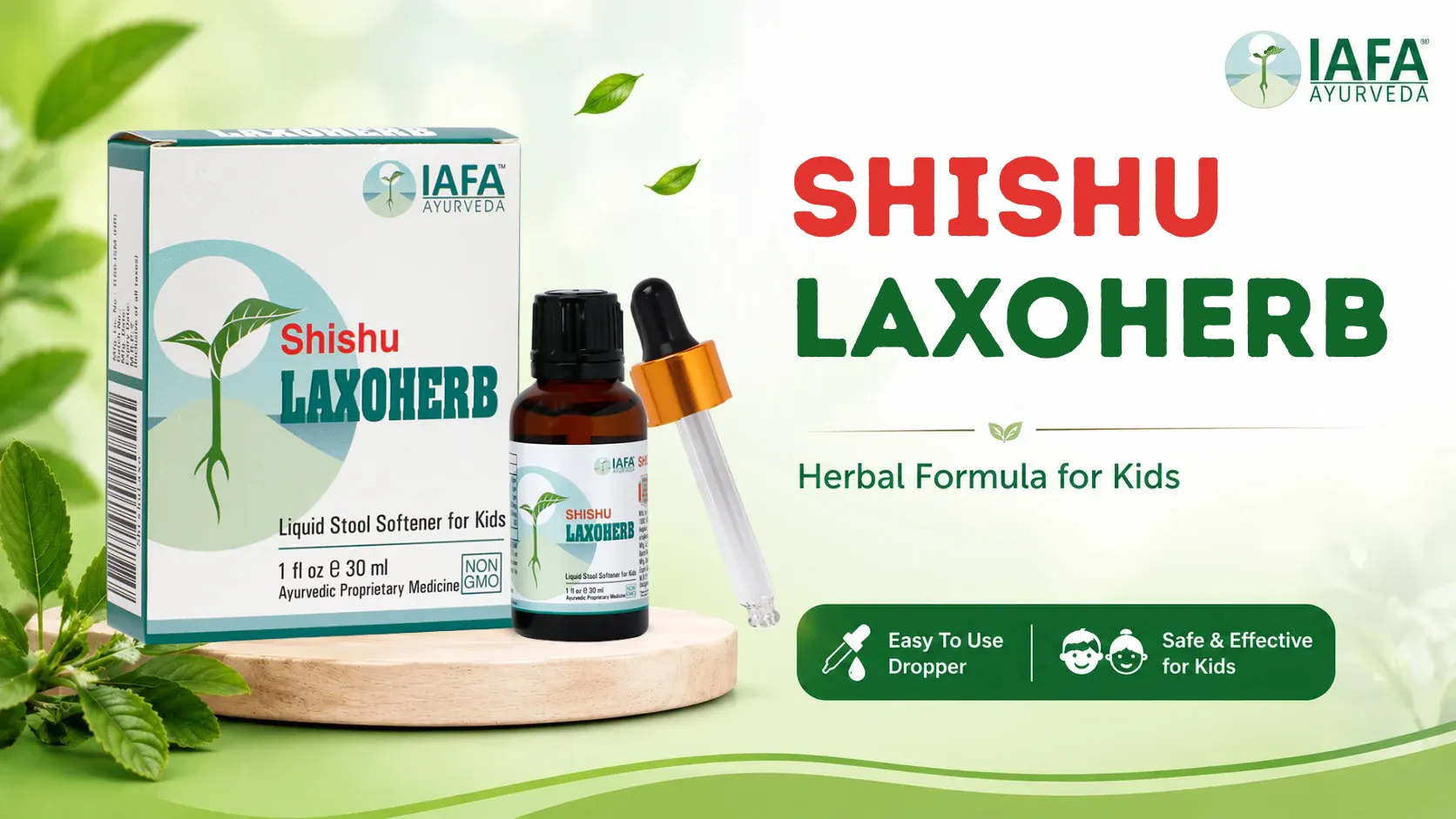
What is Shishu Laxoherb?
Inspired by Ayurvedic pediatric wisdom. Designed for modern children.
Created for delicate digestive systems, Shishu Laxoherb combines traditionally valued bowel-support herbs in an easy-to-administer drop form to help children maintain healthy bowel regularity, digestive stability, and balanced gut function naturally.
Because every child deserves:
- Balanced digestion
- Smoother daily elimination
- Happy daily routine
Shishu Laxoherb is a gentle Ayurvedic pediatric bowel-support formulation specially designed for children suffering from:
- Constipation
- Hard stools
- Irregular bowel habits
- Bloating and gas
- Difficulty passing stools
- Digestive discomfort associated with bowel irregularity
Unlike harsh laxatives that force bowel evacuation, Shishu Laxoherb works by gently supporting the child’s natural bowel rhythm and digestive balance.
It helps:
- Soften stools naturally
- Support smooth bowel movement
- Reduce strain and discomfort during stool passage
- Support gastrointestinal ease and regularity
- Support digestive balance in sensitive pediatric gut systems
Because in children, constipation is not just “not passing stool.[1]
It gradually affects:
- Appetite
- Digestion
- Sleep
- Mood
- Gut comfort
- Daily activity and behavior
A child with comfortable bowel movements:
- Eat better
- Sleep peacefully
- Feels lighter
- Becomes more active
- Develops a healthier digestive rhythm
“Healthy growth begins with a comfortable gut.”
The Modern Childhood Gut Problem
The modern lifestyle is changing children’s digestion long before parents notice the symptoms. Today’s children are growing up in an environment where digestive imbalance has become increasingly common. Irregular food habits, processed diets, reduced outdoor activity, and poor hydration gradually disturb the natural rhythm of the pediatric gut.
Children are now more frequently exposed to:[2]
- Processed and packaged foods
- Low-fiber eating patterns
- Excess junk snacks and sugary foods
- Reduced physical movement and outdoor activity
- Inadequate water intake
- Irregular meal timings and rushed eating habits
Over time, these factors begin disturbing intestinal regularity, digestive efficiency, and gut comfort.
What starts as “occasional constipation” slowly progresses into a repetitive digestive pattern.
Many children gradually develop: [2,3]
- Stool withholding habits
- Hard and dry stools
- Difficulty during bowel movement
- Reduced natural urge sensation
- Bloating and abdominal heaviness after meals
- Irritability and discomfort associated with constipation
In many cases, children begin avoiding toilet visits because bowel movements become painful or distressing. This further worsens stool retention and disturbs normal bowel rhythm.
Parents often focus only on whether the child is “passing stool,” but the real concern is whether the bowel movement is:
- Comfortable
- Regular
- Complete
- Soft and non-straining
Because healthy bowel movement is not just elimination, it is an important part of digestive balance, appetite regulation, intestinal balance, and overall well-being in children.
Modern understanding also recognizes that bowel health influences:[4]
- Gut microbiome balance
- Digestive efficiency
- Appetite signaling
- Behavioral comfort in children
“When bowel movement becomes stressful, digestion itself begins losing its natural balance.”
The Pediatric Bowel is Different From the Adult Bowel
Children do not experience constipation the same way adults do; their digestive system is still learning rhythm, coordination, and regulation. In adults, bowel movement is relatively stable and predictable. In children, however, the intestinal system is still developing:[5]
- Gut motility patterns are immature
- Digestive signaling is still evolving
- Hydration balance fluctuates quickly
- Bowel habits are highly sensitive to food, emotions, sleep, and routine changes.
Because of this, even small disturbances may alter bowel rhythm in children.
Modern pediatric understanding shows that childhood constipation is often not simply due to “less stool movement,” but due to a combination of:
- Reduced bowel coordination
- Stool withholding behavior
- Altered intestinal motility
- Functional digestive sensitivity
- Irregular gut habits are developing over time
Ayurveda explains this delicate state through:
- Sukumara Sharira (sensitive body system)
- Mridu Kostha variability in children
- Easily aggravated Vata affecting bowel movement
- Developing Agni that is not yet stable or consistent
That is why children require bowel support, that is:
- Gentle
- Regulating
- Non-irritating
- Habit-supportive, not forceful bowel stimulation.
“A child’s bowel does not need pressure; it needs rhythm.”
Why Do Children Develop Functional Constipation?[6,7]
Childhood constipation is often functional, behavioral, and lifestyle-driven rather than disease-based. In many children, constipation develops gradually through a combination of dietary habits, bowel behavior, and altered intestinal regulation rather than any major structural disease.
Modern pediatric understanding recognizes that functional constipation commonly develops due to:
- Low-fiber dietary patterns
- Inadequate water intake
- Reduced physical activity
- Irregular meal timing
- Stool withholding behavior
- Painful previous bowel movement
- Toilet avoidance during school hours
- Emotional stress or routine changes
One painful bowel movement may gradually trigger a repetitive cycle:
Pain → Fear → Stool Holding → Harder Stool → More Pain
Over time, which results in:
- Stool remains longer within the colon
- Excess water gets absorbed
- The stool becomes harder and drier
- Evacuation becomes increasingly difficult
This gradually disturbs natural bowel regularity and increases bowel stress in children. Ayurveda explains this process through:
- Vata aggravation within Pakvashaya
- Dryness accumulation (Rukshata)
- Disturbed Apana Vayu movement
- Mandagni (reduced digestive efficiency)
- Impaired physiologic elimination
Because of this, pediatric constipation management should not focus only on evacuation. It should also help:
- Restore bowel regularity
- Reduce stool retention
- Support smoother elimination
- Improve intestinal ease
- Maintain digestive stability
In children, healthy bowel habits are built progressively through rhythm, not force.

Have A Health Issue?
Consult Online
- Dr. Sahil Gupta (B.A.M.S., M.H.A.)
Ayurvedic Allergy Specialist
CEO & Founder of IAFA®
The Gut-Brain-Bowel Connection in Children [8]
A child’s emotions, digestion, and bowel movement are more connected than they appear.
Children with constipation often show:
- Irritability
- Reduced activity
- Disturbed sleep
- Mood changes
- Toilet avoidance behavior
This happens because the gut and nervous system constantly communicate with each other.
Modern science now recognizes the “gut–brain axis,” where digestive discomfort can influence:
- Emotional behavior
- Appetite
- Stress response
- Daily comfort perception
Ayurveda has long described this relationship through the connection of:
- Vata regulation
- Agni balance
- Mental comfort (Satva balance)
- Gut function harmony
When bowel movement begins normalizing again, many children naturally become:
- Less fearful of toilet habits
- More relaxed
- More active
- More willing to eat
Why Long-Term Gentle Support Matters More Than Quick Emptying?
Fast evacuation is not always a healthy correction.
Some bowel formulations produce immediate evacuation through strong stimulation, but repeated aggressive bowel activation may not support healthy habit formation in children.
The pediatric gut requires:
- Gradual regulation
- Stool softening
- Comfortable elimination
- Rhythm restoration
- Digestive balance maintenance
That is why Shishu Laxoherb is designed as:
- A physiologic bowel-regulation approach
- A comfort-oriented formulation
- A rhythm-supportive pediatric gut system, rather than an aggressive purgative formulation.
“The goal is not temporary emptying; the goal is sustainable bowel comfort.”
Why Drop Form (Bindu) for Children? [9-12]
Children are physiologically delicate. Their:
- The digestive system is immature
- Gut sensitivity is high
- Tolerance for strong medicines is lower
Use of Shishu Laxoherb as Bindu (drops) form is-
- Gentle
- Easy to administer
- Low load
- Physiologically supportive
Why Shishu Laxoherb Drop Form Works Better?
1. Precision Micro-Dosing
Provides small but effective support without overloading digestion.
2. Easy Acceptance
Drops are easier for children compared to tablets or bulky syrups.
3. Faster Functional Response
Liquid herbal extracts are absorbed and utilized more efficiently.
4. Better Compliance
No swallowing difficulty. No struggle.
5. Supports Natural Bowel Rhythm
Supports progressive bowel regulation rather than creating dependency through aggressive stimulation.
“In children, bowel correction should be smooth, soft, and physiological.”
Benefits of Shishu Laxoherb – Herbal Foundation of Shishu Laxoherb
• Gentle Gut Support • Stool Softening • Digestive Comfort
The formulation combines carefully selected herbs traditionally valued in Ayurveda for bowel regulation, digestive support, and intestinal comfort.
1. Revand Chini (Rheum emodi) – A Gentle Bowel Regulator
Gentle bowel activation with controlled softness, not aggressive purgation.
Ayurvedic Perspective
In Ayurveda, Revand Chini is valued for its Mridu Rechana (gentle bowel-regulating) action, especially in conditions of dry, hard, and difficult stool passage associated with aggravated Vata and disturbed Apana Vayu.
Unlike strong purgatives, it helps:
- Promote physiologic stool evacuation
- Reduce bowel dryness and stagnation
- Promote reduced bowel strain without excessive irritation
It is particularly suitable in children where the bowel is delicate, and excessive stimulation may further disturb digestive balance. It supports:
- Mridu Rechana
- Vatanulomana
- Relief from stool retention
- Improved bowel softness and comfort
Modern Perspective
Rheum emodi contains naturally occurring anthraquinone compounds such as:
- Emodin
- Rhein
- Chrysophanol
These compounds are known to support:
- Intestinal motility
- Smooth stool movement
- Stool softening and evacuation
Functional studies suggest that Revand Chini may help improve bowel movement efficiency while reducing prolonged stool retention and straining.
2. Sauf (Foeniculum vulgare) – A Soothing Digestive Balancer[13-15]
Reduces gas, supports digestion, and keeps the pediatric gut comfortable.
Ayurvedic Perspective
In Ayurveda, Sauf (Mishreya) is widely valued as a gentle Deepana-Pachana herb that helps improve digestion without creating excess heat or irritation. It is especially useful for children with:
- Bloating
- Gas formation
- Abdominal discomfort
- Sluggish digestion associated with constipation
Sauf helps balance aggravated Vata in the gastrointestinal tract and supports smoother movement within the bowel.
Unlike strong digestive stimulants, it works gently to:
- Reduce gaseous distension
- Improve digestive comfort
- Support natural digestive rhythm
- Relieve post-meal heaviness and discomfort
Its mild and pleasant nature makes it particularly suitable for delicate pediatric digestion. It supports:
- Deepana (digestive activation)
- Pachana (improved digestion)
- Vatanulomana (proper movement of Vata)
- Reduction of bloating and abdominal discomfort
Modern Perspective
Foeniculum vulgare contains bioactive compounds such as:
- Anethole
- Fenchone
- Flavonoids
- Volatile aromatic oils
These compounds are known to support:
- Digestive motility
- Reduction of intestinal gas
- Smooth intestinal relaxation
- Relief from abdominal discomfort and spasms
Modern studies suggest that fennel may help reduce bloating, support intestinal comfort, and maintain smoother digestive activity, especially in functional digestive disturbances.
3. Anjeer (Ficus carica) – A Natural Stool-Softening Nourisher[16-18]
Supports comfortable bowel movement while maintaining digestive softness.
Ayurvedic Perspective
In Ayurveda, Anjeer is valued for its gentle bowel-supportive and nourishing properties, especially in conditions associated with dryness, hard stools, and difficult elimination.
Its naturally Snigdha (softening and lubricating) nature helps:
- Maintain bowel moisture
- Support softer stool transit
- Reduce dryness-related discomfort during elimination
Unlike harsh laxative substances, Anjeer works gently by supporting bowel softness and digestive comfort without excessive stimulation. It is particularly beneficial in children, where constipation is associated with:
- Dry stool consistency
- Mild bowel stagnation
- Reduced digestive comfort
- Straining during stool passage
It supports:
- Mridu Malashodhana
- Bowel lubrication
- Comfortable elimination
- Mild Vata balancing within the colon
Modern Perspective
Ficus carica contains:
- Natural dietary fibers
- Mucilage components
- Polyphenols
- Natural sugars and antioxidants
These constituents are known to support:
- Stool bulk and softness
- Intestinal hydration balance
- Improve bowel movement
- Gentle digestive regularity
Modern observations suggest that figs may help maintain comfortable evacuation by improving stool consistency and supporting bowel movement without harsh intestinal irritation.
4. Amaltaas (Cassia fistula) – A Gentle Bowel-Softening Support Herb[19-21]
One of Ayurveda’s mildest and most child-friendly bowel-regulating herbs.
Ayurvedic Perspective
In Ayurveda, Amaltaas is traditionally valued for its Mridu Rechana (gentle bowel-cleansing) action, especially in conditions of hard stool, bowel dryness, and difficult elimination associated with aggravated Vata. Its naturally mild and soothing nature helps:
- Soften accumulated stool
- Improve bowel evacuation
- Reduce dryness within the intestine
- Promote comfortable elimination without harsh stimulation
Unlike strong purgatives that may irritate the bowel, Amaltaas works gradually and gently, making it particularly suitable for delicate pediatric digestion. It is commonly used where constipation is associated with:
- Dry and hard stools
- Straining during stool passage
- Irregular bowel habits
- Abdominal heaviness due to bowel retention
Ayurvedically, it supports:
- Mridu Rechana
- Vatanulomana
- Reduction of bowel dryness
- Comfortable stool passage
Modern Perspective
Cassia fistula contains naturally occurring compounds such as:
- Anthraquinones
- Flavonoids
- Pectins and mucilage-like components
These constituents are known to support:
- Stool softening
- Intestinal motility
- Smooth bowel evacuation
- Reduction of bowel strain during elimination
Modern functional understanding suggests that Amaltaas may help maintain bowel regularity while supporting softer and more comfortable stool passage.
5. Mulethi (Glycyrrhiza glabra) – A Soothing Protector for Sensitive Digestion [22-23]
Calms intestinal irritation while supporting gentle digestive balance.
Ayurvedic Perspective
In Ayurveda, Mulethi is highly regarded for its Mridu, Sheeta, and Pittashamaka properties, making it especially useful in conditions where bowel discomfort, irritation, or dryness disturb digestive comfort.
Its soothing and nourishing nature helps:
- Calm intestinal irritation
- Maintain intestinal mucosal balance
- Support comfortable bowel movement
- Reduce heat and sensitivity associated with disturbed digestion
Unlike strongly stimulating digestive herbs, Mulethi works gently to maintain internal comfort while supporting balanced bowel function.
It is particularly beneficial in children with:
- Sensitive digestion
- Gut irritation associated with constipation
- Dryness and abdominal discomfort
- Digestive imbalance with bowel irregularity
Ayurvedically, it supports:
- Pittashamana
- Mridu Anulomana
- Intestinal soothing
- Maintenance of digestive comfort and balance
Modern Perspective
Glycyrrhiza glabra contains important bioactive compounds such as:
- Glycyrrhizin
- Flavonoids
- Saponins
- Mucilage-like constituents
These compounds are known to support:
- Mucosal protection
- Reduction of intestinal irritation
- Antioxidant and soothing activity
- Maintenance of gut lining integrity
Modern studies suggest that Mulethi may help support intestinal comfort and protect the digestive mucosa during functional digestive disturbances.
How Shishu Laxoherb Works As A System?
LEVEL 1 – STOOL SOFTENING
( • Amaltaas • Anjeer)
↓ Stool hardness
↓ Dry bowel tendency
↑ Smooth stool passage
LEVEL 2 – VATA REGULATION
( • Sauf • Mulethi)
↓ Gas and abdominal discomfort
↓ Irregular bowel movement
↑ Comfortable intestinal activity
LEVEL 3 – NATURAL BOWEL MOVEMENT SUPPORT
( • Revand Chini • Amaltaas)
↑ Natural evacuation
↑ Daily bowel regularity
↓ Stool retention tendency
LEVEL 4 – DIGESTIVE STABILITY
( • Sauf • Mulethi)
↓ Bloating
↓ Heaviness
↑ Digestive ease and comfort
Brings predictability and balance to a sensitive pediatric gut
The Gut-Appetite Connection
One of the most common observations in children with constipation is poor appetite.
Why?
Because retained stool and bowel heaviness gradually affect:
- Digestive fire (Agni)
- Hunger signaling
- Gastric comfort
- Gut movement
As constipation improves:
- Appetite often improves naturally
- Abdominal heaviness reduces
- The child feels lighter and more active
Sometimes children don’t eat properly because bowel retention affects normal appetite signaling.
How Shishu Laxoherb Benefits in Daily Comfort?
Children with bowel discomfort often become:
- Irritable
- Restless
- Less active
- Fearful during toilet time
Ayurveda recommends gentle correction in children unless strong intervention is necessary. Kaumarabhritya principles emphasize:
- Mridu Chikitsa (gentle therapy)
- Sukshma Matra (small doses)
- Gradual physiological correction
Shishu Laxoherb is designed on the same way:
- Gentle bowel regulation
- Delicate digestive support
- Pediatric-friendly administration
- Comfortable long-term compliance
“In children, the body responds better to support than force.”
Benefits & Uses of Shishu Laxoherb
Shishu Laxoherb may be useful in:
Functional Constipation in Children
- Hard stools
- Irregular bowel habits
- Difficulty passing stool
Stool Dryness and Straining
- Pain during stool passage
- Dry stool consistency
- Bloating and Gas
- Abdominal fullness
- Gut discomfort associated with constipation
Bowel Irregularity During Dietary Changes
- Weaning phase
- Change in food habits
- Low-fiber diet patterns
Sluggish Digestion with Constipation
- Poor appetite associated with bowel retention
- Heaviness after meals
Pediatric Digestive Support
- Mild recurrent bowel irregularity
- Sensitive digestion
What are the Exclusive Benefits of the Shishu Laxoherb?
| Other Laxatives | Shishu Laxoherb |
| Forces bowel evacuation | Supports natural bowel rhythm |
| May cause cramping | Gentle pediatric-friendly action |
| Often harsh for children | Designed for delicate digestion |
| Symptom-focused | Gut comfort and bowel balance |
| Bulky syrups/ tablets | Easy-to-administer drops |
Drop Form Vs Syrup Vs Tablet
| Parameter | Drops | Syrup | Tablet |
| Pediatric suitability | Excellent | Good | Poor |
| Ease of administration | Very high | Moderate | Low |
| Digestive load | Minimal | Moderate | Higher |
| Precision dosing | High | Moderate | Fixed |
Dosage and Administration
Recommended Dosage
| Age Group | Recommended Dose | Administration |
| Infants (0–1 Year) | 2–3 drops | With 10 ml of water |
| Children (1–10 Years) | 5–10 drops | With 20 ml of water |
| Children (10–14 Years) | 1–2 ml | With 30 ml of water |
Preferably:
On an empty stomach or as directed by the physician
Can also be administered with:
- Water
- Fresh juice
- Sugar syrup
Important Guidance
- Use under professional supervision in persistent constipation.
- Maintain adequate hydration and a fiber-rich diet.
- Encourage healthy bowel habits in children.
- Not intended as emergency treatment for acute abdominal conditions.
This product does not contain:
- Wheat
- Gluten
- Dairy
- Corn
- Soy
- Eggs
- Tree nuts
- Peanuts
- Fish
- Shellfish
This makes the formulation more suitable for children requiring cleaner and simpler digestive support options.
Tiny Drops. Comfortable Mornings. Happier Childhoods.
Shishu Laxoherb
References
- Vriesman MH, Koppen IJN, Camilleri M, Di Lorenzo C, Benninga MA. Management of functional constipation in children and adults. Nat Rev Gastroenterol Hepatol. 2020 Jan; 17 (1): 21- 39. doi: 10. 1038/ s41575-019- 0222- y. Epub 2019 Nov 5. PMID: 3169- 0829.
- Mescoloto SB, Pongiluppi G, Domene SMÁ. Ultra-processed food consumption and children’s and adolescents’ health. J Pediatr (Rio J). 2024 Mar- Apr; 100 Suppl 1(Suppl 1): S18- S30. doi: 10. 1016/ j. jped. 2023. 09. 006. Epub 2023 Oct 20. PMID: 3786- 6398; PMCID: PMC-10960188.
- Calcaterra V, Cena H, Ferrara C, Magenes VC, Boussetta S, Zambon I, Zuccotti G. Highly Processed Food and Functional Gastrointestinal Disorders in Children and Adolescents with Obesity: The Preventive Challenge-A Narrative Review. Nutrients. 2025 Nov 28; 17 (23): 3744. doi: 10. 3390/ nu/ 17233744. PMID: 41374033; PMCID: PMC- 12693803.
- Zhang C, Lin G, Lu X, Yu X. Exploring the role of the gut microbiome in pediatric gastrointestinal and neurological health. Transl Pediatr. 2025 Dec 31; 14 (12): 3449- 3472. doi: 10. 21037/ tp- 2025- 608. Epub 2025 Dec 26. PMID: 4150- 2883; PMCID: PMC- 12771168.
- Rajindrajith S, Devanarayana NM. Constipation in children: novel insight into epidemiology, pathophysiology and management. J Neurogastroenterol Motil. 2011 Jan; 17 (1): 35- 47. doi: 10. 5056/ jnm. 2011. 17. 1. 35. Epub 2011 Jan 26. PMID: 2136- 9490; PMCID: PMC- 3042216.
- Rajindrajith S, Devanarayana NM, Benninga MA. Childhood constipation: Current status, challenges, and future perspectives. World J Clin Pediatr. 2022 Sep 9; 11 (5): 385- 404. doi: 10. 5409/ wjcp. v11. i5. 385. PMID: 3618- 5096; PMCID: PMC- 9516492.
- https://www.ncbi.nlm.nih.gov/books/NBK537037/
- Al-Beltagi M, Saeed NK, Bediwy AS, Elbeltagi R. Breaking the cycle: Psychological and social dimensions of pediatric functional gastrointestinal disorders. World J Clin Pediatr. 2025 Jun 9; 14 (2): 103323. doi: 10. 5409/ wjcp. v14. i2. 103323. PMID: 4049- 1742; PMCID: PMC- 11947882.
- Dash B. Kashyap Samhita or Vriddha Jivakiya Tantra. Varanasi: Chaukhamba Sanskrit Sansthan; 1996.
- Vaidya Jadavji Trikamji. Kashyap Samhita (with Vidyotini Hindi Commentary). Varanasi: Chaukhamba Sanskrit Series; 1994.
- Tiwari PV. Ayurveda Kaumarabhritya (Pediatrics). Varanasi: Chaukhamba Visvabharati; 2003.
- Ravindra Angadi, 1st edition, The Textbook of Bhaishajya Kalpana, Chaukhambha Prakashan, 2016.
- AZHAR, MISBAHUDDIN & Anjum, Nighat. (2019). Revand Chini (Chinese rhubarb): A review on historical and Unani classical prospect. International Journal of Unani and Integrative Medicine. 3. 11- 18. 10. 33545/ 2616454X. 2019. v3. i1a. 66.
- Huang T, Zhao L, Lin CY, Lu L, Ning ZW, Hu DD, Zhong LLD, Yang ZJ, Bian ZX. Chinese Herbal Medicine (MaZiRenWan) Improves Bowel Movement in Functional Constipation Through Down-Regulating Oleamide. Front Pharmacol. 2020 Jan 23; 10: 1570. doi: 10. 3389/ fphar. 2019. 01570. PMID: 3203- 8247; PMCID: PMC- 6989537.
- Zargar BA, Masoodi MH, Ahmed B, Ganie SA. Phytoconstituents and therapeutic uses of Rheum emodi wall. ex Meissn. Food Chem. 2011 Oct 1; 128 (3): 585– 9. doi: 10. 1016/ j. food- chem. 2011. 03. 083. Epub 2011 Mar 24. PMCID: PMC- 7116966.
- Oh HG, Lee HY, Seo MY, Kang YR, Kim JH, Park JW, Kim OJ, Back HI, Kim SY, Oh MR, Park SH, Kim MG, Jeon JY, Hwang MH, Shin SJ, Chae SW. Effects of Ficus carica paste on constipation induced by a high-protein feed and movement restriction in beagles. Lab Anim Res. 2011 Dec; 27 (4): 275- 81. doi: 10. 5625/ lar. 2011. 27. 4. 275. Epub 2011 Dec 19. PMID: 22232635; PMCID: PMC- 3251757.
- Lu Y, Maimaiti S, Qin Z, Cheng X, Li J, Zhou C, Xiao Y, Abula S, Kuang L, Mai Z. Effects of Ficus carica L. polysaccharide on the intestinal immune function and microbiota of broilers. Front Immunol. 2025 Apr 8; 16: 1579046. doi: 10. 3389/ fimmu. 2025. 1579046. PMID: 4026- 4763; PMCID: PMC- 12011799.
- Salvatore S, Battigaglia MS, Murone E, Dozio E, Pensabene L, Agosti M. Dietary Fibers in Healthy Children and in Pediatric Gastrointestinal Disorders: A Practical Guide. Nutrients. 2023 May 6; 15 (9): 2208. doi: 10. 3390/ nu- 15092208. PMID: 37432354; PMCID: PMC- 10180776.
- Mozaffarpur SA, Naseri M, Esmaeilidooki MR, Kamalinejad M, Bijani A. The effect of cassia fistula emulsion on pediatric functional constipation in comparison with mineral oil: a randomized, clinical trial. Daru. 2012 Dec 3; 20 (1): 83. doi: 10. 1186/ 2008- 2231- 20- 83. PMID: 2335- 1337; PMCID: PMC- 3556012.
- Aslam MS. Application of genus Cassia in the Treatment of Constipation: A systematic review. F1000Res. 2021 Mar 8; 8: 256. doi: 10. 12688/ f1000- research. 17893. 2. PMID: 39238530; PMCID: PMC11375415.
- https://www.ncbi.nlm.nih.gov/books/NBK600283/
- Wahab S, Annadurai S, Abullais SS, Das G, Ahmad W, Ahmad MF, Kandasamy G, Vasudevan R, Ali MS, Amir M. Glycyrrhiza glabra (Licorice): A Comprehensive Review on Its Phytochemistry, Biological Activities, Clinical Evidence and Toxicology. Plants (Basel). 2021 Dec 14; 10 (12): 2751. doi: 10. 3390/ plants 10122751. PMID: 3496- 1221; PMCID: PMC- 8703329.
- Zhu X, Han B, Hu A, Bi J, Wang W, Ye Y, Xue F, Zhang C. Licorice Flavonoid Extract Ameliorates Intestine Damage in Ulcerative Colitis via MAPK/NF-κB Signaling Modulation and Gut Microbiome Remodeling. Foods. 2026 Feb 14; 15 (4): 716. doi: 10. 3390/ foods- 15040716. PMID: 4175- 0908; PMCID: PMC- 12939381.