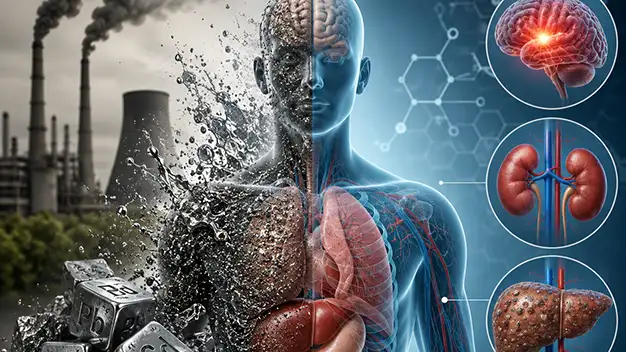
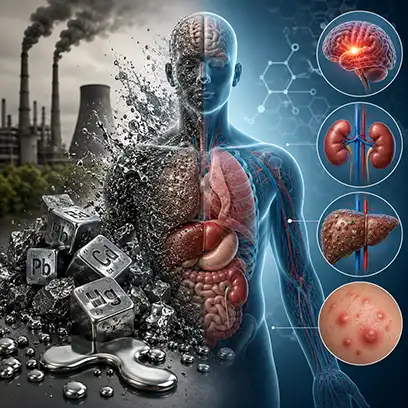
Heavy Metal Toxicity (Part – 2)
Learn how Ayurveda explains heavy metal toxicity through Dushi Visha and Gara Visha, and explore personalized Ayurvedic Treatment for Heavy Metal Toxicity with holistic detox and expert care.
On This Page


-
 50
50
 50
50
 Share
ShareSummarise this article using AI




Introduction
Ayurvedic Perspective of Heavy Metal Toxicity: Understanding Dushi Visha, Gara Visha, Visha Guna, and Ayurvedic Management
Heavy metal toxicity has become an increasingly important public health concern in the modern world. Rapid industrialization, environmental pollution, contaminated food and water, occupational exposure, agricultural chemicals, consumer products, and urban lifestyles have contributed to rising human exposure to toxic metals such as lead, mercury, arsenic, cadmium, chromium, nickel, and manganese. Chronic exposure to these substances has been associated with neurological disorders, skin diseases, immune dysregulation, kidney dysfunction, liver injury, reproductive disturbances, and a wide range of chronic inflammatory conditions.
From a modern biomedical perspective, heavy metal toxicity is characterized by bioaccumulation, oxidative stress, mitochondrial dysfunction, chronic inflammation, and progressive tissue damage. However, the chronic, multisystem, and often hidden nature of heavy metal toxicity raises an important question: Does Ayurveda provide an understanding of such toxic exposures?
The common assumption that heavy metal toxicity is purely a modern concept is incorrect; Ayurveda possesses a highly developed branch of toxicology known as Agada Tantra. Classical Ayurvedic literature extensively discusses Visha (poisons and toxins), their properties, mechanisms of action, clinical manifestations, complications, and principles of treatment. In addition, Rasashastra texts describe numerous metals and mineral substances, including Parada (Mercury), Naga (Lead), Vanga (Tin), Tamra (Copper), Loha (Iron), Yashada (Zinc), Haratala, and Manashila.
Although heavy metal toxicity is not described as a single disease entity in classical Ayurvedic texts, several foundational concepts provide a remarkably relevant understanding of its pathogenesis and treatment. Among these, Visha, Gara Visha, Dushi Visha, Agnimandya, Ama, Srotorodha, Dosha Dushti, and Dhatu Dushti are particularly important.
This article explores the Ayurvedic understanding of heavy metal toxicity, its possible correlation with Dushi Visha and Gara Visha, the significance of the ten classical qualities of Visha (Dasha Visha Guna), the involvement of Doshas, Dhatus, and Strotas, and the principles of Ayurvedic management.
Key Takeaways
Key Facts About Heavy Metal Toxicity
| Topic | Key Point |
| Modern Understanding | Chronic toxic accumulation of metals |
| Closest Ayurvedic Correlation | Dushi Visha |
| Additional Correlation | Gara Visha |
| Major Pathological Factors | Agnimandya, Ama, Srotorodha |
| Main Doshas | Vata and Pitta |
| Major Dhatus | Rakta, Majja, Asthi, Shukra |
| Common Symptoms | Fatigue, brain fog, skin disorders |
| Important Metals | Lead, Mercury, Arsenic, Cadmium, Nickel, Manganese |
| Treatment Principle | Individualized management |
| Prevention | Exposure reduction |
What is Heavy Metal Toxicity – According to Ayurveda?
Heavy metal toxicity does not correspond exactly to a single disease entity described in Ayurveda. Instead, it may be understood through a combination of toxicological and pathological concepts.
Table 1. Modern and Ayurvedic Correlations
| Modern Concept | Ayurvedic Correlation |
| Heavy Metal Toxicity | Visha |
| Chronic Toxic Exposure | Dushi Visha |
| Environmental and Artificial Toxins | Gara Visha |
| Toxic Metabolite Accumulation | Ama |
| Metabolic Dysfunction | Agnimandya |
| Tissue Damage | Dhatu Dushti |
| Multisystem Disease | Srotorodha |
From an Ayurvedic perspective, chronic exposure to toxic substances may gradually impair Agni, promote Ama formation, obstruct Strotas, disturb Doshas, and eventually damage multiple Dhatus.
Does Ayurveda Describe Heavy Metal Toxicity?
Not directly. Classical Ayurvedic texts do not mention lead, mercury, cadmium, chromium, nickel, or manganese as environmental pollutants in the modern sense. However, Ayurveda contains an extensive branch known as Agada Tantra (Ayurvedic Toxicology) that discusses various forms of poisoning, including natural poisons, artificial poisons, cumulative poisons, food-borne toxins, and chronic toxic states.
Therefore, while heavy metal toxicity is not described by its modern name, several Ayurvedic concepts provide a valuable understanding of its pathogenesis and management.
Also Read:- Heavy Metal Toxicity: Causes, Symptoms, Diagnosis & Treatment
Why Can Heavy Metal Toxicity be Compared with Dushi Visha?
Among the various Ayurvedic concepts of toxicity, Dushi Visha provides one of the most relevant understandings of chronic heavy metal toxicity. Dushi Visha is described as a weakened, residual, or partially neutralized poison that is not eliminated from the body. Instead, it remains hidden within the Dhatus and Strotas, gradually accumulating over time and producing disease after prolonged periods.
Unlike acute poisoning, Dushi Visha does not always produce immediate symptoms. Its manifestations may appear slowly and involve multiple organ systems, making diagnosis difficult. This description closely resembles modern heavy metal toxicity, where repeated low-level exposure to metals such as lead, mercury, arsenic, cadmium, nickel, and manganese may remain unnoticed for years before causing clinically significant disease.
Heavy metals accumulate within tissues such as the brain, liver, kidneys, bones, skin, and nervous system. Over time, they may induce chronic inflammation, oxidative stress, metabolic dysfunction, neurological impairment, skin disorders, reproductive abnormalities, and multisystem disease. This gradual accumulation and delayed manifestation closely parallel the Ayurvedic description of Dushi Visha.
Therefore, although classical Ayurvedic texts do not specifically mention modern environmental heavy metals, the pathogenesis, chronicity, tissue persistence, and multisystem effects of heavy metal toxicity show remarkable conceptual similarities with Dushi Visha.
Table 2. Similarities Between Dushi Visha and Heavy Metal Toxicity
| Classical Features of Dushi Visha | Possible Correlation with Heavy Metal Toxicity |
| Dhatu Dushti | Accumulation of metals within tissues and organs |
| Chirakari Vyadhi | Chronic and progressive toxicity |
| Twak Vikara | Dermatitis, eczema, itching, pigmentation disorders |
| Kesha-Roma Patana | Hair loss and hair abnormalities |
| Shotha | Chronic inflammation and tissue swelling |
| Agnimandya | Digestive dysfunction and metabolic impairment |
| Aruchi | Loss of appetite and altered taste sensation |
| Daha | Burning sensations and inflammatory manifestations |
| Jwara | Persistent inflammatory and systemic symptoms |
| Unmada / Manovikara | Brain fog, mood changes, irritability, cognitive dysfunction |
| Vepathu (Kampa) | Tremors and movement disorders, especially in manganese toxicity |
| Daurbalya | Chronic fatigue and generalized weakness |
| Shukra Dushti / Shukra Kshaya | Reproductive dysfunction and infertility |
| Hridroga Pravrutti | Cardiovascular effects associated with certain metals |
| Bahu-Dhatu and Bahu-Srotas Involvement | Multisystem involvement affecting Skin, liver, kidneys, nervous system, and reproductive organs |
Can Heavy Metal Toxicity Also be Compared to Gara Visha?
Yes. From an Ayurvedic perspective, chronic heavy metal exposure shows striking similarities with the concept of Gara Visha.
Ayurvedic classics describe Gara Visha as an artificial or compounded poison produced by the combination of multiple substances that individually may not cause immediate death but gradually generate toxicity within the body. Unlike acute poisons, Gara Visha acts slowly, accumulates over time, disturbs Doshas and Dhatus, and ultimately produces chronic disease.
This description closely resembles modern heavy metal exposure, where individuals are repeatedly exposed to small amounts of toxic substances through contaminated food, drinking water, cosmetics, industrial pollutants, food additives, pesticides, household products, medications, and environmental contaminants.
The modern concept of cumulative toxic exposure and bioaccumulation therefore shares several features with the Ayurvedic understanding of Gara Visha.
Why is Heavy Metal Toxicity Similar to Gara Visha?
According to Ayurvedic texts, Gara Visha is produced by repeated exposure to incompatible, adulterated, contaminated, or artificially combined substances such as
- Food adulteration
- Chemical additives
- Contaminated drinks
- Cosmetics
- Drugs and chemicals
- Environmental contaminants
Many of these are also recognized sources of heavy metal exposure today.
Table 3. Similarities Between Gara Visha and Heavy Metal Toxicity
| Gara Visha | Heavy Metal Toxicity |
| Artificially acquired poison | Environmental and man-made toxic exposure |
| Repeated low-dose exposure | Chronic low-level metal exposure |
| Gradually accumulates in the body | Bioaccumulation in tissues |
| Produces chronic disease | Chronic toxicity |
| Multiple organ involvement | Multisystem toxicity |
| Difficult to identify initially | Often underdiagnosed |
| Food and environmental origin | Food, water, air, cosmetics, occupation |
| Causes Dhatu Dushti | Causes tissue and organ damage |
Table 4. Classical Sources of Gara Visha and Modern Equivalents
| Classical sources of Gara Visha | Modern Equivalent |
| Dushita Ahara | Contaminated food |
| Viruddha Ahara | Harmful dietary combinations |
| Gara Dravya | Chemical additives and preservatives |
| Dushita Jala | Heavy metal-contaminated water |
| Dushita Vayu | Industrial air pollution |
| Vishayukta Ahara | Food contaminated with metals, pesticides, and pollutants |
| Kritrima Visha | Synthetic environmental toxins |
Does the Concept of Bioaccumulation Support the Gara Visha Theory?
Modern toxicology recognizes that many heavy metals accumulate within tissues over time through a process known as bioaccumulation.
Lead may remain in bones for decades, cadmium may persist in kidneys for decades, while mercury can accumulate within nervous tissue. Similarly, Gara Visha is described as a slowly acting poison that remains within the body and gradually produces disease after prolonged exposure.
This resemblance makes Gara Visha one of the most relevant Ayurvedic concepts for understanding chronic environmental toxic exposure.
What is the Difference Between Gara Visha and Dushi Visha?
This distinction is extremely important.
Table 5. Gara Visha vs Dushi Visha vs Heavy Metal Toxicity
| Feature | Gara Visha | Dushi Visha | Heavy Metal Toxicity |
| Origin | External toxic exposure | Residual retained toxin | External toxic exposure |
| Initial Stage | Exposure phase | Retention phase | Exposure phase |
| Nature | Artificial/ compound poison | Persistent hidden poison | Bioaccumulative toxicant |
| Progression | Gradually enters the body | Remains hidden in tissues | Accumulates in tissues |
| Outcome | Dosha vitiation | Dhatu Dushti | Organ damage |
| Clinical Course | Chronic | Chronic | Chronic |
What are the Ayurvedic Characteristics of Toxic Substances, and How do they Relate to Heavy Metal Toxicity?
Ayurveda describes Visha (toxic substances) through ten classical properties known as Dasha Visha Guna. Although ancient texts do not specifically describe modern environmental heavy metals, many toxic effects of lead, mercury, arsenic, cadmium, nickel, and other metals closely resemble these classical characteristics of Visha.
Table 6. Dasha Visha Guna and Their Relevance to Heavy Metal Toxicity
| Visha Guna | Classical Meaning | Relevance to Heavy Metal Toxicity |
| Laghu | Rapid movement | Distribution through blood and tissues |
| Ruksha | Drying and depleting | Tissue degeneration and nutritional depletion |
| Tikshna | Sharp and penetrating | Cellular and organ toxicity |
| Ushna | Aggravating and damaging | Oxidative stress and inflammatory injury |
| Ashukari | Fast acting | Acute toxic manifestations after high exposure |
| Vyavayi | Spreads throughout the body before digestion | Systemic circulation and widespread distribution |
| Vikasi | Disrupts structural integrity | Loss of tissue function and cellular damage |
| Sukshma | Enters minute channels | Penetration into cells, nerves, and micro-tissues |
| Vishada | Non-unctuous and depleting | Progressive depletion of Dhatus and vitality |
| Anirdeshya Rasa | Difficult to identify | Silent, often unrecognized chronic toxicity |
Many heavy metals remain undetected for years while gradually affecting the nervous system, liver, kidneys, skin, and reproductive tissues. This silent and multisystem nature of heavy metal toxicity closely resembles the Ayurvedic description of Visha.
Which Doshas are Involved in Heavy Metal Toxicity?
Heavy metal toxicity cannot be attributed to a single Dosha. The clinical presentation varies depending on the type of metal involved, duration of exposure, affected organs, and individual susceptibility. However, chronic toxicity generally involves all three Doshas, with Vata and Pitta predominance being most common.
Table 7. Dosha Involvement in Heavy Metal Toxicity
| Clinical Manifestation | Dominant Dosha |
| Inflammation | Pitta |
| Neurotoxicity | Vata |
| Tissue Degeneration | Vata |
| Burning Sensation | Pitta |
| Allergic Reactions | Kapha-Pitta |
| Fatigue | Vata-Kapha |
| Cognitive Dysfunction | Vata |
| Skin Disorders | Pitta-Rakta |
| Chronic Toxic Accumulation | Tridosha |

Have A Health Issue?
Consult Online
- Dr. Sahil Gupta (B.A.M.S., M.H.A.)
Ayurvedic Allergy Specialist
CEO & Founder of IAFA®
At last, Easier Heavy Metal Toxicity Management

Trusted by
More than 90,000 Patients

Convenient
at-Home Treatments

9.2 / 10
Customer Satisfaction Score
Why is Vata Important in Heavy Metal Toxicity?
Vata governs the nervous system, sensory functions, movement, cognition, and communication within the body.
Heavy metals such as lead, mercury, and manganese frequently affect:
- Brain function
- Memory
- Coordination
- Peripheral nerves
- Speech
- Motor activity
Therefore, symptoms such as tremors, neuropathy, forgetfulness, brain fog, anxiety, insomnia, and Parkinson-like manifestations may be viewed as expressions of Vata aggravation and Majja Dhatu involvement.
Why is Pitta Important in Heavy Metal Toxicity?
Pitta governs metabolism, transformation, inflammation, and cellular activity.
Heavy metals induce:
- Oxidative stress
- Inflammatory responses
- Cellular injury
- Hepatic dysfunction
- Skin inflammation
These manifestations resemble Pitta Dushti and Rakta Dushti.
Why is Kapha also Involved?
Kapha contributes to:
- Retention
- Accumulation
- Obstruction
- Chronicity
Persistent toxic accumulation within tissues may therefore involve Kapha and Strotorodha.
How Does Heavy Metal Toxicity Affect Different Dhatus?
As per Ayurveda, chronic disease develops when Doshas progressively affect the Dhatus. Because heavy metals can persist for years, multiple Dhatus may become involved.
Table 8. Dhatu-Wise Effects of Heavy Metal Toxicity
| Dhatu | Possible Manifestations |
| Rasa | Fatigue, malaise |
| Rakta | Inflammation, skin disease |
| Mamsa | Muscle weakness |
| Meda | Metabolic dysfunction |
| Asthi | Bone accumulation and toxicity |
| Majja | Neurological disorders |
| Shukra | Reproductive dysfunction |
| Dhatu | Possible Modern Correlation |
| Rasa | Chronic fatigue, malaise, impaired nourishment |
| Rakta | Anemia, inflammatory skin disorders |
| Mamsa | Weaknesses, muscle dysfunction |
| Meda | Metabolic disturbances |
| Asthi | Bone toxicity and demineralization |
| Majja | Neurological disorders, neurotoxicity, and cognitive dysfunction |
| Shukra | Reproductive toxicity and infertility |
Which Dhatus (Tissues) are Most Affected in Heavy Metal Toxicity?
From an Ayurvedic perspective, chronic heavy metal toxicity may affect multiple Dhatus over time. This helps explain why patients often develop seemingly unrelated neurological, dermatological, hematological, reproductive, skeletal, and systemic manifestations.
Can Heavy Metal Toxicity Affect Blood and Skin Health (Rakta Dhatu)?
Yes. Rakta Dhatu is responsible for nourishment, vitality, complexion, and tissue sustenance. Heavy metals such as lead, arsenic, cadmium, and nickel may affect blood formation and circulation, resulting in manifestations that resemble Rakta Dhatu Dushti.
Possible Manifestations
- Anemia
- Fatigue
- Pallor
- Skin discoloration
- Inflammatory skin disorders
- Pruritus
- Hyperpigmentation
Table 9. Rakta Dhatu and Modern Correlation
| Ayurvedic Concept | Modern Correlation |
| Rakta Dushti | Hematological toxicity |
| Twak Vikara | Dermatitis and skin disorders |
| Vaivarnya | Pigmentation changes |
| Panduta | Anemia |
Can Heavy Metal Toxicity Affect the Brain and Nervous System (Majja Dhatu)?
Yes. Majja Dhatu is closely associated with the nervous system and marrow tissues. Many heavy metals, including lead, mercury, manganese, and arsenic, are neurotoxic and may accumulate within nervous tissues.
Possible Manifestations
- Brain fog
- Poor concentration
- Memory impairment
- Mood disturbances
- Tremors
- Peripheral neuropathy
- Parkinson-like symptoms
Table 10. Majja Dhatu and Modern Correlation
| Ayurvedic Concept | Modern Correlation |
| Majja Dushti | Neurotoxicity |
| Smriti Bhramsha | Memory impairment |
| Unmada-like features | Mood and behavioral changes |
| Kampa | Tremors |
Can Heavy Metal Toxicity Affect Bone and Skeletal Health (Asthi Dhatu)?
Several heavy metals have a strong affinity for bone tissue. Lead may remain stored in bones for decades, while cadmium is associated with bone demineralization and skeletal damage.
Possible Manifestations
- Bone pain
- Osteopenia
- Osteoporosis
- Joint discomfort
- Skeletal weakness
Table 11. Asthi Dhatu and Modern Correlation
| Ayurvedic Concept | Modern Correlation |
| Asthi Kshaya | Bone loss |
| Asthi Shoola | Bone pain |
| Asthi Daurbalya | Skeletal weakness |
Can Heavy Metal Toxicity Affect Fertility and Reproductive Health (Shukra Dhatu)?
Yes. Shukra Dhatu represents reproductive health, fertility, vitality, and healthy progeny. Chronic exposure to lead, cadmium, mercury, and arsenic has been associated with adverse reproductive outcomes.
Possible Manifestations
- Reduced fertility
- Hormonal imbalance
- Reduced sperm quality
- Menstrual disturbances
- Pregnancy complications
- Reduced reproductive vitality
Table 12. Shukra Dhatu and Modern Correlation
| Ayurvedic Concept | Modern Correlation |
| Shukra Dushti | Reproductive toxicity |
| Beeja Dushti | Impaired gamete quality |
| Vandhyatva | Infertility |
| Garbha Vikriti Risk | Adverse reproductive outcomes |
Can Heavy Metal Toxicity Affect Multiple Dhatus Simultaneously?
Yes. One of the defining features of chronic heavy metal toxicity is its multisystem nature. Because toxic metals may accumulate in blood, nerves, bones, skin, liver, kidneys, and reproductive tissues, multiple Dhatus may become affected simultaneously.
Table 13. Dhatu Involvement in Heavy Metal Toxicity
| Dhatu | Possible Modern Correlation |
| Rasa | Chronic fatigue, impaired nourishment |
| Rakta | Anemia, inflammatory skin disorders |
| Mamsa | Weaknesses, muscle dysfunction |
| Meda | Metabolic disturbances |
| Asthi | Bone toxicity and demineralization |
| Majja | Neurotoxicity and cognitive dysfunction |
| Shukra | Reproductive toxicity and infertility |
Key Clinical Insight
The progressive involvement of Rakta, Majja, Asthi, and Shukra Dhatu provides an Ayurvedic explanation for why heavy metal toxicity often presents as a chronic multisystem disorder affecting the blood, nervous system, bones, skin, and reproductive organs rather than a single-organ disease.
How Does Heavy Metal Toxicity Affect Different Body Channels (Strotas)?
Since heavy metals circulate throughout the body, multiple Strotas may become affected simultaneously.
Table 14. Strotas’s Involvement in Heavy Metal Toxicity
| Strotas (Body channels) | Possible Manifestations |
| Rasavaha | Fatigue, weakness |
| Raktavaha | Skin disorders, inflammation |
| Annavaha | Digestive symptoms |
| Mutravaha | Kidney dysfunction |
| Majjavaha | Neurological symptoms |
| Pranavaha | Respiratory symptoms |
| Shukravaha | Fertility disturbances |
Why is Obstruction of Channels (Strotorodha) Important in Heavy Metal Toxicity?
Strotorodha (obstruction of channels) is a key concept in understanding chronic toxic disorders. When toxic substances accumulate within the body:
- Nutrient transport becomes impaired
- Waste elimination becomes impaired
- Tissue nourishment becomes impaired
- Doshas become disturbed
As a result, patients may develop multisystem symptoms involving several organs simultaneously. This concept helps explain why heavy metal toxicity often presents with a seemingly unrelated combination of skin, neurological, digestive, hepatic, renal, and reproductive manifestations.
How Does Ayurveda Explain the Development of Heavy Metal Toxicity?
According to Ayurveda, repeated exposure to toxic substances may impair Agni (metabolic function), generate Ama (metabolic toxins), obstruct bodily channels (Srotorodha), and gradually damage tissues (Dhatu Dushti). This process can ultimately manifest as chronic multisystem disease.
Ayurvedic Samprapti of Heavy Metal Toxicity
Heavy Metal Exposure
↓
Gara Visha Formation
(Repeated Environmental Toxic Exposure)
↓
Agnimandya
(Impaired Metabolic and Detoxification Capacity)
↓
Ama Formation
(Toxic Metabolic Accumulation)
↓
Dushi Visha State
(Persistent Retained Toxic Burden)
↓
Srotorodha
(Channel Obstruction)
↓
Dosha Prakopa
(Vata-Pitta-Kapha Imbalance)
↓
Dhatu Dushti
(Tissue and Organ Damage)
↓
Chronic Multisystem Disorders
Table 15. Ayurvedic Pathogenesis and Modern Correlation
| Ayurvedic Concept | Modern Interpretation |
| Gara Visha | Repeated environmental toxic exposure |
| Agnimandya | Impaired metabolism and detoxification |
| Ama | Toxic metabolic burden |
| Dushi Visha | Chronic retained toxins and bioaccumulation |
| Srotorodha | Impaired transport and elimination pathways |
| Dhatu Dushti | Organ and tissue injury |
| Vyadhi | Clinical manifestations of toxicity |
Can Heavy Metal Toxicity Cause Skin Diseases – According to Ayurveda?
Yes. From an Ayurvedic perspective, chronic heavy metal toxicity may contribute to various skin disorders through the involvement of Rakta Dhatu, Pitta Dosha, Kapha Dosha, Ama, and Dushi Visha. The skin (Twak) is closely related to Rakta Dhatu. When chronic toxins circulate within the body for prolonged periods, they may disturb Rakta and Pitta, resulting in various dermatological manifestations.
Common manifestations may include:
- Kandu (itching)
- Daha (burning)
- Twak Vaivarnya (discoloration)
- Shyavata (hyperpigmentation)
- Pidika (eruptions)
- Visphota (blister-like lesions)
- Chronic inflammatory skin disorders
Table 16. Skin Manifestations and Ayurvedic Correlations
| Clinical Manifestation | Ayurvedic Interpretation |
| Contact Dermatitis | Vicharchika |
| Chronic Itching | Kandu |
| Hyperpigmentation | Rakta Dushti |
| Allergic Skin Reactions | Sheetapitta |
| Eczema-like Lesions | Vicharchika |
| Chronic Inflammation | Pitta-Rakta Dushti |
| Photosensitivity | Pitta Prakopa |
Why Does Nickel Toxicity Affect the Skin?
Nickel is one of the most common causes of allergic contact dermatitis worldwide.
From an Ayurvedic perspective, nickel-induced skin manifestations may involve:
- Rakta Dushti
- Pitta Dushti
- Kandu
- Twak Vikara
- Sheetapitta-like manifestations
Patients may experience:
- Itching
- Redness
- Burning
- Rashes
- Hyperpigmentation
- Chronic recurrent dermatitis
This explains why skin complaints are often among the earliest manifestations of chronic nickel exposure.
Can Heavy Metal Toxicity Affect the Brain – According to Ayurveda?
Yes. The nervous system is one of the most important targets of heavy metal toxicity. Metals such as lead, mercury, and manganese may significantly affect cognition, movement, memory, and neurological function.
This may be understood through:
- Vata Prakopa
- Majja Dhatu Dushti
- Majjavaha Srotodushti
- Dushi Visha
Table 17. Neurological Symptoms and Ayurvedic Interpretation
| Symptom | Ayurvedic Correlation |
| Brain Fog | Majjavaha Srotodushti |
| Forgetfulness | Smriti Vibhramsha |
| Tremors | Kampa |
| Anxiety | Vata Prakopa |
| Sleep Disturbance | Vata Dushti |
| Cognitive Dysfunction | Majja Dushti |
| Neuropathy | Vata Vyadhi |
Why do people experience brain fog and poor concentration?
Brain fog is increasingly reported among individuals with chronic toxic exposure.
From an Ayurvedic perspective, it may result from:
- Ama accumulation
- Vata aggravation
- Majja Dhatu involvement
- Srotorodha
- Dushi Visha
Patients may experience:
- Poor concentration
- Forgetfulness
- Mental fatigue
- Reduced clarity
- Difficulty completing tasks
What is the Ayurvedic View of Manganese Toxicity?
Manganese occupies a unique position because it is both an essential trace element and a potential neurotoxin when present in excess.
As per Ayurveda, Manganese toxicity may be viewed as:
- Dushi Visha
- Majja Dhatu Dushti
- Vata Prakopa
- Majjavaha Srotodushti
Table 18. Modern and Ayurvedic View of Manganese Toxicity
| Modern Observation | Ayurvedic Interpretation |
| Neurotoxicity | Vata Prakopa |
| Parkinson-like Symptoms | Kampa |
| Brain Involvement | Majja Dushti |
| Chronic Exposure | Dushi Visha |
| Occupational Toxicity | Gara Visha |
Why Does Manganese Toxicity Resemble Certain Vata Disorders?
Excess manganese primarily affects:
- Movement
- Coordination
- Speech
- Cognition
Common manifestations include:
- Tremors
- Rigidity
- Gait abnormalities
- Slowness of movement
- Cognitive dysfunction
These features closely resemble classical manifestations of aggravated Vata affecting Majja Dhatu.
What is the Ayurvedic View of Nickel Toxicity?
Nickel toxicity frequently manifests through skin and immune-related disorders.
Ayurvedically, nickel exposure may primarily involve:
- Rakta Dushti
- Pitta Dushti
- Kandu
- Twak Vikara
- Dushi Visha
Table 19. Modern and Ayurvedic View of Nickel Toxicity
| Modern Observation | Ayurvedic Interpretation |
| Contact Dermatitis | Vicharchika |
| Allergic Reactions | Sheetapitta |
| Skin Inflammation | Pitta Dushti |
| Hyperpigmentation | Rakta Dushti |
| Chronic Exposure | Dushi Visha |
Can Heavy Metal Toxicity Cause Allergies – According to Ayurveda?
Many individuals with chronic toxic exposure develop:
- Allergic disorders
- Chronic itching
- Recurrent rashes
- Hypersensitivity reactions
These manifestations may involve:
- Pitta
- Kapha
- Rakta Dushti
- Dushi Visha
The persistent nature of these disorders often reflects an underlying chronic toxic burden rather than a simple acute reaction.
Why Do Symptoms Persist for Years?
This is one of the strongest parallels between Dushi Visha and heavy metal toxicity. According to Ayurveda, a toxin that is not eliminated may remain dormant within the body and become activated under favorable conditions.
Classical aggravating factors include:
- Weak Agni
- Stress
- Poor diet
- Seasonal changes
- Illness
- Excessive exertion
Similarly, heavy metals may remain stored in tissues for years and continue producing symptoms long after initial exposure.
What is the Ayurvedic Treatment Approach for Heavy Metal Toxicity?
From an Ayurvedic perspective, the management of heavy metal toxicity extends beyond the suppression of symptoms. The primary objective is to identify and eliminate the source of toxic exposure, prevent further accumulation, restore physiological balance, support the body’s natural detoxification mechanisms, protect affected organs, and promote long-term tissue recovery.
Heavy metal toxicity may affect multiple systems, including the nervous system, skin, liver, kidneys, blood, bones, and reproductive organs. Therefore, treatment should be individualized according to the type of exposure, duration of toxicity, affected organs, Dosha involvement, Dhatu involvement, Agni status, and overall health of the patient.
Ayurvedic management may involve principles of Nidana Parivarjana, Agni Deepana, Ama Pachana, Visha Chikitsa, Srotoshodhana, Dhatu Poshana, and Rasayana Chikitsa, depending upon the clinical presentation.
Table 20. Primary Goals of Ayurvedic Management in Heavy Metal Toxicity
| Treatment Goal | Ayurvedic Objective |
| Eliminate the source of exposure | Nidana Parivarjana |
| Improve digestion and metabolism | Agni Deepana |
| Reduce toxic burden | Ama Pachana |
| Address retained toxins | Visha Chikitsa |
| Restore channel function | Srotoshodhana |
| Correct Dosha imbalance | Dosha Shamana |
| Support affected tissues and organs | Dhatu Poshana |
| Promote recovery and rejuvenation | Rasayana Chikitsa |
Key Clinical Principle
The first and most important step in the management of heavy metal toxicity is the identification and elimination of the exposure source. Without removing the underlying cause, long-term recovery may remain incomplete despite symptomatic improvement. Therefore, successful management requires a comprehensive approach that combines exposure reduction, metabolic correction, tissue support, organ protection, and long-term restoration of physiological balance.
What is Nidana Parivarjana and Why is it Important?
Ayurveda considers Nidana Parivarjana (elimination of the causative factor) the first and most important step in treatment. Without removing the source of exposure, therapeutic interventions may provide only temporary relief.
Examples include:
- Contaminated drinking water
- Occupational exposure
- Industrial pollutants
- Metal-containing cosmetics
- Tobacco exposure
- Environmental contamination
Table 21. Examples of Nidana Parivarjana
| Source of Exposure | Possible Preventive Measure |
| Contaminated Water | Water testing and filtration |
| Industrial Exposure | Protective equipment |
| Cosmetic Exposure | Quality-controlled products |
| Welding Fumes | Occupational precautions |
| Tobacco Smoke | Smoking cessation |
Why is Agni Important in Heavy Metal Toxicity?
According to Ayurveda, proper Agni is essential for maintaining health.
When Agni becomes impaired:
- Ama accumulates
- Metabolism becomes inefficient
- Tissues become vulnerable
- Recovery becomes difficult
Heavy metal exposure may contribute to Agnimandya directly or indirectly through chronic inflammation and metabolic dysfunction.
Therefore, restoration of Agni is an important therapeutic objective.
What is Ama, and Why is Ama Pachana important?
Ama refers to incompletely processed substances that interfere with normal physiological function. Although Ama is not identical to heavy metals, chronic toxicity may create conditions favorable for Ama formation.
Possible manifestations include:
- Fatigue
- Heaviness
- Brain fog
- Digestive disturbances
- Reduced vitality
Table 22. Common Features of Ama and Chronic Toxicity
| Feature | Ama | Heavy Metal Toxicity |
| Fatigue | ✓ | ✓ |
| Digestive Complaints | ✓ | ✓ |
| Brain Fog | ✓ | ✓ |
| Chronic Disease | ✓ | ✓ |
| Multisystem Symptoms | ✓ | ✓ |
Why is Strotoshodhana Important in Chronic Toxicity?
Heavy metal toxicity often affects multiple organs simultaneously.
Ayurveda explains this phenomenon through:
- Srotorodha (channel obstruction)
- Impaired tissue nourishment
- Impaired waste elimination
Therefore, restoring normal Strotas function is considered an important component of management.
Can Panchakarma be Useful in Heavy Metal Toxicity?
Panchakarma should not be viewed as a universal treatment for every patient with heavy metal toxicity. However, selected patients may benefit from appropriately planned Panchakarma procedures under expert supervision.
Potential objectives include:
- Dosha management
- Agni restoration
- Srotoshodhana
The suitability of Panchakarma depends on:
- Strength of the patient
- Severity of illness
- Dosha predominance
- Organ involvement
- Overall clinical condition
Which Ayurvedic Herbs May be Useful in Heavy Metal Toxicity?
Ayurvedic management aims to reduce toxic burden, support natural detoxification pathways, protect vulnerable organs, counter oxidative stress, and promote tissue recovery. Several Ayurvedic herbs possess antioxidants, hepatoprotective, nephroprotective, immunomodulatory, neuroprotective, and Rasayana properties that may be relevant in patients with heavy metal toxicity.
Table 23. Commonly Used Ayurvedic Herbs and their Potential Roles
| Herb | Potential Role in Heavy Metal Toxicity |
| Guduchi (Tinospora cordifolia) | Rasayana, antioxidant, immunomodulatory, hepatoprotective |
| Amalaki (Emblica officinalis) | Antioxidants support detoxification pathways |
| Haridra (Curcuma longa) | Anti-inflammatory, antioxidant |
| Nimba (Azadirachta indica) | Supports skin and inflammatory conditions |
| Bhumyamalaki (Phyllanthus niruri) | Liver support |
| Punarnava (Boerhavia diffusa) | Renal support, fluid regulation |
| Manjistha (Rubia cordifolia) | Rakta Prasadana, skin support |
| Yashtimadhu (Glycyrrhiza glabra) | Mucosal and tissue protection |
| Ashwagandha (Withania somnifera) | Neuroprotective, adaptogenic |
| Shigru (Moringa oleifera) | Antioxidant, nutritional support |
| Tulsi (Ocimum sanctum) | Antioxidant and immunomodulatory |
| Brahmi (Bacopa monnieri) | Cognitive and neurological support |
Which Ayurvedic Formulations May be Considered in Heavy Metal Toxicity?
The selection of formulations depends upon the affected organs, symptoms, Dosha involvement, and overall clinical presentation.
Table 24. Commonly Used Ayurvedic Formulations
| Formulation | Potential Clinical Use |
| Mahagandhaka Rasayana | Chronic skin and inflammatory manifestations |
| Guduchi Satva | Immune and Metabolic Support |
| Arogyavardhini Vati | Liver support |
| Punarnavadi Mandura | Anemia and Renal Support |
| Punarnava Mandoor | Chronic inflammatory conditions |
| Chandraprabha Vati | Urinary and metabolic support |
| Kaishora Guggulu | Chronic inflammatory conditions |
| Mahamanjisthadi Kwatha | Skin and Rakta involvement |
| Panchatikta Kwatha | Chronic inflammatory and dermatological conditions |
| Amritottara Kashaya | Ama and inflammatory conditions |
| Brahmi preparations for | Neurological symptoms |
| Ashwagandha preparations | Neuro-muscular support |
| Triphala | Digestive and eliminative support |
| Chyavanaprasha | Long-term Rasayana support |


Committed to Holistic Healing through Alternative Medicine Since 2008
Can Different Organs Require Different Ayurvedic Approaches?
Yes. Ayurvedic treatment is often individualized according to the primary organ system affected. Eg: if the liver is affected, Guduchi, Bhumyamalaki, Arogyavardhini, etc herbs can be used.
Can Ayurveda Help in Long-Term Recovery?
Ayurvedic management emphasizes long-term restoration rather than short-term symptomatic relief alone.
Potential goals include:
- Supporting affected organs
- Improving digestive and metabolic function
- Restoring Dosha balance
- Supporting tissue recovery
- Improving overall quality of life
The recovery process varies depending on:
- Individual patient factors
- Type of metal
- Duration of exposure
- Severity of toxicity
- Organ involvement
Clinical Insights from IAFA Ayurveda
At IAFA Ayurveda, individuals with suspected heavy metal toxicity may present with a wide spectrum of symptoms involving the skin, nervous system, immune system, and gastrointestinal tract. Clinical observations have shown that some patients with elevated heavy metal levels, particularly manganese and nickel, may experience chronic skin disorders, recurrent allergic manifestations, brain fog, poor concentration, fatigue, digestive disturbances, and other multisystem complaints.
These observations highlight an important clinical reality: heavy metal toxicity does not always present as a classical poisoning syndrome. Instead, it may manifest through chronic inflammatory, allergic, neurological, or dermatological conditions, making diagnosis challenging.
Why Choose IAFA Ayurveda for Heavy Metal Toxicity Management?
Heavy metal toxicity can affect multiple organ systems and may present a wide range of symptoms involving the skin, nervous system, liver, kidneys, immune system, and reproductive health. Because the pattern of toxicity varies significantly from person to person, management often requires an individualized and comprehensive approach.
At IAFA Ayurveda, Dr. Sahil Gupta and his team focus on identifying potential sources of exposure, understanding the patient’s clinical presentation, evaluating affected organ systems, and developing personalized treatment plans based on Ayurvedic principles.
How Does IAFA Ayurveda Manage Heavy Metal Toxicity?
At IAFA Ayurveda, Dr. Sahil Gupta and his team adopted an individualized approach for patients with suspected heavy metal toxicity. Management is planned according to the patient’s symptoms, exposure history, affected organ systems, laboratory findings, and overall health status.
Based on Ayurvedic principles, treatment may include:
- Nidana Parivarjana
- Agni and Ama management
- Dosha-specific interventions
- Organ-supportive therapies
- Rasayana Chikitsa
- Personalized dietary recommendations
- Lifestyle modifications
What Makes IAFA Ayurveda Different?
| IAFA Ayurveda Approach | Potential Benefit |
| Individualized assessment | Treatment is personalized as per the patient’s condition |
| Focus on exposure history | Helps identify possible contributing factors |
| Dushi Visha and Gara Visha’s perspective | Ayurvedic understanding of chronic toxic burden |
| Organ-specific support | Addresses affected systems such as the skin, liver, kidneys, or nervous system. |
| Rasayana-based approach | Supports long-term recovery and tissue health |
| Integrated dietary and lifestyle guidance | Help reduce ongoing toxic exposure |
| Experienced clinical team led by Dr. Sahil Gupta | Comprehensive patient-centered care |
When Should You Consult a Doctor?
Seek medical evaluation if you experience:
- Persistent fatigue
- Neurological symptoms
- Recurrent skin problems
- Occupational exposure
- Contaminated water exposure
At IAFA Ayurveda, Dr. Sahil Gupta provides personalized assessment and Ayurvedic management for heavy metal toxicity. Book your appointment now!!
Frequently Asked Questions
Q1. What are the First Signs of Heavy Metal Toxicity?
Ans. Common early signs include fatigue, headaches, poor concentration, dizziness, digestive problems, and unexplained weakness.
Q2. How Do I Know If I Have Heavy Metal Toxicity?
Ans. Diagnosis usually requires a medical evaluation, exposure history, and appropriate laboratory testing.
Q3. What is the Most Common Source of Heavy Metal Exposure?
Ans. Contaminated food, drinking water, air pollution, cosmetics, and occupational exposure are common sources.
Q4. Can Heavy Metal Toxicity Cause Skin Disease?
Ans. Yes. It may cause itching, dermatitis, recurrent rashes, pigmentation changes, and chronic inflammatory disorders.
Q5. Can Heavy Metal Toxicity Affect the Brain?
Ans. Yes. Certain heavy metals may affect memory, concentration, mood, coordination, and neurological function.
Q6. Can Heavy Metal Toxicity Cause Fatigue?
Ans. Yes. Persistent fatigue and weakness are among the most commonly reported symptoms.
Q7. Can Heavy Metal Toxicity Cause Infertility?
Ans. Long-term exposure may affect reproductive health in both men and women.
Q8. Is Heavy Metal Toxicity Reversible?
Ans. Early identification and removal of the exposure source may improve outcomes and reduce further damage.
Q9. Which Heavy Metal is Most Harmful?
Ans. Lead, mercury, arsenic, and cadmium are among the most significant environmental toxins affecting human health.
Q10. Can Cosmetics Contain Heavy Metals?
Ans. Some cosmetics may contain trace amounts of heavy metals such as contaminants or pigments.
Q11. Can Heavy Metals Accumulate in the Body?
Ans. Yes. Many heavy metals accumulate in tissues and organs over time.
Q12. Who is at the Highest Risk of Heavy Metal Toxicity?
Ans. Children, pregnant women, industrial workers, welders, miners, smokers, and people living in polluted environments.
Q13. Can Heavy Metal Toxicity Be Prevented?
Ans. In many cases, yes. Reducing exposure to contaminated food, water, air, and consumer products can significantly lower risk.
Q14. What is the Ayurvedic View of Heavy Metal Toxicity?
Ans. Ayurveda may correlate chronic heavy metal toxicity with concepts such as Visha, Gara Visha, Dushi Visha, Ama, and Dhatu Dushti.
Q15. Can Heavy Metal Toxicity Be Cured?
Ans. The outcome depends on the type of metal, severity of exposure, duration of exposure, and timing of diagnosis.
Q16. How Long Do Heavy Metals Stay in the Body?
Ans. Some heavy metals remain for months, while others, such as lead and cadmium, may persist for years or decades.
Q17. What Foods Help Protect Against Heavy Metal Toxicity?
Ans. A balanced diet rich in fruits, vegetables, antioxidants, and dietary fiber may support the body’s natural defense mechanisms.
Q18. Can Ayurveda Help in the Management of Heavy Metal Toxicity?
Ans. Ayurveda aims to support metabolic function, tissue health, elimination pathways, and overall recovery through individualized treatment.
Q19. Is Dushi Visha the Same as Heavy Metal Toxicity?
Ans. Not exactly. However, Dushi Visha provides one of the closest Ayurvedic models for understanding chronic toxic accumulation.
Q20. Why Does Heavy Metal Toxicity Often Remain Undiagnosed?
Ans. Symptoms are often nonspecific and may mimic neurological, dermatological, digestive, hormonal, or inflammatory disorders.
References
- Jomova K, Alomar SY, Nepovimova E, Kuca K, Valko M. Heavy metals: toxicity and human health effects. Arch Toxicol. 2025 Jan; 99 (1): 153- 209. doi: 10. 1007/ s00204- 024- 03903- 2. Epub 2024 Nov 20. PMID: 3956- 7405; PMCID: PMC- 11742009.
- Dr. Parveen Kumar Prajapati, Dr Manpreet Kaur, Dr Piyush Gupta, Dr Anirudha, – Naveen Agad Tantra evam Vyavhara Ayurved
- Agnivesha, Charaka, Dridhabala. In: Charaka Samhita, ed. Vaidya Jadavaji Trikamji Aacharya, editor. Varanasi: Chaukhamba Sanskrit Sansthan; 2009.
- Sushruta. In: Sushruta Samhita, Sutra Sthana, ed. Vaidya Jadavji Trikamji Acharya, editor. Varanasi: Choukhambha Orientalia; 2005.
- Vagbhata. In: Ashtanga Hrudaya, 9th ed. Anna Moreshwar Kunte, Krishnashastri Navarre, Harishastri, editors. Varanasi: Choukhambha Orientalia; 2005.
- Jaishankar M, Tseten T, Anbalagan N, Mathew BB, Beeregowda KN. Toxicity, mechanism, and health effects of some heavy metals. Interdiscip Toxicol. 2014 Jun;7 (2): 60- 72. doi: 10. 2478/ intox- 2014- 0009. Epub 2014 Nov 15. PMID: 2610- 9881; PMCID: PMC- 4427717.
- Tchounwou PB, Yedjou CG, Patlolla AK, Sutton DJ. Heavy metal toxicity and the environment. Exp Suppl. 2012; 101: 133- 64. doi: 10. 1007/ 978- 3-7643- 8340- 4- 6. PMID: 2294- 5569; PMCID: PMC- 4144270.
- Laoye B, Olagbemide P, Ogunnusi T, Akpor O. Heavy Metal Contamination: Sources, Health Impacts, and Sustainable Mitigation Strategies with Insights from Nigerian Case Studies. F1000Res. 2025 Jul 11; 14: 134. doi: 10. 12688/ f1000 research. 160148. 4. PMID: 4082- 2873; PMCID: PMC- 12355173.
- Jomova K, Alomar SY, Nepovimova E, Kuca K, Valko M. Heavy metals: toxicity and human health effects. Arch Toxicol. 2025 Jan; 99 (1): 153- 209. doi: 10. 1007/ s00204- 024- 03903- 2. Epub 2024 Nov 20. PMID: 3956- 7405; PMCID: PMC- 11742009.
- Jaishankar M, Tseten T, Anbalagan N, Mathew BB, Beeregowda KN. Toxicity, mechanism, and health effects of some heavy metals. Interdiscip Toxicol. 2014 Jun;7 (2): 60- 72. doi: 10. 2478/ intox- 2014- 0009. Epub 2014 Nov 15. PMID: 2610- 9881; PMCID: PMC- 4427717.
- Tchounwou PB, Yedjou CG, Patlolla AK, Sutton DJ. Heavy metal toxicity and the environment. Exp Suppl. 2012; 101: 133- 64. doi: 10. 1007/ 978- 3-7643- 8340- 4- 6. PMID: 2294- 5569; PMCID: PMC- 4144270.
- Laoye B, Olagbemide P, Ogunnusi T, Akpor O. Heavy Metal Contamination: Sources, Health Impacts, and Sustainable Mitigation Strategies with Insights from Nigerian Case Studies. F1000Res. 2025 Jul 11; 14: 134. doi: 10. 12688/ f1000 research. 160148. 4. PMID: 4082- 2873; PMCID: PMC- 12355173.
- Balakrishnan P, Surendran ES, Sree Deepthi GN, Abhayadev A, Raj LS. Complete healing of a Dooshivishajanya non-healing wound with Jalaukavacharana – A case report. J Ayurveda Integr Med. 2025 Sep-Oct; 16 (5): 101187. doi: 10. 1016/ j. jaim. 2025. 101187. Epub 2025 Aug 29. PMID: 40885087; PMCID: PMC12418819.
- Jangid, Sushil & Jadhav, Dnyaneshwar. (2017). AYURVEDIC MANAGEMENT OF CUMULATIVE TOXICITY (DUSHI VISHA) A REVIEW. 10. 5281/ zenodo. 1142682.
- Adeyemi O.S., Aroge C.S., Akanji M.A., Moringa oleifera-based diet protects against nickel-induced hepatotoxicity in rats. J. Biomed. Res. 2017; 31: 350- 357.
- Nair PP, Krishnakumar V, Nair PG. Chronic inflammation: Cross-linking insights from Ayurvedic Sciences, a silver lining to systems biology and personalized medicine. J Ayurveda Integr Med. 2024 Jul-Aug; 15 (4): 101016. doi: 10. 1016/ j. jaim. 2024. 101016. Epub 2024 Jul 16. PMID: 3901- 8639; PMCID: PMC- 11298630.
- Rani J, Savalagimath MP. Effect of Dooshivishari Agada over MSG-induced reproductive toxicity w.s.r. ovary and follicle count. Ayu. 2017 Jan- Jun; 38 (1- 2): 88- 92. doi: 10. 4103/ ayu. AYU- 166- 17. PMID: 2986- 1600; PMCID: PMC- 5954251.
- Dhaliya R, Babu H. Ayurvedic visha hara (antitoxic) chikitsa in recurrent dyshidrotic eczema skin disease: A case report. J Ayurveda Integr Med. 2021 Jan- Mar; 12 (1): 156- 160. doi: 10. 1016/ j. jaim. 2020. 06. 010. Epub 2020 Aug 27. PMID: 3286- 3125; PMCID: PMC- 8039325.
- Savoca D, Pace A. Bioaccumulation, Biodistribution, Toxicology and Biomonitoring of Organofluorine Compounds in Aquatic Organisms. Int J Mol Sci. 2021 Jun 11; 22 (12): 6276. doi: 10. 3390/ ijms- 2212- 6276. PMID: 34207956; PMCID: PMC- 8230574.
- Datta S, Chattopadhyay A. Physiological concept of hapten-carrier adducts vis-a-vis Garavisha. Ayu. 2017 Jan- Jun; 38 (1- 2): 3- 6. doi: 10. 4103/ ayu. AYU- 85- 16. PMID: 2986- 1584; PMCID: PMC- 5954249.
- Rider CV, Boekelheide K, Catlin N, Gordon CJ, Morata T, Selgrade MK, Sexton K, Simmons JE. Cumulative risk: toxicity and interactions of physical and chemical stressors. Toxicol Sci. 2014 Jan; 137 (1): 3- 11. doi: 10. 1093/ toxsci/ kft228. Epub 2013 Oct 23. PMID: 2415- 4487; PMCID: PMC- 3871930.
- Cheng YF, Zhao YJ, Chen C, Zhang F. Heavy Metals Toxicity: Mechanism, Health Effects, and Therapeutic Interventions. MedComm (2020). 2025 Aug 19; 6 (9): e70241. doi: 10. 1002/ mco2. 70241. PMID: 40843132; PMCID: PMC- 12365346.
- Bandara SB, Towle KM, Monnot AD. A human health risk assessment of heavy metal ingestion among consumers of protein powder supplements. Toxicol Rep. 2020 Aug 21; 7: 1255- 1262. doi: 10. 1016/ j. toxrep. 2020. 08. 001. PMID: 3300- 5567; PMCID: PMC- 7509468.
- Balali-Mood M, Naseri K, Tahergorabi Z, Khazdair MR, Sadeghi M. Toxic Mechanisms of Five Heavy Metals: Mercury, Lead, Chromium, Cadmium, and Arsenic. Front Pharmacol. 2021 Apr 13; 12: 643972. doi: 10. 3389/ fphar. 2021. 643972. PMID: 3392- 7623; PMCID: PMC- 8078867.
- Popescu M, Tripon MA, Lupșan AF, Bungărdean D, Crecan CM, Musteata M, Pașca PM, Mârza SM, Purdoiu RC, Papuc I, Lăcătuș R, Lăcătuș CM, Panait LC, Patrichi TS, Matei IR, Sisea CR, Bunea CI, Călugăr A, Petrescu-Mag IV, Daradics Z, Bora FD. Sentinel Equines in Anthropogenic Landscapes: Bioaccumulation of Heavy Metals and Hematological Biomarkers as Indicators of Environmental Contamination. Toxics. 2025 Dec 9; 13 (12): 1064. doi: 10. 3390/ toxics- 13121064. PMID: 4144- 1284; PMCID: PMC- 12737071.
- 22. Jamil Emon F, Rohani MF, Sumaiya N, Tuj Jannat MF, Akter Y, Shahjahan M, Abdul Kari Z, Tahiluddin AB, Goh KW. Bioaccumulation and Bioremediation of Heavy Metals in Fishes: A Review. Toxics. 2023 Jun 6; 11 (6): 510. doi: 10. 3390/ toxics- 11060510. PMID: 37368610; PMCID: PMC- 10302055.
- 23. Jomova K, Alomar SY, Nepovimova E, Kuca K, Valko M. Heavy metals: toxicity and human health effects. Arch Toxicol. 2025 Jan; 99 (1): 153- 209. doi: 10. 1007/ s00204- 024- 03903- 2. Epub 2024 Nov 20. PMID: 3956- 7405; PMCID: PMC- 11742009.
- 24. Witkowska D, Słowik J, Chilicka K. Heavy Metals and Human Health: Possible Exposure Pathways and the Competition for Protein Binding Sites. Molecules. 2021 Oct 7; 26 (19): 6060. doi: 10. 3390/ molecules- 2619- 6060. PMID: 3464- 1604; PMCID: PMC- 8511997.
- Streit B. Bioaccumulation processes in ecosystems. Experientia. 1992 Oct 15; 48 (10): 955- 70. doi: 10. 1007/ BF01919142. Erratum in: Experientia 1993 Feb 15; 49 (2): 184. PMID: 142- 6146.
- Danovaro R, Cocozza di Montanara A, Corinaldesi C, Dell’Anno A, Illuminati S, Willis TJ, Gambi C. Bioaccumulation and biomagnification of heavy metals in marine micro-predators. Commun Biol. 2023 Nov 27; 6 (1): 1206. doi: 10. 1038/ s42003- 023- 05539- x. PMID: 3801- 2231; PMCID: PMC- 10682414.
- Jaishankar M, Tseten T, Anbalagan N, Mathew BB, Beeregowda KN. Toxicity, mechanism, and health effects of some heavy metals. Interdiscip Toxicol. 2014 Jun; 7 (2): 60- 72. doi: 10. 2478/ intox- 2014- 0009. Epub 2014 Nov 15. PMID: 2610- 9881; PMCID: PMC- 4427717.
- Haidar Z, Fatema K, Shoily SS, Sajib AA. Disease-associated metabolic pathways affected by heavy metals and metalloids. Toxicol Rep. 2023 Apr 24; 10: 554- 570. doi: 10. 1016/ j. toxrep. 2023. 04. 010. PMID: 3739- 6849; PMCID: PMC- 1031- 3886.
- Koyama H, Kamogashira T, Yamasoba T. Heavy Metal Exposure: Molecular Pathways, Clinical Implications, and Protective Strategies. Antioxidants (Basel). 2024 Jan 5; 13 (1): 76. doi: 10. 3390/ antiox- 13010076. PMID: 3824- 7500; PMCID: PMC- 10812460.
- Clarkson TW. Metal toxicity in the central nervous system. Environ Health Perspect. 1987 Nov; 75: 59- 64. doi: 10. 1289/ ehp. 877559. PMID: 3319- 566; PMCID: PMC- 1474439.
- Pamphlett R, Bishop DP. The toxic metal hypothesis for neurological disorders. Front Neurol. 2023 Jun 23; 14: 1173779. doi: 10. 3389/ fneur. 2023. 1173779. PMID: 3742- 6441; PMCID: PMC- 10328356.
- Pyatha S, Kim H, Lee D, Kim K. Association between Heavy Metal Exposure and Parkinson’s Disease: A Review of the Mechanisms Related to Oxidative Stress. Antioxidants (Basel). 2022 Dec 15; 11 (12): 2467. doi: 10. 3390/ antiox- 1112- 2467. PMID: 3655- 2676; PMCID: PMC- 9774122.
- Kim TH, Seo JW, Hong YS, Song KH. A Case-Control Study of Skin Cancer and Exposure to Toxic Heavy Metals. Ann Dermatol. 2018 Apr; 30 (2): 238- 240. doi: 10. 5021/ ad. 2018. 30. 2. 238. Epub 2018 Feb 21. PMID: 2960- 6828; PMCID: PMC- 5839902.
- 35. Arshad H, Mehmood MZ, Shah MH, Abbasi AM. Evaluation of heavy metals in cosmetic products and their health risk assessment. Saudi Pharm J. 2020 Jul; 28 (7): 779- 790. doi: 10. 1016/ j. jsps. 2020. 05. 006. Epub 2020 May 29. PMID: 3264- 7479; PMCID: PMC- 7335825.
- 36. Patel SP, Mishra C, Kumari V, Patel S, Vyas KN, Kalola SD. Effect of heavy metal exposure on human kidney cells. Bioinformation. 2025 Jun 30; 21 (6): 1539- 1542. doi: 10. 6026/ 973206- 3002- 11539. PMID: 4097- 8665; PMCID: PMC- 1244- 9519.
- 37. Manouchehri A, Shokri S, Pirhadi M, Karimi M, Abbaszadeh S, Mirzaei G, Bahmani M. The Effects of Toxic Heavy Metals Lead, Cadmium, and Copper on the Epidemiology of Male and Female Infertility. JBRA Assist Reprod. 2022 Nov 9; 26 (4): 627- 630. doi: 10. 5935/ 1518- 0557. 20220013. PMID: 3591- 6450; PMCID: PMC- 9635604.
- Marconi G, Di Resta C, Naclerio A, Banfi G, Tomaiuolo R. Heavy metals and human reproductive toxicity: Mechanisms, pregnancy outcomes, and mitigation strategies. Reprod Toxicol. 2026 Jan; 139: 109104. doi: 10. 1016/ j. reprotox. 2025. 109104. Epub 2025 Nov 5. PMID: 4120- 3213.
- Lin J, Lin X, Qiu J, You X, Xu J. Association between heavy metals exposure and infertility among American women aged 20-44 years: A cross-sectional analysis from 2013 to 2018 NHANES data. Front Public Health. 2023 Feb 14; 11: 1122183. doi: 10. 3389/ fpubh. 2023. 1122183. PMID: 3686- 6101; PMCID: PMC- 9971928.
- Rodríguez J, Mandalunis PM. A Review of Metal Exposure and Its Effects on Bone Health. J Toxicol. 2018 Dec 23; 2018: 4854- 152. doi: 10. 1155/ 2018/ 4854152. PMID: 3067- 5155; PMCID: PMC- 6323513.
- 41. Lim HS, Lee HH, Kim TH, Lee BR. Relationship between Heavy Metal Exposure and Bone Mineral Density in Korean Adults. J Bone Metab. 2016 Nov; 23 (4): 223- 231. doi: 10. 11005/ jbm. 2016. 23. 4. 223. Epub 2016 Nov 30. PMID: 2796- 5944; PMCID: PMC- 5153379.
- Sikder MM. Ayurvedic Medicine: A Traditional Medical System and Its Heavy Metal Poisoning. Chonnam Med J. 2024 May; 60(2):97-104. doi: 10. 4068/ cmj. 2024. 60. 2. 97. Epub 2024 May 24. PMID: 38841- 605; PMCID: PMC- 11148304.
Need Professional Guidance?
Patients experiencing chronic skin disorders, recurrent allergies, unexplained fatigue, brain fog, digestive disturbances, neurological symptoms, or other persistent health concerns may benefit from a detailed evaluation. At IAFA Ayurveda, Dr. Sahil Gupta and his team assess each case individually and develop personalized management strategies according to the patient’s symptoms, exposure history, laboratory findings, and overall health status.
Book Your Appointment Now!!!


Was this Page Helpful?
So, IAFA’s Root-Cause Treatment for Heavy Metal Toxicity is Just 3 Steps Away!

01. Connect With Us
Share Your History of Illness or Book Your Appointment Now.

02. Consult With Us
Dr. Gupta A Certified Ayurvedic Allergy Specialist.

03. Root Cause Treatment
Get An Accurate Diagnosis, Medicine, Diet and Lifestyle Guidance.
Real Case Studies – Successfully Treated Patients
Real Case Studies of Successfully Treated Patients from All Around the World by IAFA Ayurveda®
-

32-Year-Old Female Patient Recovered from Chronic Urticaria and Leaky Gut Syndrome – A Case Study
This case study highlights the successful Ayurvedic treatment of chronic urticaria associated…
-
5-Year-Old Shih Apso Dog Recovered from Canine Peripheral Neuropathy – A Case Study
This case study presents a 5-year-old Shih Tzu-Lhasa Apso crossbreed dog (pet)…
-
9 Year Old Female Patient Recovered from Chronic Allergic Bronchitis – A Case Study
This case study presents a 9-year-old female patient who has successfully recovered…
-
12-Year-Old Child Recovered from Solar Urticaria (Chronic Sun-Sensitivity) – A Sun Allergy Case Study
This is a case study of a 12-year-old child who has successfully…


Read More Articles
-

Heavy Metal Toxicity (Part – 2)
Learn how Ayurveda explains heavy metal toxicity through Dushi Visha and Gara…
-

Gut Health Care
Root Cause Based Healing for IBS, SIBO, Crohn’s Disease, Ulcerative Colitis, Celiac…
-
Heavy Metal Toxicity (Part – 1)
Heavy metal toxicity and heavy metal poisoning occur when toxic metals like…