Carcinoma: Types, Symptoms & Ayurvedic Treatment Guide
Carcinoma is the most common cancer affecting epithelial tissues. Explore its types, symptoms, causes, and the role of Ayurvedic treatment in supporting healing and early detection.
On This Page


-
 405
405
 405
405
 Share
ShareSummarise this article using AI




Overview
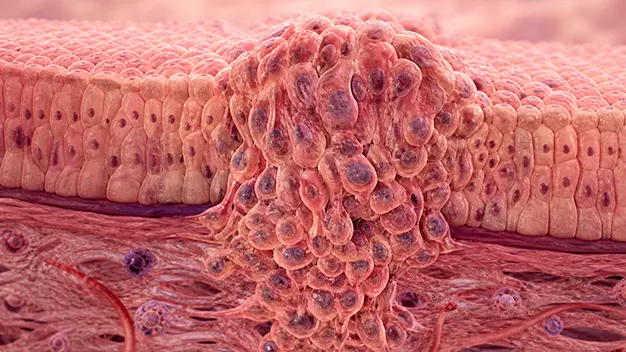
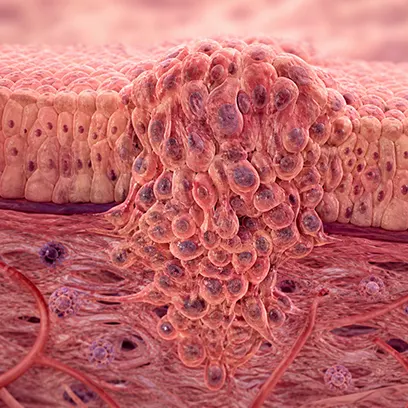
Carcinoma is the most common form of cancer, arising from epithelial tissues that cover the body’s surface and line internal organs. It accounts for the majority of cancer cases and can develop in various organs such as the skin, lungs, breast, and digestive system. Major types include adenocarcinoma, squamous cell carcinoma, basal cell carcinoma, and transitional cell carcinoma, each differing in origin, behavior, and affected sites.
What is Carcinoma?
Carcinoma is a cancer that begins in the epithelial tissues, the tissue that covers the outside of the body such as skin, the tissue that lines and covers all the organs inside the body like the digestive system, and the tissue that covers the body cavity like abdominal cavity, or chest cavity, etc. Carcinoma is the most common type of cancer that covers approximately 80 % of cancer in the US.
Types of Carcinomas
- Adenocarcinoma
- Squamous cell carcinoma
- Basal cell carcinoma
- Transitional cell carcinoma
1. Adenocarcinoma
What is Adenocarcinoma?
It is a type of carcinoma that affects the glands that line the organs. Adenocarcinoma starts in the glandular cells which are known as adenomatous cells. The glandular cells, when healthy, produce the mucous, digestive juices, or fluids to keep the tissue moist.
When the cells of these tissues grow uncontrollably it results in tumors. Some of these tumors remain non-cancerous i.e., benign, which is known as adenoma when these tumors of the glandular cells become cancerous, they are known as adenocarcinoma.
Approximately all prostate cancers are adenocarcinoma, 96 % of colorectal cancer, 40 % of non-small lung cancer, 95 % of pancreatic cancer and most of the breast cancer are adenocarcinoma. The main cause of adenocarcinoma is smoking, previous radiation therapy, exposure to toxins, etc.
Sites Affected by Adenocarcinoma
Sites that are commonly affected by the adeno carcinoma are as follows:
- Prostrate
- Breast
- Pancreas
- Lung
- Stomach
- Colon
- Rectum
- Esophagus
Common Symptoms of Adenocarcinoma
The symptoms of adenocarcinoma depend on the part which is involved. So here we will discuss a few symptoms that are involved in adenocarcinoma according to the site involved.
Common Symptoms of Breast Adenocarcinoma
Mostly the breast cancer symptoms start after the early diagnosis made by the mammogram. But here we mention some early symptoms of Breast adenocarcinoma that can be treated as a warning sign.
- Red or flaky skin of the breast.
- Swelling in the breast.
- Fluid with blood coming from the nipple.
- Uneven skin of the breast.
- Dimpled skin of the breast.
- Change in size and shape of the breast.
These can be the warning signs of breast adenocarcinoma. So, it is better to consult your health provider and take further tests before reaching any conclusion.
Common Symptoms of Prostate Adenocarcinoma
Early symptoms are hardly seen in the case of prostate cancer but in the advanced stages the symptoms may be seen. Here are a few symptoms that can be seen in the advanced stages of prostate cancer:
- A frequent urge to go to the pee (micturition)
- Blood in the pee (micturition)
- Erectile dysfunction
Common Symptoms of Colon/Colo-Rectal Adenocarcinoma
If the tumor of the colon and rectum has not grown enough, it is hard to see any symptoms. In a few cases, blood in the feces (poop) can be seen but sometimes the amount is so small that it can be hardly seen. The other symptoms that should be taken into account are as follows:
- Diarrhea
- Constipation
- Abdominal pain
- Unexplained weight loss
- Gas/bloating
Common Symptoms of Pancreatic Adenocarcinoma
The symptoms of pancreatic cancer are hardly seen until the late stages. The first symptom or warning sign that can be seen in pancreatic cancer is weight loss and stomach pain. Other symptoms that can be seen in the pancreatic adenocarcinoma are as follows:
- Nausea
- Loss of appetite
- Vomiting
- Heartburn
- Back pain
- Floating of the poop (feces)
- Feeling bloated
Common Symptoms of Esophageal Adenocarcinoma
The symptoms that can be seen in esophageal adenocarcinoma are as follows:
- Burning sensation in the chest
- Pain in the chest
- Pressure in the chest
- Coughing
- Hoarseness
- Difficulty in swallowing
- Heartburn
- Indigestion
Common Symptoms of Lung Adenocarcinoma
In lung adenocarcinoma, the first early symptom that can be seen is a chronic cough. In cough or saliva, there may be a small amount of blood mixed in it. The other symptoms that can be seen are as follows:
- Chest pain
- Wheezing sound
- Loss of appetite
- Weight loss
- Difficulty in breathing
- Hoarseness
Common Symptoms of Stomach Adenocarcinoma
The symptoms that can be seen in adenocarcinoma are as follows:
- Bloating
- Nausea
- Difficulty in swallowing
- Feeling full after eating a small amount of food that is early satiety
- Stomach pain
- Indigestion

Dr. Sahil Gupta utilizes carefully formulated Ayurvedic herbal combinations, selected based on classical principles and clinical experience, to support patients in the management of carcinoma.
This approach aims to improve overall quality of life, support metabolic balance, and complement Ayurvedic medical care where appropriate.
– Dr. Sahil Gupta (B.A.M.S., M.H.A.)
Renowned Ayurvedic Practitioner
CEO & Founder of IAFA®
2. Squamous Cell Carcinoma
What is Squamous Cell Carcinoma?
This carcinoma is related to squamous cells which are surface-covering cells that are flat. It covers the area of skin, esophagus, lining of the throat, etc. This type of carcinoma is also known as cutaneous squamous cell carcinoma. Squamous cell carcinoma is the second most common type of carcinoma of the skin. This usually occurs in the skin that is most exposed to the sun like arms, legs, and heads.
This squamous carcinoma can also occur in the inner lining of the body organs like the anus, lungs, mouth, etc. survey suggest that around 1 million people in the US every year are diagnosed with squamous cell carcinoma. The rate of squamous cell carcinoma has increased by 200 % over the last 30 years.
Types of squamous cell carcinoma are as follows:-
- Papillary squamous cell carcinoma
- Papillary thyroid carcinoma
- Pseudo glandular/ Adenoid squamous cell carcinoma
- Intraepidermal squamous cell carcinoma
- Spindle cell squamous cell carcinoma
- Lymphoepithelial carcinoma
- Small cell keratinizing squamous cell carcinoma
- Verrucous squamous cell carcinoma
- Large cell keratinizing squamous cell carcinoma
- Large cell nonkeratinizing squamous cell carcinoma
Based on how much and where the squamous carcinoma is involved in the body it is of two types:-
- Cutaneous squamous cell carcinoma
- Metastatic squamous cell carcinoma
1. Cutaneous squamous cell carcinoma: The carcinoma that only spreads beyond the top layer of the skin or only affects the top layer of the skin is known as cutaneous squamous cell carcinoma.
2. Metastatic squamous cell carcinoma: This type of squamous cell carcinoma can spread to other parts of the body beyond the skin.
Who is at High Risk of Having Squamous Cell Carcinoma?
- People aged more than 65
- A patient who receives an organ transplant
- People with weak immune system
- Long-term exposure to skin
- Young age skin damage
- Exposure to chemicals like arsenic, cigarettes, etc.
- People with blue and green eyes
- People with red or blonde hair
- People with pale complexion
Sites Affected by Squamous Cell Carcinoma
- Mouth
- Tongue
- Throat
- Skin
- Hand
- Arms
- Legs
- Anal cavity
- Face
- Lips
- Nose
- Scalp
- Ears
- eyelids
What is the Role of the p53 genes in Squamous Cell Carcinoma?
The p53 genes in our body instruct the cells to replicate, divide and replace when they reach the end of their life span. The p53 is the tumor-suppressing gene, it controls the cell and decides how much the cell has to divide, replicate, or replace.
In squamous cell carcinoma, a mutation to the p53 genes occurs which means no one in the body instructs the cell to which extent they should divide and replicate which results in uncontrollable growth of the cancerous cells.
Signs and Symptoms of the Squamous Cell Carcinoma
- Growth is formed in the skin that is higher than the skin but has depression in the middle.
- The growth or bump on the skin gives a rough feeling.
- A sore and wound formation that can not heal and if heals then again reoccur.
- Red, scaly flat area on the skin that is about 2.5 cm in size.
Stages of Squamous Cell Carcinoma
- Stage 0 – Stage 0 is known as the squamous cell carcinoma in situ i.e. also known as Bowen disease. In this stage, carcinoma occurs only in the top layer of the skin.
- Stage 1 – In stage 1, the carcinoma occurs in the top layer and also in the middle layer of the skin i.e., the epidermis and dermis.
- Stage 2 – In stage 2, the carcinoma spreads from the top and middle layer of the skin to the deeper layers of the skin i.e. epidermis, dermis, subcutis, and targeted nerves.
- Stage 3 – In stage 3, carcinoma spreads to the lymph nodes.
- Stage 4 – In stage 4, carcinoma spreads to the organs of the body like the Brain, lungs, liver, etc.
3. Basal Cell Carcinoma
What is Basal Cell Carcinoma?
Basal cell carcinoma is the most common type of carcinoma. In the US approximately 4 million cases of basal cell carcinoma increase every year. The deepest layer of the epidermis or the lower part of the epidermis is known as the basal cells and the carcinoma that starts in the basal cell is known as basal cell carcinoma. In this carcinoma, a scaly flat patch or small shiny bump is formed on the skin that grows slowly with time.
Basal cell carcinoma affects men more than women. People with age more than 50 years old have more chances to be affected by this type of carcinoma. Fair skin people and light-eyed people have more chances of developing cancer. A biopsy is needed to confirm the cases of basal cell carcinoma.
Types of Basal Cell Carcinoma
Mainly three types of basal cell carcinoma are mentioned that is nodular, superficial, and infiltrative basal cell carcinoma. There is another rare type of basal cell carcinoma i.e., pigmented carcinoma.
Nodular basal cell carcinoma – Nodular basal cell carcinoma is the most common type of carcinoma i.e., about 60-80 % of basal cell carcinoma in which the round bump is formed with visible blood vessels surrounding it.
Superficial basal cell carcinoma – In this type of basal cell carcinoma small lesions are formed that are slightly lighter in color than the normal color of the skin. This type of carcinoma is formed in the legs, arms, and trunk. This carcinoma comprises 10- 30 % of basal cell carcinoma.
Infiltrative basal cell carcinoma – In this type of carcinoma thin small clusters are formed which are difficult to spot. This type has a nest-like configuration due to a thin bundle of basaloids formed between the collagenous fiber on the dermis.
Pigmented basal cell carcinoma – This is a rare type of basal cell carcinoma. This type of hyperpigmentation occurs when skin color becomes darker than the surrounding skin color.
Signs and Symptoms of Basal Cell Carcinoma
- Scaly lesions are formed on the skin.
- Painful and itchy lesions are formed on the skin.
- Shiny lumps can be formed in the skin along with visible blood vessels.
Sites Affected by Basal Cell Carcinoma
- Legs
- Nose
- Scalp
- Face
- Eyelids
- Arms
- Ears



Committed to Holistic Healing through Alternative Medicine Since 2008
At Last, Easier Carcinoma Management

Trusted by
More than 90,000 Patients

Convenient
at-Home Treatments

9.2 / 10
Customer Satisfaction Score
4. Transitional Cell Carcinoma
What is Transitional Cell Carcinoma?
The cells that stretch with the expansion of the organ are known as transitional cells. These cells form transitional epithelium. Carcinoma that starts in the transitional cells is known as transitional cell carcinoma. Urothelial carcinoma is a transitional carcinoma that starts in the bladder and this accounts for approximately 90 % of bladder cancer.
It also contributes to the 7 % of the cancer of the kidney. Transitional carcinoma or urothelial carcinoma is the sixth most common carcinoma in the US. Males are more likely to develop transitional carcinoma than females.
Grades of the Transitional Cell Carcinoma
- High-grade urothelial / transitional cell carcinoma
- Low-grade urothelial / transitional cell carcinoma
High-grade urothelial / transitional cell carcinoma: It is a life-threatening carcinoma that spreads into the muscle layer of the bladder and it also spreads into lymph nodes and other parts of the body.
Low-grade urothelial / transitional cell carcinoma: This type is not life-threatening as it rarely spreads in the muscle layer of the bladder and other parts of the body.
Signs and Symptoms of Transitional Cell Carcinoma
- Unexplained weight loss
- Low-grade fever
- Persistent back pain
- Tiredness
- Dysuria i.e painful micturition
- Mass or lump formation in the kidney
Stages of Transitional Cell Carcinoma
Stage 1: In stage 1 the carcinoma has not invaded the muscle layer of the bladder; it is only confined to the connective tissue or the lining of the bladder.
Stage 2: In this stage of transitional cell carcinoma, it spreads to the muscle layer of the bladder.
Stage 3: In this stage of squamous cell carcinoma, it spreads to the fatty tissues that are outside the muscle layer of the bladder.
Stage 4: In this stage of squamous cell carcinoma, it spreads to the lymph nodes, bones, and other organs of the body.
Some others categorized the transitional cell carcinoma into invasive, non-muscle invasive, and muscle-invasive.
- Also Read:- Ayurvedic Treatment for Cancer
Seek Expert Advice
Carcinoma is a broad group of cancers that originate in the epithelial tissues and can affect multiple organs in the body. Its different types vary in their causes, progression, and symptoms, but early detection and proper management play a crucial role in improving outcomes. Understanding the warning signs and risk factors can help in timely diagnosis and treatment.
Take the first step towards better health, consult Dr. Sahil Gupta and his expert team today, and discover the power of Ayurveda healing in your fight against Carcinoma. Book Appointment Now!!!
Frequently Asked Questions
Q1. What are the Early Signs and Symptoms of Carcinoma?
Ans. Early symptoms vary by type but may include unusual lumps, persistent cough, unexplained weight loss, skin changes, or abnormal bleeding. Detecting these signs early can improve treatment outcomes.
Q2. What is the Most Common Type of Carcinoma?
Ans. Adenocarcinoma is the most common type, affecting organs like the breast, lungs, prostate, and colon. It develops in glandular tissues responsible for producing fluids.
Q3. What are the Main Causes and Risk Factors of Carcinoma?
Ans. Common causes include smoking, exposure to harmful chemicals, radiation, genetic factors, and unhealthy lifestyle habits. Long-term sun exposure also increases skin carcinoma risk.
Q4. Can Carcinoma be Cured with Early Diagnosis?
Ans. Yes, many types of carcinoma can be effectively treated or even cured if detected early. Timely diagnosis allows for better treatment options and improved survival rates.
Q5. How can Ayurveda help in Managing Carcinoma Naturally?
Ans. Ayurveda focuses on boosting immunity, detoxifying the body, and improving overall well-being through herbal remedies, diet, and lifestyle changes.


Was this Page Helpful?
IAFA’s Root-Cause Management for Carcinoma is Just 3 Steps Away!

01. Connect With Us
Share Your History of Illness or Book Your Appointment.

02. Consult With Us
Dr. Gupta A Certified Ayurvedic Practitioner.

03. Root Cause Management
Get An Accurate Diagnosis, Medicine, Diet & Lifestyle Guidance.
Real Case Studies – Successfully Treated Patients
Real Case Studies of Successfully Treated Patients from All Around the World by IAFA Ayurveda®
-

32-Year-Old Female Patient Recovered from Chronic Urticaria and Leaky Gut Syndrome – A Case Study
This case study highlights the successful Ayurvedic treatment of chronic urticaria associated…
-
5-Year-Old Shih Apso Dog Recovered from Canine Peripheral Neuropathy – A Case Study
This case study presents a 5-year-old Shih Tzu-Lhasa Apso crossbreed dog (pet)…
-
9 Year Old Female Patient Recovered from Chronic Allergic Bronchitis – A Case Study
This case study presents a 9-year-old female patient who has successfully recovered…
-
12-Year-Old Child Recovered from Solar Urticaria (Chronic Sun-Sensitivity) – A Sun Allergy Case Study
This is a case study of a 12-year-old child who has successfully…




Read More Articles
-

Spinal Cord and Brain Cancer
Learn about spinal cord and brain cancer, including common tumor types, symptoms,…
-
-