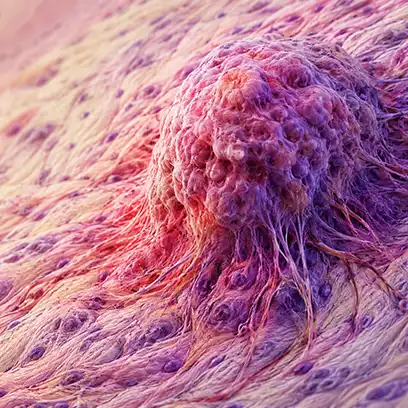
Sarcoma: Types, Symptoms & Ayurvedic Treatment Guide
Sarcoma is a rare but serious form of cancer that develops in bones and soft tissues. Learn about its types, causes, symptoms, and explore supportive Ayurvedic treatment approaches for better care and management.
On This Page


-
 381
381
 381
381
 Share
ShareSummarise this article using AI




Overview
Sarcoma is a rare but serious type of cancer that develops in the body’s connective tissues, including bones, muscles, fat, cartilage, and blood vessels. Unlike more common cancers that originate in organs, sarcomas can arise in various parts of the body such as the limbs, chest, abdomen, head, and neck.
Although it accounts for only about 1% of adult cancers, it represents a significant portion of childhood cancers. Sarcomas are broadly classified into two main types: bone sarcomas and soft tissue sarcomas, each with multiple subtypes like osteosarcoma, chondrosarcoma, and Ewing’s sarcoma. Early detection and awareness of symptoms such as persistent pain, swelling, or unusual lumps are crucial for effective treatment and improved outcomes.
What is Sarcoma?
Sarcoma is a malignant tumor that develops in the soft tissues and the bones. It is a rare type of carcinoma that contributes to 15 % of childhood cancer and 1 % of adult cancer. Approximately 16000 cases of sarcomas are diagnosed in the US every year out of which 13000 are soft tissue sarcomas and 4000 are bone sarcomas. Both children and adults are affected by sarcoma. It occurs more often in children and in adults that are above 65 years. Men who are black or Hispanic are more frequently affected by sarcoma.
Sites Affected by Sarcoma
In lower extremities – 40 % of the sarcoma occurs in the lower extremities i.e. ankles, feet, and legs.
In upper extremities – 15 % of the sarcoma occurs in the upper extremities i.e. arms, wrist, hand, shoulders, etc.
In trunk / chest / pelvis / abdomen – 30 % of the cases occur in the trunk, chest, abdomen, and pelvis.
In the head and neck – 15 % of cases occur in the neck and head.

Dr. Sahil Gupta utilizes carefully formulated Ayurvedic herbal combinations, selected based on classical principles and clinical experience, to support patients in the management of Sarcoma.
This approach aims to improve overall quality of life, support metabolic balance, and complement Ayurvedic medical care where appropriate.
– Dr. Sahil Gupta (B.A.M.S., M.H.A.)
Renowned Ayurvedic Practitioner
CEO & Founder of IAFA®
Types of the Sarcoma
The most common types of sarcomas are:
- Bone sarcoma
- Soft tissue sarcoma
What is Bone Sarcoma?
It is the primary type of sarcoma that develops in the bone. 1/ 3rd of the cases of bone sarcoma occur in people that are younger than 35 years old. Most bone sarcoma is diagnosed in children.
Types of the bone sarcoma are as follows:
- Osteosarcoma
- Chondrosarcoma
- Chordoma
- Ewing’s sarcoma
- Fibrosarcoma
What is Osteosarcoma?
Osteosarcoma is the most common type of bone sarcoma that develops in the cells where the new bone tissues are formed. Osteosarcoma can occur in any bone, but it usually starts in the large bones such as legs and arms. Osteosarcoma is commonly diagnosed in teenagers and children.
Most Affected areas by osteosarcoma are:
- Upper arm bone (humerus) near your shoulder
- The thigh bone (femur) near your knee
- Shinbone (tibia) near your knee
- Organs and soft tissues in the chest and abdomen, but are affected rarely.
Types of Osteosarcomas
There are nine types of high-grade osteosarcoma:
- Fibroblastic osteosarcoma
- Pagetoid osteosarcoma
- Osteoblastic osteosarcoma
- Chondroblastic osteosarcoma
- Small cell osteosarcoma
- Post-radiation osteosarcoma High-grade surface (juxtacortical high-grade) osteosarcoma
- Telangiectatic osteosarcoma
- High-grade surface (juxtacortical high-grade) osteosarcoma
- Extraskeletal osteosarcoma
There is one type of mediate-grade osteosarcoma:
- Periosteal (juxtacortical immediate grade)
There are two types of low-grade osteosarcoma:
- Paro steal (juxtacortical low grade).
- Intramedullary or intraosseous well-differentiated (low-grade central).
Causes of Osteosarcoma
- Exposure to radiation
- Rapid bone growth
- Bone infarction
- Genetic factors
Symptoms of Osteosarcoma
- Redness and swelling at the site of the tumor.
- Limited movement of the joints
- Mass or lump that is warm.
- Bone tenderness and pain
- Unexplained fever
- The pain increased with lifting weights.
- Bone may break with the simple movement.
What is Chondrosarcoma?
Movements between the bones and joint occur due to soft connective tissue i.e., known as cartilage and the sarcoma that starts in this cartilage is known as chondrosarcoma. Chondrosarcoma occurs more frequently in adults than in younger people and the main parts affected by this sarcoma are the pelvis bone, leg, and arms. Rarely this sarcoma can occur in the spine bone.
Symptoms of Chondrosarcoma
- Area of swelling and growing lump in the affected region
- Increased pain
- Weakness
- Bladder control problem
- Bowel control problem
What is Chordoma?
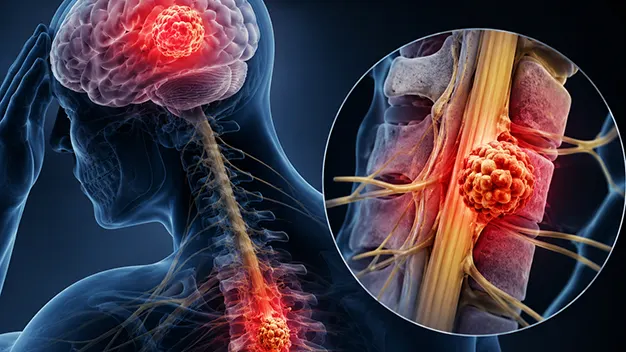
This type of sarcoma mainly affects older adults. Only 5 % of children are affected by this type of sarcoma. Chordoma is a rare type of sarcoma that mainly affects the base of the skull or the base of the spine. Chordoma has various subtypes, and all the subtypes are cancerous i.e., malignant. Approximately 35 % of Chordoma occurs in the base of the spine mainly in the sacrum and 35 % occurs where the spine meets the skull this type of chordoma is also known as clivus chordoma because the clivus bone is mainly involved in it. 30 % of the chordoma occurs in the mobile spine mainly in the second cervical vertebrae. It also affects the lumbar and thoracic spine. In advanced stages, chordoma spreads to nearby lymph nodes, skin, lungs, and other bones.
Types of Chordoma
- Conventional or classic chordoma: Classic chordoma is 80- 90 % of all the Chordoma cases that occur throughout the world. In this type of chordoma, the cells that are involved look bubbly in appearance. This type of chordoma affects mainly the base of the skull.
- Dedifferentiated chordoma: This type of chordoma is faster and more aggressive than conventional chordoma but its cases are less than 5 % cases throughout the world. It is a rare type of chordoma in which a mixture of abnormal cells are involved.
- Poorly differentiated chordoma: Poorly differentiated chordoma is very rare. In medical literature, only 60 cases of this type of chordoma are recorded. INI 1, SAMARCB 1 gene deletion results in this type of rare sarcoma type. Young adults and children are mainly affected by this type of poorly differentiated chordoma.
Causes of Chordoma
Recent research revealed that the duplication or changes in the TBXT genes may be the cause of the chordoma. Changes in the TBXT genes trigger the growth of the abnormal cell which results in chordoma.
Symptoms of the Chordoma
When chordoma grows it puts pressure on the spinal cord which results in various symptoms in the patient. Here is the list of the symptoms:
- Numbness and weakness in the back
- Numbness and weakness in the arms, legs
- Pain in the back, arms, legs
- Headache
- Blurry vision
- Double vision
- Facial pain and numbness
If chordoma occurs in the coccyx i.e., the tail bone then the symptoms are as follows:
- Abnormal bladder and bowel function
- Lower back numbness and pain
- Lump feel through your skin
What is Ewing Sarcoma?
Ewing’s sarcoma is named after the doctor who described this sarcoma the first time. Most commonly Ewing’ sarcoma occurs in bones and soft tissues and commonly occurs in the shoulder blades, hips, and ribs. Ewing sarcoma is very rare. Sarcoma mainly occurs in teenagers and children, but it also occurs at any age.
Cause of Ewing gene
Change in the gene EWSR 1 is the main cause of the Ewing gene.
Symptoms of the Ewing gene
- Unexplained tiredness
- Fever with unknown reason
- Unexplained weight loss
- Tenderness, swelling, and pain in the affected area
- Pain in bone
What is Fibrosarcoma?
Fibrosarcoma is the soft tissue sarcoma, and it is also rare like Ewing sarcoma. Soft tissues that keep our body together are known as fibrous tissue and the sarcoma that occurs in fibrous tissue is known as fibrosarcoma. The adults between 20- 60 are more often affected by fibro sarcoma and the men are more commonly affected by fibro sarcoma than women. The parts that are mainly affected by the fibrosarcoma are the knees, arms, thighs, and trunk.
Causes of Fibrosarcoma
- Werner syndrome
- Retino blastoma
- Nevoid basal cell carcinoma syndrome
- Tuberous sclerosis
- Familial adenomatous polyposis
- Neurofibromatosis type- 1
- Previous radiation therapy
- Lymphedema
Symptoms of Fibrosarcoma
- A pinched nerve (sharp, aching, or burning pain) due to nerve compression.
- Unexplained weight loss
- A soft lump that is painful
- Unusual swelling
There are approximately 70 different sub-types of sarcomas. The most common sub-types of sarcoma are as follows:
- Fibro sarcoma – This is fibroblastic sarcoma that develops in fibrous tissues.
- Kaposi sarcoma – This type of sarcoma occurs in the lymphatic vessels and in the cells that line the inside of the blood cells.
- Chondrosarcoma – This type of sarcoma develops in the cartilage cells.
- Leiomyosarcoma – This type of sarcoma develops in the smooth muscles of the organs in the pelvis and abdomen.
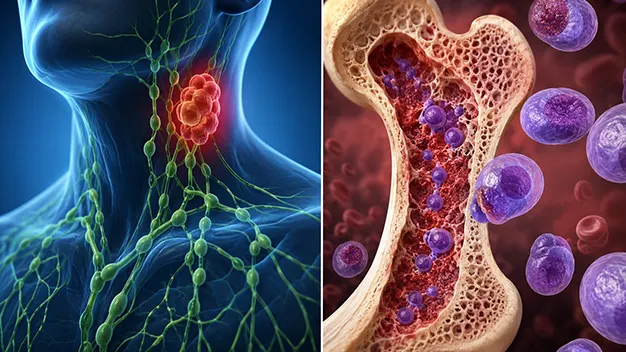
- Myeloid sarcoma – This type of blood cancer develops outside the bone marrow.
- Liposarcoma – This sarcoma develops in fatty tissues.
- Angiosarcoma – This is the type of vascular sarcoma that develops in lymphatic vessels or the walls of the blood cells.
- Clear cell sarcoma – This sarcoma develops in the deep soft tissues surrounding the tendons and muscles in the lower feet and legs.
- Ewing’s sarcoma – This sarcoma develops in the bone cells and immature soft tissue.
- Epithelioid sarcoma – This is the soft tissue sarcoma that originates under the skin of the hand, lower foot, leg, forearm, hand, etc.
- Dermatofibrosarcoma protuberans sarcoma – This sarcoma develops in the skin.
- Spindle cell sarcoma – This type of sarcoma originates in the long bones such as legs and arms.
- Synovial sarcoma – This type of sarcoma develops in the cells near the tendons and joints.
- Rhabdomyosarcoma – This sarcoma develops in the skeletal muscles.
- Also Read – Ayurvedic Treatment for Cancer



Committed to Holistic Healing through Alternative Medicine Since 2008
At Last, Easier Sarcoma Management

Trusted by
More than 90,000 Patients

Convenient
at-Home Treatments

9.2 / 10
Customer Satisfaction Score
Seek Expert Advice
Sarcoma is a complex and diverse group of cancers with over 70 subtypes, each differing in origin, behavior, and treatment approach. While rare, its impact can be severe, especially when diagnosis is delayed. Understanding the types, causes, and symptoms, such as bone pain, swelling, unexplained weight loss, or limited movement, can help in early identification. Advances in medical research, including genetic insights and targeted therapies, are improving survival rates and treatment options. Raising awareness about sarcoma is essential to ensure timely diagnosis and better prognosis for both children and adults affected by this disease.
Take the first step toward better health. Consult Dr. Sahil Gupta and his expert team today and experience the power of Ayurvedic healing in your fight against Sarcoma. Book your appointment now!
Frequently Asked Questions
Q1. What are the Early Signs of Sarcoma?
Ans. Early signs of sarcoma often include a painless lump or swelling, persistent bone pain, tenderness, or limited joint movement. As the tumor grows, symptoms like pain, fatigue, or fractures may occur.
Q2. What Causes Sarcoma Cancer?
Ans. The exact cause of sarcoma is not always known, but risk factors include genetic mutations, exposure to radiation, inherited conditions (like neurofibromatosis), and rapid bone growth in children.
Q3. Is Sarcoma Curable?
Ans. Yes, sarcoma can be curable, especially if detected early. Treatment options such as surgery, chemotherapy, radiation therapy, or targeted therapy depend on the type, stage, and location of the tumor.
Q4. Who is Most at Risk of Developing Sarcoma?
Ans. Sarcoma can affect anyone, but it is more common in children, teenagers, and adults over 65. Certain genetic conditions and prior radiation exposure also increase risk.
Q5. What is the Difference Between Bone Sarcoma and Soft Tissue Sarcoma?
Ans. Bone sarcoma originates in the bones (e.g., osteosarcoma), while soft tissue sarcoma develops in muscles, fat, nerves, or blood vessels. Both types differ in location, symptoms, and treatment strategies.
Q6. How Does Ayurvedic Treatment Support Sarcoma Management?
Ans: Ayurveda may help in sarcoma management as a supportive approach alongside modern medical treatment. It focuses on strengthening immunity, improving digestion, reducing weakness, and enhancing overall well-being. Ayurvedic therapies such as herbal medicines, Panchakarma detoxification, dietary regulation, and stress management may help reduce treatment side effects and support recovery.


Was this Page Helpful?
IAFA’s Root-Cause Management for Sarcoma is Just 3 Steps Away!

01. Connect With Us
Share Your History of Illness or Book Your Appointment.

02. Consult With Us
Dr. Gupta A Certified Ayurvedic Practitioner.

03. Root Cause Management
Get An Accurate Diagnosis, Medicine, Diet & Lifestyle Guidance.
Real Case Studies – Successfully Treated Patients
Real Case Studies of Successfully Treated Patients from All Around the World by IAFA Ayurveda®
-

32-Year-Old Female Patient Recovered from Chronic Urticaria and Leaky Gut Syndrome – A Case Study
This case study highlights the successful Ayurvedic treatment of chronic urticaria associated…
-
5-Year-Old Shih Apso Dog Recovered from Canine Peripheral Neuropathy – A Case Study
This case study presents a 5-year-old Shih Tzu-Lhasa Apso crossbreed dog (pet)…
-
9 Year Old Female Patient Recovered from Chronic Allergic Bronchitis – A Case Study
This case study presents a 9-year-old female patient who has successfully recovered…
-
12-Year-Old Child Recovered from Solar Urticaria (Chronic Sun-Sensitivity) – A Sun Allergy Case Study
This is a case study of a 12-year-old child who has successfully…



Read More Articles
-

Spinal Cord and Brain Cancer
Learn about spinal cord and brain cancer, including common tumor types, symptoms,…
-
-