

 189
189
 Share
Share



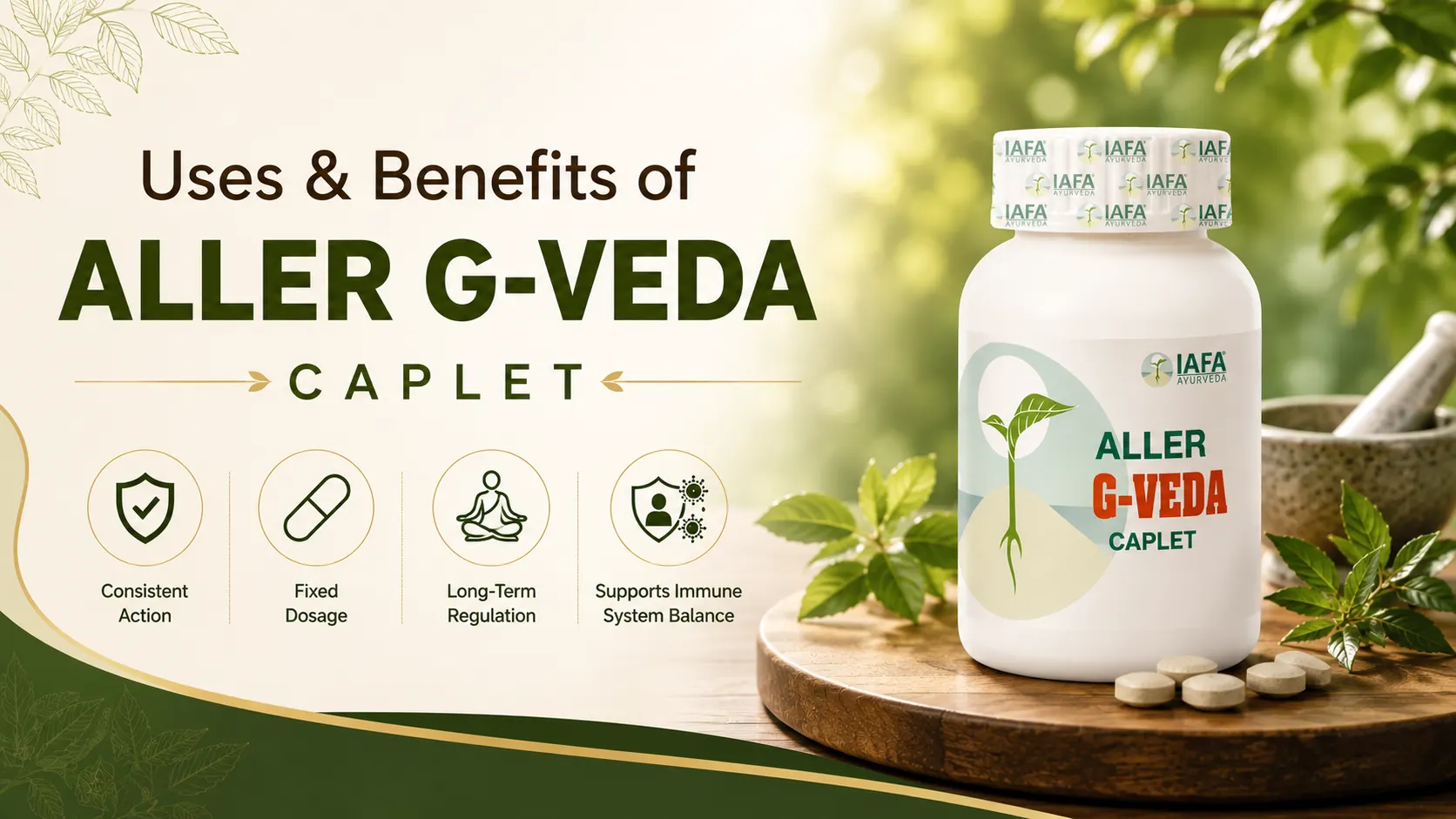
What is An Aller-G Veda Caplet?
Aller-G Veda Caplet is not about simply chasing symptoms; it is designed to support long-term regulation by helping stabilize the system that contributes to them. With consistent action, a fixed dose, and regular use, the focus is on maintaining balance and supporting the body’s natural regulatory processes over time.
Aller-G Caplet is a precision-designed Ayurvedic formulation in a modern caplet (capsule-shaped tablet) form, created for one clear purpose – to bring consistency to a system that keeps overreacting.
Allergic disorders are not random; they are patterns of repeated hypersensitivity, where the body reacts more than it should, more often than it should. Most solutions try to shut the reaction down temporarily.
Aller-G Caplet takes a different route. It works by gradually stabilizing the internal response mechanisms involved in allergies, so that the body doesn’t keep going into overdrive every time.
What Makes It Different?
- It follows the classical principle of Vati Kalpana, where therapy is delivered in a measured, repeatable, and sustainable manner.
- It is not designed for sudden, short-lived relief.
- It is built for regular use, steady action, and long-term control.
Why Does this Caplet Form Matter?
This is not just a shape change.
It’s a deliberate therapeutic choice.
Allergic disorders are not one-time events; they are repetitive, pattern-driven responses. So, the formulation must do one thing well – Delivering steadily influences over time, not short bursts of action.
That’s exactly where this caplet form becomes relevant.
1. Built on the Principle of Vati Kalpana (Consistency Over Intensity)
In Ayurveda, Vati Kalpana is chosen when the goal is: [1,8]
- Controlled dosing
- Repeated administration
- Gradual system correction
This caplet follows the same philosophy:
Instead of overwhelming the system, it nudges it back to balance dose by dose, day by day.
2. Fixed Dose (Predictable Response)
In immune-related disorders, inconsistency is the biggest problem.
- Excessive results in aggravation
- Too few results in no effect
Caplet form ensures:
- Niyat Matra (precise dosing)
- Reproducible therapeutic response
No guesswork. No variability.
3. Gradual Absorption Supports Immune Stability
“Where rapid support is needed, Swarasa responds; where stability is required, the caplet sustains.”
Different dosage forms serve different therapeutic phases. Liquid preparations like Swarasa are designed for rapid availability and quicker onset, making them highly useful when an immediate response is needed during active phases.
The caplet form, on the other hand, works in a measured and sustained manner:
- Provides steady exposure to active compounds
- Supports progressive immune regulation
- Helps maintain day-to-day stability in allergic response
This makes it especially suitable for ongoing control and recurrence prevention.
How Do They Work Together?
Rather than replacing each other, both forms are strategically complementary:
- Swarasa → supports the active phase and quicker response
- Caplet (Vati-based) → supports stability and long-term control
Together, they create a more complete and effective approach to allergy management
4. Designed for Long-Term Use (Chirakala Sevana)
- Easy to carry
- Easy to consume
- Easy to repeat daily
And that leads to the only thing that actually matters:
Consistency → which drives real results
5. Stability Preserves Therapeutic Integrity
When therapy fluctuates, results fluctuate.
When input is stable, the system stabilizes.
In long-term conditions like allergies, consistency of effect matters more than occasional intensity.
The caplet form of Aller-G Veda offers:
- Physical and chemical stability of the formulation over time
- Uniform performance across doses, without significant variation
- Reliable delivery of actives with each administration
This means the body receives the same therapeutic input every day, which is essential for:
- Gradual immune regulation
- Reduction in unpredictable responses
- Building sustained tolerance over time
“Stability in the formulation translates into stability in the response.”
6. Caplet shape is a practical advantage (Not a Marketing Gimmick)
Simple improvement, but important for adherence.
- Easier to swallow than flat tablets
- Better acceptance in daily use
Not because it is fast.
Not because it is strong.
It works because it is consistent, controlled, and sustainable.
What’s Actually Going Wrong in Allergies?
Allergy isn’t just a “reaction.” It’s a mis-calibrated defense system; the body starts treating harmless exposures as threats and repeats that mistake over and over.

Have A Health Issue?
Consult Online
- Vaidya Sahil Gupta (B.A.M.S., M.H.A.)
Ayurvedic Allergy Specialist
CEO & Founder of IAFA®
Where the System Goes Off Track?
1. Skewed Immune Programming (Th2 Bias)[2]
The immune system shifts toward a Th2-dominant response, favoring allergic-type responses instead of balanced defense. The body becomes predisposed to overreact even to non-harmful substances.
2. Allergen Sensitization and IgE Loop[3]
With repeated exposure, the body produces allergen-specific IgE antibodies.
- IgE attaches to mast cells.
- On re-exposure, rapid activation occurs.
This creates a self-reinforcing loop of hypersensitivity.
3. Mast Cell Hyper-Reactivity [4]
Mast cells become trigger-happy:
- Release histamine and other inflammatory mediators too easily
- React faster and more intensely than normal
Leads to immediate symptoms like sneezing, itching, swelling, etc.
4. Persistent Low-Grade Inflammation[5]
Even between episodes, the system remains in a subclinical inflammatory state:
- Cytokines (like IL-4, IL-5, IL-13) remain elevated
- Tissues remain sensitive and reactive
This is why allergies keep coming back
5. Barrier Dysfunction (Gut–Skin–Airway Axis)[6]
Protective barriers lose integrity:
- Gut lining becomes more permeable
- The airway mucosa becomes hypersensitive
- Skin reacts more easily
Enhanced allergen entry leads to repeated reactions.
Call +91 961-218-0000 to Enquire More About this Product.
Ayurvedic Perspective: The Deeper Functional Imbalance[7,8]
Ayurveda doesn’t see allergy as a single entity, but as the outcome of a multilayered internal imbalance.
1. Agni Vaishamya (Disturbed Metabolic Function)
Improper digestion and metabolism lead to incomplete processing of food and environmental exposures.
2. Ama Formation (Unprocessed Toxic Load)
This metabolic residue (Ama):
- Circulates within the system
- Acts as an internal trigger
Makes the body more reactive than it should be.
3. Asatmya (Loss of Adaptation/Tolerance)
The body loses its ability to accept or adapt to certain substances. Even normal exposures become intolerable.
4. Dosha Involvement (Kapha–Pitta Axis)
- Kapha results in mucus accumulation, congestion, and heaviness
- Pitta results in inflammation, redness, and irritation
Together, they create a hyper-reactive physiological state.
5. Srotas Dysfunction (Body Channel Disturbance)
Especially:
- Pranavaha Srotas (respiratory pathways)
- Rasavaha Srotas (nutritive circulation)
Leads to blocked, sensitive, and reactive channels
Ingredients of Aller-G Veda Caplet
Aller-G Veda Caplet combines the power of 8 carefully selected herbs to provide multi-layered support against allergic responses. Each herb is chosen to target a specific stage of the allergy cycle, helping address factors such as airway reactivity and immune imbalance. Together, these herbal ingredients work across multiple pathways to support respiratory comfort and help maintain a balanced immune response.
1. Bharangi (Clerodendrum serratum) – The Respiratory Regulator [9,10]
When allergic reactions repeatedly affect the airways, Bharangi helps restore functional balance.
Ayurvedic View:
- Katu–Tikta Rasa, Ushna Virya results in Kapha-Vata Shamana
- Indicated in Shwasa, Kasa, etc.
- Acts on Pranavaha Strotas, reducing Kapha-induced obstruction
Modern Correlation:
- Bronchodilator and anti-inflammatory activity
- Helps reduce airway resistance and mucus load
- Useful in chronic respiratory hypersensitivity
Opens the airways and reduces the root of respiratory reactivity
2. Kalonji (Nigella sativa) – The Immune Modulator [11,12]
At the core of allergy lies immune overreaction; Kalonji helps regulate this imbalance.
Ayurvedic View:
- Katu–Tikta Rasa results in Kapha-Vata Shamana
- Deepana–Pachana → Corrects Agni, reduces Ama
Modern Correlation:
- Thymoquinone-mediated immunomodulation
- Downregulation of pro-inflammatory cytokines and allergic mediators
Brings an overactive immune system back toward balance.
3. Haldi/ Haridra (Curcuma longa) – The Inflammation Controller [13,14]
Persistent inflammation is what sustains allergic disorders; Haldi helps break this cycle.
Ayurvedic View:
- Tikta-Katu Rasa results in Kapha-Pitta Shamana
- Raktashodhaka, Kusthaghna
Modern Correlation:
- Curcumin inhibits the NF-κB pathway and exhibits anti-inflammatory activity.
- Reduces cytokines like TNF-α, IL-6
- Supports tissue repair and healing
Reduces the inflammatory background that fuels allergies
4. Neem (Azadirachta indica) – The Detoxifier and Skin Protector [15,16]
When allergies manifest through skin and blood involvement, Neem plays a central role.
Ayurvedic View:
- Tikta Rasa results in Pitta–Kapha Shamana
- Acts as Raktaprasadaka and Vishaghna
Modern Correlation:
- Anti-inflammatory and immunomodulatory effects
- Help reduce skin inflammation and oxidative stress
5. Tulsi (Ocimum sanctum) – The Reactive Symptom Stabilizer [17,18]
In conditions where symptoms appear quickly, Tulsi helps control immediate responses.
Ayurvedic View:
- Katu–Tikta Rasa exhibits Kapha–Vata Shamana properties
- Ushna Virya helps in clearing the obstruction
- Shwasa-Kasa Hara
Modern Correlation:
- Anti-allergic, anti-inflammatory, and adaptogenic activity
- Modulates the stress-immune axis
Stabilizes acute symptoms and supports, strengthening the respiratory defense
6. Onion Extract (Allium cepa) – The Histamine Response Modulator [19]
Allergic symptoms are largely driven by histamine release; this is where onion extract acts.
Ayurvedic View:
- Plandu (onion) helps in Kapha Vilayana, i.e., reduce mucus stagnation.
- Prevent excessive dryness with its Snigdha Guna.
- Acts as a supportive Rasa Dhatu Stabilizer.
Modern Correlation:
- Rich in quercetin, it helps modulate histamine-related responses
- Reduces sneezing, irritation, and nasal discharge
- Supports acute symptom control
Targets the biochemical triggers behind allergic symptoms
7. Bichoo Buti (Urtica dioica) – The Hypersensitivity Regulator [20,21]
Traditionally recognized for its role in allergic conditions, it works on reducing reactivity.
Ayurvedic View:
- Bichubuti helps in Kapha Shamana, reducing excessive secretion.
- It’s Ushana Virya that facilitates Strotoshodhana, reducing obstruction.
- Acts at the level of Rasa-Rakta Dushti, helping in hypersensitive skin and respiratory issues.
Modern Correlation:
- Anti-allergic activity specifically in allergic rhinitis.
- It inhibits the pathway involved in mast cell activation.
- Shows a reduction in symptoms like sneezing, nasal congestion, and itching.
8. Kikar Gond (Acacia arabica) – The Supportive Stabilizer [22]
Often overlooked, but essential for structural and functional support within the formulation.
Ayurvedic View:
- Kashaya Rasa → Kapha-Pitta Shamana
- Sandhankara (binding and stabilizing)
Modern Correlation:
- Supports mucosal integrity
- Provides formulation stability
- Assists in the smooth delivery of active ingredients
Supports the system while enhancing formulation integrity.
Combined Effect of All Herbs: Multi-Level Control of Allergic Response
“A multi-herb system where each active compound targets a different step of the allergic cascade, together shifting the body from hypersensitivity to controlled response.“
Aller-G Caplet is not a random combination of herbs. It is a functionally layered formulation, where each ingredient contributes to a specific stage of the allergic process.
How the Combination of Herbs Works As A System?
1. Regulates Immune Over-Reactivity
( • Kalonji-Thymoquinone • Bichoo Buti-Polyphenols, Lectins)
Help normalize exaggerated immune responses and reduce hypersensitivity tendency.
2. Controls Inflammatory Cascade
( • Haldi-Curcumin • Neem-Nimbidin, Azadirachtin)
Reduces chronic inflammatory signaling and tissue irritation.
3. Modulates Histamine Response
( • Onion Extract – Quercetin • Bichoo Buti – Histamine Receptor Modulators)
Helps control mediator-driven symptoms like sneezing, itching, and irritation.
4. Supports Respiratory Function
( • Bharangi – Diterpenoids • Tulsi – Eugenol, Rosmarinic acid)
Reduces Kapha accumulation, airway sensitivity, and breathing discomfort.
5. Improves Mucosal and Tissue Stability
( • Neem – Flavonoids • Kikar Gond – Polysaccharides)
Supports barrier integrity of gut, skin, and respiratory pathways.
6. Reduces Ama and Internal Triggers
( • Kalonji – Nigellone, Thymoquinone • Haldi – Curcuminoids, Curcumin)
Supports metabolic correction and reduces internal sensitizing factors.
7. Enhances System Tolerance (Vyadhikshamatva)
( • Tulsi – Eugenol, Rosmarinic acid • Kalonji – Thymoquinone)
Improves the body’s ability to handle allergens without overreacting.
8. Prevents Recurrence Pattern
(Synergistic multi-herb action)
Help break the cycle of repeated allergic flare-ups over time.
Final Outcome
Through this multi-layered action, the formulation:
- Reduces hypersensitivity at its root
- Controls inflammation and mediator release
- Improves respiratory and tissue resilience
- Decreases frequency and intensity of reactions
- Supports long-term immune balance
“Aller G-Veda Caplet is not a single-action formula, but a coordinated system designed to regulate, calm, and stabilize allergic response at every level.”
Benefits of Aller G-Veda Caplet – Therapeutic Indications
Indicated in allergic conditions characterized by recurrent hypersensitivity, inflammatory reactivity, and multi-system involvement, Aller-G Veda Caplet is designed for structured, long-term management of allergic disorders where regular control and stabilization are required rather than immediate symptomatic relief.
Upper and Lower Respiratory Hypersensitivity
- Recurrent nasal irritation and blockage
- Frequent sneezing episodes
- Seasonal respiratory sensitivity
- Chronic sinus congestion patterns
- Supportive role in airway hyper-responsiveness
TARGET: Regulation of airway reactivity and reduction of recurring Kapha-driven obstruction
Cutaneous Reactivity and Sensitivity
- Episodic itching and wheal formation
- Redness and irritation triggered by external factors
- Hypersensitive skin response patterns
- Recurrent, non-infective skin flare-ups
TARGET: Control of reactive skin pathways and stabilization of tissue response
Gastro-Immune Linked Sensitivity
- Food-triggered discomfort or reactivity
- Post-meal hypersensitivity patterns
- Variable tolerance to commonly consumed foods
TARGET: Correction of metabolic triggers and reduction of internally driven sensitivity
Environmental and Exposure-Related Reactivity
- Sensitivity to dust, climate variation, or pollutants
- Reaction to strong odors, smoke, or chemical exposure
- Occupational exposure-related hypersensitivity
TARGET: Improving adaptability and reducing exaggerated response to external stimuli
Recurrent Hypersensitivity Profile
- Repeated flare-ups with identifiable or unknown triggers
- Fluctuating symptom patterns across systems
- Long-standing tendency toward allergic reactions
TARGET: Breaking the recurrence cycle and supporting system-level stability
Clinical Use
- Suitable for long-term control in allergic disorders
- Appropriate for patients with frequent relapse patterns
- Can be used as baseline support in multi-system allergies
- Complements faster-acting interventions where required
- Can be used as supportive therapy in chronic or complex cases
List of Recommended Allergic Conditions
Where Aller-G Caplet can be considered for supportive management.
Respiratory Allergies
- Allergic Rhinitis
- Recurrent Sneezing Syndrome
- Nasal Congestion and Blockage
- Sinus Sensitivity / Chronic Sinusitis
- Dust and Pollen Allergy
- Seasonal Respiratory Allergies
- Mild Airway Hyper-Responsiveness (supportive in asthma)
Skin Allergies
- Urticaria (Hives)
- Allergic Dermatitis
- Itching (Kandu) of allergic origin
- Recurrent Skin Rashes
- Mild Eczema
- Insect Bite Hypersensitivity
Food and Gut-Related Allergies
- Food Intolerance (Ahara Asatmya)
- Food-triggered Skin or Respiratory Reactions
- Gut-associated Hypersensitivity
- Post-meal Allergic Discomfort
Environmental Allergies
- Dust Sensitivity
- Pollution-related Allergies
- Smoke Exposure Reactions
- Chemical/Odor Sensitivity
- Climate/Season Change Allergy
Chronic and Recurrent Allergy Patterns
- Repeated seasonal allergies
- Multi-trigger hypersensitivity
- Elevated allergic tendency (frequent flare-ups)
- Mixed allergy presentation (where skin, respiratory system, and gut are involved)
Acute Vs Maintenance Allergy Management
“Manage the flare with speed, stabilize the system with consistency. This is where phase-based therapy makes the difference.”
| Phase | Clinical State | What the Body is Experiencing | Therapeutic Requirement | Preferred Approach |
| Acute Phase | Active flare-up with prominent symptoms | Intense immune activation, histamine release, airway/skin irritation | Rapid symptom control and quick response modulation | Aller-G Veda Swarasa (fast-acting support) |
| Sub-Acute Phase | Symptoms are reducing, but the system is still reactive | Ongoing low-grade inflammation and residual hypersensitivity | Stabilization of response and prevention of rebound | Aller G-Veda Swarasa and Caplet Combination |
| Maintenance Phase | Symptoms are minimal or controlled, but a recurrence tendency is present | Underlying immune imbalance and trigger sensitivity persist | Long-term regulation and recurrence prevention | Aller-G Veda Caplet (sustained control) |
| Prevention Phase | No active symptoms, but high susceptibility | The system is prone to overreaction on exposure | Strengthening tolerance and maintaining stability | Aller-G Caplet (continued use) |
Dosage and Administration
Recommended Dosage
Adults:
1–2 caplets, twice daily
Duration of Use
Acute Phase:
1-2 weeks (as supportive therapy along with faster-acting formulations)
Chronic/ Recurrent Conditions:
4-8 weeks or longer, depending on clinical response
Maintenance / Prevention:
Continued use at a reduced dose as advised by the physician
Call +91 961-218-0000 to Enquire More About this Product.
Clinical Guidance
- Best suited for regular, consistent use
- Can be combined with Aller-G Veda Swarasa in active phases
- Dose may be adjusted based on:
- Use under medical supervision in chronic or multi-system allergies
- Not intended for emergency management of severe allergic reactions
References
- Ravindra Angadi, 1st edition, The Textbook of Bhaishajya Kalpana, Chaukhambha Prakashan, 2016.
- Maggi E. The TH1/ TH2 paradigm in allergy. Immunotechnology. 1998 Jan; 3 (4): 233- 44. doi: 10. 1016/ s1380- 2933 (97) 10005- 7. PMID: 9530557.
- Galli SJ, Tsai M. IgE and mast cells in allergic disease. Nat Med. 2012 May 4; 18 (5): 693- 704. doi: 10. 1038/ nm. 2755. PMID: 2256- 1833; PMCID: PMC- 3597223.
- Cernescu LD, Haidar L, Panaitescu C. Dendritic cell-CD4+ T cell interaction: The differential role of IL- 4/ IL-13 in serum IgE levels in house dust mite allergic patients. Exp Ther Med. 2021 Jan; 21 (1): 95. doi: 10. 3892/ etm. 2020. 9527. Epub 2020 Nov 26. PMID: 3336- 3606; PMCID: PMC- 7725010.
- Wisniewski JA, Borish L. Novel cytokines and cytokine-producing T cells in allergic disorders. Allergy Asthma Proc. 2011 Mar- Apr; 32 (2): 83- 94. doi: 10. 2500/ aap. 2011. 32. 3428. PMID: 2143- 9160.
- Ramirez GA, Cardamone C, Lettieri S, Fredi M, Mormile I. Clinical and Pathophysiological Tangles Between Allergy and Autoimmunity: Deconstructing an Old Dichotomic Paradigm. Clin Rev Allergy Immunol. 2025 Feb 11; 68 (1): 13. doi: 10. 1007/ s12016- 024- 09020- 3. PMID: 3993- 2658; PMCID: PMC- 11814061.
- Charka Samhita by Agnivesha, revised by Charaka and Dridhabala with Hindi commentary by Pt. Kashinath Pandey and Vaidya Gorakhnath Chaturvedi, Sutra Sthana Part I, Chaukhamba Bharati Academy, Varanasi; Reprint Year, 2013.
- Bramha Nand Tripathi, Sharangdhar Samhita Madhyam Khanda, 1st chapter, 1994.
- Arora P, Ansari SH, Nainwal LM. Clerodendrum serratum extract attenuates production of inflammatory mediators in ovalbumen-induced asthma in rats. Turk J Chem. 2021 Nov 4; 46 (2): 330- 341. doi: 10. 3906/ kim- 2107- 22. PMID: 3814-3476; PMCID: PMC-10734715.
- Bhangare, N.K. & Pansare, T.A. & Ghongane, B.B. & Nesari, T.M. (2012). Screening for anti-inflammatory and anti-allergic activity of Bharangi {Clerodendrum serrratum (Linn.) moon} in animals. International Journal of Pharma and Bio Sciences. 3. 245- 254.
- Wei J, Wang B, Chen Y, Wang Q, Ahmed AF, Zhang Y, Kang W. The Immunomodulatory Effects of Active Ingredients from Nigella sativa in RAW264.7 Cells Through NF-κB/ MAPK Signaling Pathways. Front Nutr. 2022 May 31; 9: 899797. doi: 10. 3389/ fnut. 2022. 899797. PMID: 35711536; PMCID: PMC 9194833.
- Gholamnezhad Z, Shakeri F, Saadat S, Ghorani V, Boskabady MH. Clinical and experimental effects of Nigella sativa and its constituents on respiratory and allergic disorders. Avicenna J Phytomed. 2019 May- Jun; 9 (3): 195- 212. PMID: 31143688; PMCID: PMC 6526035.
- Olivera A, Moore TW, Hu F, Brown AP, Sun A, Liotta DC, Snyder JP, Yoon Y, Shim H, Marcus AI, Miller AH, Pace TW. Inhibition of the NF-κB signaling pathway by the curcumin analog, 3, 5- Bis (2- pyridinylmethylidene)- 4- piperidone (EF31): anti-inflammatory and anti-cancer properties. Int Immunopharmacol. 2012 Feb; 12 (2): 368- 77. doi: 10. 1016/ j. intimp. 2011. 12. 009. Epub 2011 Dec 22. PMID: 22197802; PMCID: PMC 3372981.
- Ahangari N, Kargozar S, Ghayour-Mobarhan M, Baino F, Pasdar A, Sahebkar A, Ferns GAA, Kim HW, Mozafari M. Curcumin in tissue engineering: A traditional remedy for modern medicine. Biofactors. 2019 Mar; 45 (2): 135- 151. doi: 10. 1002/ biof. 1474. Epub 2018 Dec 8. PMID: 3053 7039.
- Raju R, Prasad AS, S RK. Anti-inflammatory and Antioxidant Activity of Neem and Kirata-Induced Silver Nanoparticles Against Oral Biofilm: An In Vitro Study. Cureus. 2024 Aug 25; 16 (8): e67708. doi: 10. 7759/ cureus. 67708. PMID: 39318902; PMCID: PMC 11420701.
- Ali E, Islam MS, Hossen MI, Khatun MM, Islam MA. Extract of neem (Azadirachta indica) leaf exhibits bactericidal effect against multidrug-resistant pathogenic bacteria of poultry. Vet Med Sci. 2021 Sep; 7 (5): 1921- 1927. doi: 10. 1002/ vms3. 511. Epub 2021 May 6. PMID: 3395- 5693; PMCID: PMC 8464248.
- Khan, Shaista & Ghanghro, Allah & Memon, Naima & Devrajani, Bikha & S.Qureshi, Ghulam. (2016). In Vitro analysis of antiallergic activity of Ocimum sanctum (Tulsi/Holy Basil) and Calotropis gigantea (AaK) for reduction of wheat allergenic proteins. Rawal Medical Journal. 41. 100- 103.
- Kamelnia E, Mohebbati R, Kamelnia R, El-Seedi HR, Boskabady MH. Anti-inflammatory, immunomodulatory and antioxidant effects of Ocimum basilicum L. and its main constituents: A review. Iran J Basic Med Sci. 2023; 26 (6): 617- 627. doi: 10. 22038/ IJBMS. 2023. 67466. 14783. PMID: 3727- 5758; PMCID: PMC- 10237160.
- Mlcek J, Jurikova T, Skrovankova S, Sochor J. Quercetin and Its Anti-Allergic Immune Response. Molecules. 2016 May 12; 21 (5): 623. doi: 10. 3390/ molecules- 21050623. PMID: 27187333; PMCID: PMC- 6273625.
- Taheri Y, Quispe C, Herrera-Bravo J, Sharifi-Rad J, Ezzat SM, Merghany RM, Shaheen S, Azmi L, Prakash Mishra A, Sener B, Kılıç M, Sen S, Acharya K, Nasiri A, Cruz-Martins N, Tsouh Fokou PV, Ydyrys A, Bassygarayev Z, Daştan SD, Alshehri MM, Calina D, Cho WC. Urtica dioica-Derived Phytochemicals for Pharmacological and Therapeutic Applications. Evid Based Complement Alternat Med. 2022 Feb 24; 2022: 4024331. Doi: 10. 1155/ 2022/ 4024331. PMID: 3525- 1206; PMCID: PMC- 8894011.
- Arulselvan AJ, Manimuthu MS, Narayanaswamy R. Molecular Docking Analysis of Selected Urtica dioica Constituents as Human Carbonic Anhydrase II (hCA-II), Human 11 Beta-Hydroxysteroid Dehydrogenases Type 1 (h11beta-HSD1), and Human Dual Specificity Phosphatase (hCDC25B) Inhibitory Agents. Cureus. 2024 Feb 8; 16 (2): e53886. doi: 10. 7759/ cureus. 53886. PMID: 3846- 5091; PMCID: PMC- 10925072.
- Liang Q, Ma P, Zhang Q, Yin Y, Wang P, Wang S, Zhang Y, Han R, Deng H. A gum Arabic-assisted sustainable drug delivery system for adult Drosophila. Biol Open. 2020 Jun 14; 9 (6): bio-052241. doi: 10. 1242/ bio. 052241. PMID: 3248- 7516; PMCID: PMC- 7328006.