

 22
22
 Share
Share



Introduction
Advanced Ayurvedic Support for Gastrointestinal Care, Digestive Stability, and Intestinal Wellness
The gastrointestinal system is not limited to digestion alone. It is a continuously coordinated system involving: [1,2]
- Appetite regulation
- Gastric balance
- Digestive transformation
- Intestinal movement
- Nutrient assimilation
- Mucosal protection
- Bowel coordination
- Gut tolerance
- Post-digestive recovery
When this balance weakens gradually, the body may begin experiencing:[3,4]
- Irregular digestion
- Bloating after meals
- Post-meal heaviness
- Loose or inconsistent stools
- Gastric discomfort
- Intestinal sensitivity
- Food intolerance tendency
- Digestive fatigue
- Weak appetite
- Altered bowel rhythm
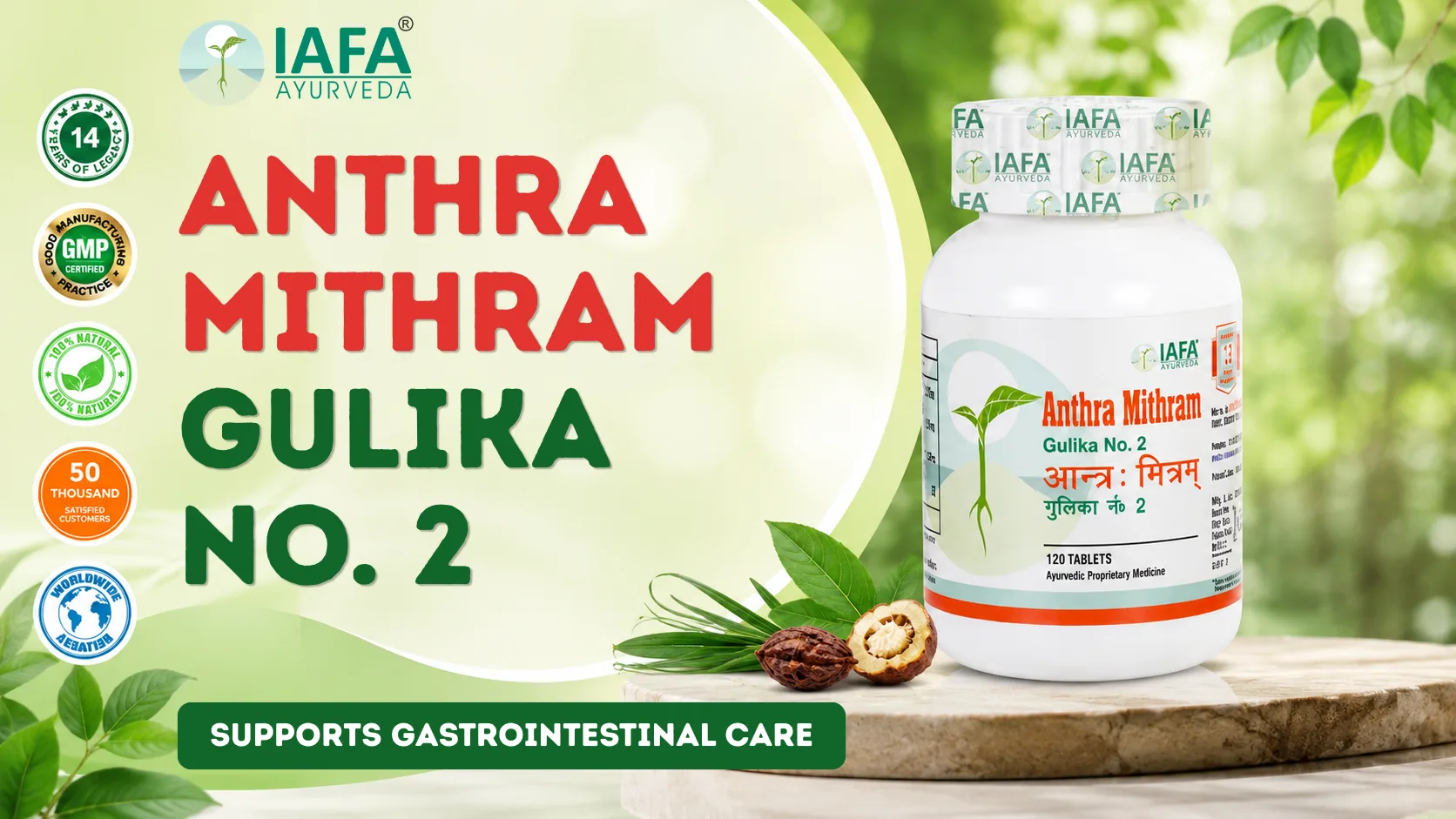
Over time, digestive instability may begin to affect overall energy, comfort, food tolerance, and metabolic balance. Anthra Mithram Gulika No. 2 is designed as an Ayurvedic gastrointestinal support formulation for chronic digestive imbalance, intestinal instability, bowel irregularity, and weakened digestive resilience. The formulation combines carefully selected classical herbs traditionally valued for supporting:
- Digestive regulation
- Gastrointestinal balance
- Intestinal steadiness
- Bowel coordination
- Functional digestive recovery
- Gastric comfort
- Metabolic support
- Gut adaptability
Rather than aggressively suppressing symptoms, the formulation is designed to progressively and physiologically restore functional digestive balance.
Healthy digestion is not merely symptom control.
It is the ability of the gastrointestinal system to comfortably process, regulate, absorb, and tolerate food consistently.
Chronic Gastrointestinal Imbalance – Ayurvedic Perspective [6-12]
Ayurveda does not view the gastrointestinal tract merely as a hollow tube responsible for food passage. It is considered a dynamic metabolic system governed by Agni, regulated through coordinated interaction of:
- Jatharagni
- Grahani
- Pachaka Pitta
- Samana Vayu
- Kledaka Kapha
- Intestinal channels (Annavaha and Purishavaha Strotas)
Classical Ayurvedic texts repeat this again and again that the foundation of health begins with proper digestive transformation. When digestion functions efficiently, nourishment, strength, immunity, tissue formation, and metabolic balance remain stable. But when digestive coordination weakens, the disturbance gradually spreads throughout the body.
Acharya Charaka (Father of medicine) describes Grahani as the seat and support of Agni. Food is retained there until proper digestion occurs. Only after adequate transformation is it allowed to move further through the gastrointestinal tract. When Agni becomes unstable or weakened, this coordination begins to fail. [13-20]
As digestion weakens:[21]
- Food remains improperly processed
- Ama begins accumulating
- Intestinal tolerance reduces
- Bowel rhythm loses consistency
- Metabolism becomes improper
- Gastrointestinal sensitivity increases
This disturbance does not always appear suddenly. It often develops gradually through:
- Irregular eating habits
- Excessively heavy or incompatible food
- Repeated digestive suppression
- Stress and a disturbed lifestyle
- Chronic illness
- Recurrent bowel infections
- Weak digestive recovery after illness
Ayurveda describes four major functional states of Agni:[5,22-24]
- Samagni-balanced digestion
- Mandagni-weak and sluggish digestion
- Tikshnagni-excessively sharp digestion
- Vishamagni-irregular and unpredictable digestion
Among these, Vishamagni and Mandagni are particularly associated with chronic gastrointestinal instability.
In Vishamagni:
- Digestion becomes unpredictable
- Appetite fluctuates
- Bowels alternate irregularly
- Food tolerance varies day by day
In Mandagni:
- Digestion becomes slow
- Heaviness develops after meals
- Ama accumulates
- Metabolic efficiency decreases
In Ayurveda, it is further explained that when incompletely digested material persists inside the gastrointestinal system, it generates Ama, a metabolically toxic, poorly processed intermediate substance that disturbs channels, weakens tissue nourishment, and promotes chronic disease processes. Therefore, from the Ayurvedic perspective, chronic gastrointestinal imbalance is not merely a local bowel disorder.
It represents progressive loss of:
- Digestive intelligence
- Intestinal coordination
- Metabolic steadiness
- Functional food transformation
- Gut adaptability
This is why classical Ayurvedic management focuses not only on symptom reduction, but on restoring:
- Agni balance
- Grahani stability
- Proper digestion
- Intestinal regulation
- Metabolic coordination
- Gastrointestinal balance
Traditional Grahani-supportive herbs such as Kutaj, Bilva, Dadima, Musta, and Deepana-Pachana formulations were specifically designed for these chronic states of digestive instability.
Modern Gastroenterological Perspective [25-28]
Modern medicine now understands that many chronic digestive disorders are not caused by a single problem alone. Instead, they often develop due to a gradual disturbance in overall gastrointestinal regulation.
This may involve:
- Altered gut motility (too fast or irregular bowel movement)
- Increased intestinal sensitivity
- Weak digestive coordination
- Gut microbiota imbalance
- Mild chronic intestinal inflammation
- Disturbed gut-brain communication
As a result, individuals may experience:
- Bloating
- Loose or irregular stools
- Post-meal discomfort
- Food intolerance
- Digestive fatigue
- Intestinal irritation
- Variable appetite and bowel habits
Conditions such as:
- Irritable Bowel Syndrome (IBS)
- Functional Dyspepsia
- Functional Bowel Disorders
- Post-infectious bowel instability
- Chronic gastrointestinal sensitivity
are now considered disorders involving functional imbalance of the gastrointestinal system rather than only structural disease. Modern research also suggests that stress, irregular diet, infections, altered microbiota, and chronic inflammation may gradually weaken the GIT system and digestive stability over time.
Therefore, long-term gastrointestinal care focuses not only on symptom suppression, but also on restoring:
- Functional bowel coordination
- Digestive balance
- Gut regulation
- Intestinal stability
- Mucosal health
Benefits of Anthra Mithram Gulika No. 2
The Power of Herbs in Anthra Mithram Gulika No. 2
Anthra Mithram Gulika No. 2 is built upon a focused gastrointestinal support using carefully selected classical Ayurvedic herbs traditionally valued for restoring digestive steadiness, intestinal balance, and bowel coordination. Rather than using excessive stimulation, the formulation combines herbs that work synergistically to support Digestive regulation, Intestinal stability, gastric comfort, bowel consistency, etc.
Each herb contributes a distinct role within the digestive system.
| Ingredient | Quantity | Gastrointestinal Role |
| Kutaj (Holarrhena antidysenterica) | 250 mg | Intestinal regulator and bowel stabilizer |
| Bael (Aegle marmelos) | 125 mg | Digestive, supportive, and bowel-coordinating herb |
| Dadima (Punica granatum) | 125 mg | Gastric comfort and digestive tolerance supporter |

Have A Health Issue?
Consult Online
- Dr. Sahil Gupta (B.A.M.S., M.H.A.)
Ayurvedic Allergy Specialist
CEO & Founder of IAFA®
Uses of Anthra Mithram Gulika No.2
Scientific and Ayurvedic Foundation of the Formulation
1) Kutaj – The Intestinal Balance Supporter
Restoring intestinal steadiness where digestion loses control
Ayurvedic Perspective[29,30]
Kutaj is one of Ayurveda’s most important gastrointestinal-supportive herbs traditionally used in conditions involving:
- Intestinal instability
- Bowel irregularity
- Digestive weakness
- Chronic loose stools
- Functional bowel disturbance
Traditionally regarded as:
- Grahi
- Deepana supportive
- Pachana supportive
- Intestinal stabilizing
Kutaj has been valued where bowel rhythm loses consistency and intestinal coordination weakens over time.
Modern Perspective
Holarrhena antidysenterica has demonstrated:
- Antidiarrheal activity [31]
- Antimicrobial potential[ 32]
- Gastrointestinal regulatory effects[33]
- Intestinal protective action[34]
It helps support intestinal steadiness while maintaining functional bowel balance.
2) Bael – The Digestive Coordination Supporter
Strengthening digestive coordination through balanced gut support
Ayurvedic Perspective[35]
Bael is traditionally valued in digestive states involving:
- Weak digestion
- Intestinal heaviness
- Sluggish gastrointestinal function
- Altered bowel consistency
- Digestive fatigue
Traditionally regarded as:
- Deepana supportive
- Pachana supportive
- Digestive balancing
- Bowel supportive
Bael helps support coordinated digestion and intestinal steadiness in weakened gastrointestinal states.
Modern Perspective
Aegle marmelos has demonstrated:
- Gastroprotective potential [36]
- Digestive supportive effects [37,38]
- Antidiarrheal activity [39,40]
- Gut-regulatory properties [41]
It may help support gastrointestinal comfort and digestive balance.
3) Dadima – The Gastric Comfort and Tolerance Supporter
Gentle nourishment for sensitive digestion and gastric comfort
Ayurvedic Perspective [42,43]
Dadima is traditionally valued in digestive conditions involving:
- Reduced appetite
- Digestive discomfort
- Weak gastrointestinal tolerance
- Post-meal uneasiness
- Intestinal sensitivity
Traditionally regarded as:
- Laghu
- Hridya
- Grahi
- Digestive supportive
It helps support digestive comfort without excessively burdening the sensitive digestive system.
Modern Perspective
Punica granatum has demonstrated:
- Antioxidant activity [44]
- Gastrointestinal protective effects [45]
- Gut-supportive action [45]
- Anti-inflammatory potential [46]
Dadima supports gastric comfort and intestinal adaptability in sensitive digestive states.
How Anthra Mithram Gulika No. 2 Supports Gastrointestinal Function?
LEVEL 1 – DIGESTIVE REGULATION
(Bael and Dadima)
Supports:
• Appetite balance • Digestive responsiveness • Post-meal comfort • Functional digestion
LEVEL 2 – INTESTINAL COORDINATION
(Kutaj)
Supports:
• Bowel consistency • Intestinal steadiness • Gastrointestinal balance • Functional bowel regulation
LEVEL 3 – GUT STABILITY AND RECOVERY
(Kutaj, Dadima, and Bael)
Supports:
• Improved food tolerance • Reduced digestive fatigue • Better gastrointestinal adaptability • Healthy GIT
Pathogenesis Breakdown
Digestive Imbalance
↓
Weak Gastrointestinal Coordination
↓
Intestinal Instability and Digestive Fatigue
↓
Anthra Mithram Gulika No. 2 Support
↓
• Digestive Regulation • Gut Stability • Intestinal Balance
↓
Improved Gastrointestinal Function
Medicinal Uses of Anthra Mithram Gulika No.2
Gastrointestinal Conditions Where Support May Be Considered
Based on its gastrointestinal-supportive herbal composition, bowel-regulating action, digestive balancing properties, and intestinal stabilizing potential, Anthra Mithram Gulika No. 2 may be considered under Ayurvedic supervision in conditions associated with chronic digestive imbalance and functional gastrointestinal instability.
Functional Gastrointestinal Disorders (FGIDs)
- Irritable Bowel Syndrome (IBS)
- IBS-D (Diarrhea predominant IBS)
- Mixed-type IBS
- Functional Bowel Disorder
- Functional Gastrointestinal Disorder
- Functional Diarrhea
- Functional Dyspepsia
- Postprandial Distress Syndrome (PDS)
- Chronic Functional Digestive Weakness
- Functional Intestinal Instability
- Functional Gut Sensitivity
Chronic Bowel Irregularity and Intestinal Instability
- Chronic loose stool tendency
- Recurrent bowel irregularity
- Post-meal bowel urgency
- Frequent bowel movement tendency
- Mucus-associated bowel disturbance
- Sensitive bowel states
- Non-infective chronic diarrhea
- Chronic intestinal irritability
- Altered bowel consistency
- Intestinal motility imbalance
- Chronic bowel hypersensitivity
Digestive Weakness and Indigestion Associated Conditions
- Mandagni-associated digestive weakness
- Chronic indigestion
- Sluggish digestion
- Post-meal heaviness
- Digestive fatigue after meals
- Bloating and abdominal fullness
- Incomplete digestion tendency
- Weak gastrointestinal tolerance
- Food-triggered digestive discomfort
- Digestive discomfort associated with irregular eating habits
Gut Sensitivity and Food Tolerance Disturbance
- Food intolerance-associated digestive sensitivity
- Reactive gastrointestinal states
- Chronic intestinal sensitivity
- Mild gastrointestinal reactivity
- Altered digestive adaptability
- Sensitive digestion after infections
- Stress-associated digestive instability
- Gastrointestinal discomfort after certain foods
Post-Infectious and Recovery-Associated Digestive Conditions
- Post-infectious IBS
- Post-diarrheal digestive weakness
- Recovery phase after recurrent gastrointestinal infections
- Residual bowel instability after gut infections
- Long-standing intestinal weakness
- Gastrointestinal recovery support
- Weak digestion after prolonged illness
Gastric and Upper Gastrointestinal Discomfort States
- Mild gastric irritation associated with weak digestion
- Post-meal gastric uneasiness
- Functional gastric discomfort
- Acid-associated digestive sensitivity
- Gastric heaviness
- Digestive uneasiness after meals
- Altered appetite associated with digestive imbalance
Gut Microbiota and Metabolic Digestive Imbalance
- Gut dysbiosis-associated digestive instability
- Altered gastrointestinal microbial balance
- Chronic digestive metabolic imbalance
- Ama-associated gastrointestinal disturbance
- Fermentation-associated bloating tendency
- Chronic intestinal metabolic sluggishness
Intestinal Support in Chronic Inflammatory Gut States
(As supportive Ayurvedic care under supervision)
- Mild inflammatory bowel disturbance
- Chronic colitis-associated digestive instability
- Non-specific chronic colitis
- Ulcerative colitis (supportive/remission phase)
- Mild inflammatory bowel disease (IBD) support
- Post-inflammatory intestinal weakness
- Mucosal bowel irritation states
Pediatric and Geriatric Digestive Support States
(Only under professional supervision)
- Age-related digestive weakness
- Recurrent bowel instability in elderly individuals
- Sensitive digestion with weak bowel tolerance
- Chronic digestive fatigue in debilitated individuals
Overall, Anthra Mithram Gulika No. 2 is designed to support:
- Long-term intestinal balance, rather than merely providing temporary symptomatic digestive relief.
- Digestive regulation
- Intestinal steadiness
- Bowel coordination
- Gastrointestinal comfort
- Food tolerance
- Functional gut balance
- Digestive recovery
What Makes Anthra Mithram Gulika No. 2 Different (Benefits of Anthra Mithram Gulika No.2) ?
| Other Digestive Products | Anthra Mithram Gulika No. 2 |
| Symptom-oriented approach | Gastrointestinal balance-oriented approach |
| Temporary digestive relief | Functional digestive support |
| Strong stimulatory formulations | Physiological intestinal support |
| Focus mainly on bowel symptoms | Supports digestion, the intestine, and gut coordination |
| Short-term digestive correction | Progressive gastrointestinal stabilization |
Comparative Clinical Gastrointestinal Indications of Anthra Mithram Gulika and Anthra Mithram Gulika No.2
| Condition / Digestive State | Anthra Mithram Gulika | Anthra Mithram Gulika No. 2 |
| Chronic Grahani disorders | ✓ ✓ ✓ | ✓ ✓ |
| IBS-D (Diarrhea predominant IBS) | ✓ ✓ ✓ | ✓ ✓ ✓ |
| Functional gastrointestinal disorders | ✓ ✓ ✓ | ✓ ✓ ✓ |
| Chronic intestinal weakness | ✓ ✓ ✓ | ✓ ✓ |
| Malabsorption tendency | ✓ ✓ ✓ | ✓ |
| Chronic loose stools | ✓ ✓ ✓ | ✓ ✓ ✓ |
| Post-meal bowel urgency | ✓ ✓ ✓ | ✓ ✓ |
| Intestinal instability | ✓ ✓ ✓ | ✓ ✓ ✓ |
| Digestive fatigue after meals | ✓ ✓ ✓ | ✓ ✓ |
| Ama-associated digestive disorders | ✓ ✓ ✓ | ✓ |
| Disturbed Agni with bowel irregularity | ✓ ✓ ✓ | ✓ ✓ |
| Post-infectious bowel weakness | ✓ ✓ ✓ | ✓ ✓ ✓ |
| Functional diarrhea | ✓ ✓ ✓ | ✓ ✓ ✓ |
| Sensitive bowel states | ✓ ✓ | ✓ ✓ ✓ |
| Chronic intestinal hypersensitivity | ✓ ✓ | ✓ ✓ ✓ |
| Food-triggered digestive discomfort | ✓ ✓ | ✓ ✓ ✓ |
| Mild gastric irritation with bowel imbalance | ✓ ✓ ✓ | ✓ ✓ |
| Functional dyspepsia | ✓ ✓ ✓ | ✓ ✓ ✓ |
| Sluggish digestion with bowel irregularity | ✓ ✓ ✓ | ✓ ✓ |
| Chronic colitis-associated digestive instability | ✓ ✓ ✓ | ✓ ✓ |
| Ulcerative colitis supportive phase | ✓ ✓ ✓ | ✓ ✓ |
| Mild IBD supportive care | ✓ ✓ ✓ | ✓ ✓ |
| Gastrointestinal recovery support | ✓ ✓ | ✓ ✓ ✓ |
| General gastrointestinal weakness | ✓ ✓ | ✓ ✓ ✓ |
| Digestive regulation and gut wellness | ✓ ✓ | ✓ ✓ ✓ |
| Gastric comfort and digestive tolerance support | ✓ ✓ | ✓ ✓ ✓ |
| Long-term gut resilience support | ✓ ✓ | ✓ ✓ ✓ |
Difference Between the Two Formulations
| Anthra Mithram Gulika | Anthra Mithram Gulika No. 2 |
| More advanced herbo-mineral Grahani-focused formulation | Simpler herbal gastrointestinal-support formulation |
| Stronger focus on chronic Grahani dysfunction | Broader focus on overall gastrointestinal balance |
| Contains Parpati, Bhasma, Pishti preparations | Purely herb-based support |
| Better suited for deeper chronic intestinal weakness | Better suited for mild-to-moderate GI instability |
| More metabolic and Agni-regulating depth | More gut comfort and bowel coordination support |
| Precision classical Ayurvedic GI formulation | Gentle long-term gastrointestinal wellness support |
Combined Gastrointestinal Support Approach
In individuals with deeper digestive instability, chronic bowel irregularity, weak gastrointestinal resilience, or long-standing functional digestive disorders, both formulations may also be used together under Ayurvedic supervision for broader and deeper gastrointestinal support.
Anthra Mithram Gulika provides deeper Grahani-oriented support, Agni stabilization, intestinal regulation, and metabolic digestive correction through its advanced Parpati and herbo-mineral foundation. Whereas Anthra Mithram Gulika No. 2 complements this by supporting gastrointestinal comfort, bowel steadiness, digestive tolerance, and long-term intestinal adaptability through its focused herbal gastrointestinal support approach.
Together, the combination may help provide:
- Broader digestive regulation
- Enhanced intestinal steadiness
- Better bowel coordination
- Improved gastrointestinal tolerance
- Support in chronic digestive recovery
- Gut stability support
This combined approach may be particularly valuable in chronic gastrointestinal conditions where both digestive weakness and intestinal sensitivity coexist.
Dosage and Administration
1 tablet twice daily after meals or as directed by the physician.
For best gastrointestinal outcomes:
- Use under qualified Ayurvedic supervision
- Maintain appropriate dietary discipline
- Avoid excessively heavy or incompatible foods
- Support digestive recovery with regular meal timing
Anthra Mithram Gulika No. 2
Conclusion
The gastrointestinal system functions through coordination, balance, tolerance, and stability. When this coordination weakens, digestion becomes reactive, and bowel rhythm becomes unpredictable.
Anthra Mithram Gulika No. 2 is designed to support restoration of gastrointestinal steadiness through classical Ayurvedic digestive-supportive principles focused on intestinal balance, digestive regulation, and long-term gut wellness.
References
- Kothekar AT, Kulkarni AP. Gastrointestinal Tract: A Neglected Guardian Angel? Indian J Crit Care Med. 2020 Sep; 24 (Suppl 4): S146- S151. doi: 10. 5005/ jp- journals- 10071- 23616. PMID: 3335- 4032; PMCID: PMC- 7724944.
- Hornbuckle WE, Simpson KW, Tennant BC. Gastrointestinal Function. Clinical Biochemistry of Domestic Animals. 2008: 413– 57. doi: 10. 1016/ B978- 0- 12- 370491- 7. 00014- 3. Epub 2008 Oct 22. PMCID: PMC- 7173558.
- Fikree A, Byrne P. Management of functional gastrointestinal disorders. Clin Med (Lond). 2021 Jan; 21 (1): 44- 52. doi: 10. 7861/ clinmed. 2020-0980. PMID: 3347- 9067; PMCID: PMC- 7850201.
- Shin A, Xu H. Healthcare Costs of Irritable Bowel Syndrome and Irritable Bowel Syndrome Subtypes in the United States. Am J Gastroenterol. 2024 Aug 01;119 (8): 1571- 1579.
- Agrawal AK, Yadav CR, Meena MS. Physiological aspects of Agni. Ayu. 2010 Jul; 31 (3): 395- 8. doi: 10 .4103/ 0974- 8520. 77159. PMID: 2213- 1747; PMCID: PMC- 3221079.
- Ghildiyal, Shivani & Pandey, Deepika & Nesari, Tanuja. (2024). Concept of Agni and Digestion in Ayurveda.
- Narayana A. Diseases of Annavaha Srotas (gastroenterology): historical viewpoint. Bull Indian Inst Hist Med Hyderabad. 2002 Jan- Jun; 32 (1): 15-30. PMID: 1530- 7207.
- Sharma RK, Dash B. Charaka Samhita of Agnivesha, Sutra Sthana. Reprint ed. Varanasi: Chaukhambha Sanskrit Series Office; 2018.
- Sharma RK, Dash B. Charaka Samhita of Agnivesha, Chikitsa Sthana. Reprint ed. Varanasi: Chaukhambha Sanskrit Series Office; 2018.
- Shastri AD. Sushruta Samhita with Ayurveda-Tattva-Sandipika Commentary, Sutra Sthana. Reprint ed. Varanasi: Chaukhambha Sanskrit Sansthan; 2019.
- Shastri AD. Sushruta Samhita with Ayurveda-Tattva-Sandipika Commentary, Sharira Sthana. Reprint ed. Varanasi: Chaukhambha Sanskrit Sansthan; 2019.
- Murthy KRS. Ashtanga Hridaya of Vagbhata, Sutra Sthana. Reprint ed. Varanasi: Chaukhambha Krishnadas Academy; 2017.
- Murthy KRS. Ashtanga Hridaya of Vagbhata, Nidana Sthana. Reprint ed. Varanasi: Chaukhambha Krishnadas Academy; 2017.
- Tripathi B. Charaka Samhita with Charaka Chandrika Hindi Commentary, Sutra Sthana. Reprint ed. Varanasi: Chaukhambha Surbharati Prakashan; 2020.
- Tripathi B. Charaka Samhita with Charaka Chandrika Hindi Commentary, Chikitsa Sthana. Reprint ed. Varanasi: Chaukhambha Surbharati Prakashan; 2020.
- Shastri K, Chaturvedi G. Charaka Samhita with Vidyotini Hindi Commentary, Vimana Sthana. Reprint ed. Varanasi: Chaukhambha Bharati Academy; 2018.
- Shastri K, Chaturvedi G. Charaka Samhita with Vidyotini Hindi Commentary, Chikitsa Sthana. Reprint ed. Varanasi: Chaukhambha Bharati Academy; 2018.
- Acharya YT. Sushruta Samhita with Nibandha Sangraha Commentary of Dalhana. Reprint ed. Varanasi: Chaukhambha Sanskrit Sansthan; 2016.
- Gupta A. Ashtanga Hridaya with Hindi Commentary. Reprint ed. Varanasi: Chaukhambha Prakashan; 2019.
- Upadhyaya Y. Madhava Nidana with Madhukosha Commentary. Reprint ed. Varanasi: Chaukhambha Sanskrit Bhavan; 2017.
- Krishnasamy S, Abell TL. Diabetic Gastroparesis: Principles and Current Trends in Management. Diabetes Ther. 2018 Jul; 9 (Suppl 1): 1- 42. doi: 10. 1007/ s13300- 018- 0454- 9. Epub 2018 Jun 22. PMID: 2993- 4758; PMCID: PMC- 6028327.
- Kuttikrishnan M, Sridhar R, Varghese E. Jatharagni and Prakriti of young Indian adult population: A descriptive cross-sectional study. J Ayurveda Integr Med. 2022 Jan- Mar; 13 (1): 100438. doi: 10. 1016/ j. jaim. 2021. 04. 008. Epub 2022 Jan 29. PMID: 3510- 1333; PMCID: PMC- 9034458.
- Singh A, Singh G, Patwardhan K, Gehlot S. Development, Validation, and Verification of a Self-Assessment Tool to Estimate Agnibala (Digestive Strength). J Evid Based Complementary Altern Med. 2017 Jan; 22 (1): 134-140. doi: 10. 1177/ 215658- 7216- 656117. Epub 2016 Jul 4. PMID: 27381899; PMCID: PMC- 5871217.
- V A, Singh K, G S, Rao BC, Srikanth N, Acharya R. Development and Preliminary Psychometric Evaluation of Agni Assessment Scale: A Measure of Functional Digestive Capacity Based on Ayurveda. Complement Med Res. 2026 Mar 3: 1-12. doi: 10. 1159/ 000551010. Epub ahead of print. PMID: 41774580.
- Singh R, Zogg H, Ghoshal UC, Ro S. Current Treatment Options and Therapeutic Insights for Gastrointestinal Dysmotility and Functional Gastrointestinal Disorders. Front Pharmacol. 2022 Jan 25; 13: 808195. doi: 10. 3389/ fphar. 2022. 808195. PMID: 35145413; PMCID: PMC- 8822166.
- Bhalla, Ajay & Chaudhuri, Sujit. (2025). Irritable bowel syndrome: a multidimensional review of pathophysiology, biomarkers, and tailored interventions. International Journal of Research in Medical Sciences. 14. 350- 360. 10. 18203/ 2320- 6012. ijrms 20254402.
- Noddin L, Callahan M, Lacy BE. Irritable bowel syndrome and functional dyspepsia: different diseases or a single disorder with different manifestations? MedGenMed. 2005 Aug 29; 7 (3): 17. PMID: 16369243; PMCID: PMC 1681633.
- Portincasa P, Bonfrate L, de Bari O, Lembo A, Ballou S. Irritable bowel syndrome and diet. Gastroenterol Rep (Oxf). 2017 Feb; 5 (1): 11- 19. doi: 10. 1093/ gastro/ gow- 047. Epub 2017 Jan 20. PMID: 28110300; PMCID: PMC 5444258.
- Jamadagni PS, Pawar SD, Jamadagni SB, Chougule S, Gaidhani SN, Murthy SN. Review of Holarrhena antidysenterica (L.) Wall. ex A. DC.: Pharmacognostic, Pharmacological, and Toxicological Perspective. Pharmacogn Rev. 2017 Jul- Dec; 11 (22): 141- 144. doi: 10. 4103/ phrev. phrev_31_16. PMID: 2898- 9249; PMCID: PMC- 5628520.
- De B, Maiti RN, Joshi VK, Agrawal VK, Goel RK. Effect of some Sitavirya drugs on gastric secretion and ulceration. Indian J Exp Biol. 1997 Oct; 35 (10): 1084- 7. PMID: 9475045.
- Sharma DK, Gupta VK, Kumar S, Joshi V, Mandal RS, Prakash AG, Singh M. Evaluation of antidiarrheal activity of ethanolic extract of Holarrhena antidysenterica seeds in rats. Vet World. 2015 Dec; 8 (12): 1392- 5. doi: 10. 14202/ vetworld. 2015. 1392- 1395. Epub 2015 Dec 11. PMID: 27047049; PMCID: PMC- 4774815.
- Kavitha D, Shilpa PN, Devaraj SN. Antibacterial and antidiarrhoeal effects of alkaloids of Holarrhena antidysenterica WALL. Indian J Exp Biol. 2004 Jun; 42 (6): 589- 94. PMID: 15260110.
- Gilani AH, Khan A, Khan AU, Bashir S, Rehman NU, Mandukhail SU. Pharmacological basis for the medicinal use of Holarrhena antidysenterica in gut motility disorders. Pharm Biol. 2010 Nov; 48 (11): 1240- 6. doi: 10. 3109/ 1388020- 1003727960. Epub 2010 Sep 7. PMID: 20822397.
- Zahara K, Panda SK, Swain SS, Luyten W. Metabolic Diversity and Therapeutic Potential of Holarrhena pubescens: An Important Ethnomedicinal Plant. Biomolecules. 2020 Sep 18; 10 (9): 1341. doi: 10. 3390/ biom- 10091341. PMID: 32962166; PMCID: PMC- 7565871.
- Kaur, Avneet & Bishwal, Radhakrishan & Sharma, Subhash. (2018). MANAGEMENT OF IBS THROUGH AYURVEDA.
- Singh P, Dutta SR, Guha D. Gastric mucosal protection by Aegle marmelos against gastric mucosal damage: role of enterochromaffin cell and serotonin. Saudi J Gastroenterol. 2015 Jan- Feb; 21 (1): 35- 42. doi: 10. 4103/ 1319- 3767. 151224. PMID: 25672237; PMCID: PMC 4355861.
- Ghatule RR, Gautam MK, Goel S, Singh A, Joshi VK, Goel RK. Protective effects of Aegle marmelos fruit pulp on 2,4,6-trinitrobenzene sulfonic acid-induced experimental colitis. Pharmacogn Mag. 2014 Jan; 10 (Suppl 1): S147- 52. doi: 10. 4103/ 0973- 1296. 127366. PMID: 24914296; PMCID: PMC 4047580.
- Rahman S, Parvin R. Therapeutic potential of Aegle marmelos (L.)-An overview. Asian Pac J Trop Dis. 2014 Feb; 4 (1): 71– 7. doi: 10. 1016/ S2222- 1808 (14) 60318- 2. PMCID: PMC 4027346.
- Mazumder R, Bhattacharya S, Mazumder A, Pattnaik AK, Tiwary PM, Chaudhary S. Antidiarrhoeal evaluation of Aegle Marmelos (Correa) Linn. root extract. Phytother Res. 2006 Jan; 20 (1): 82- 4. doi: 10. 1002/ ptr. 1804. PMID: 16397850.
- Thakur M, Kaur T, Sobti RC. Exploring pharmacological potential of Aegle marmelos: integrating traditional knowledge with modern physiology and molecular biology. Physiol Mol Biol Plants. 2025 Apr; 31 (4): 521- 543. doi: 10. 1007/ s12298- 025- 01586- 2. Epub 2025 May 22. PMID: 404 43470; PMCID: PMC 12116412.
- Shah B, Solanki N. Exploring the bioactive properties and mechanism of Aegle marmelos in the treatment of inflammatory bowel disease through network pharmacology and a molecular docking approach. Am J Transl Res. 2025 Feb 15; 17 (2): 748- 769. doi: 10. 62347/ GCCV5213. PMID: 40092097; PMCID: PMC 11909509.
- Colombo E, Sangiovanni E, Dell’agli M. A review on the anti-inflammatory activity of pomegranate in the gastrointestinal tract. Evid Based Complement Alternat Med. 2013; 2013: 247145. doi: 10. 1155/ 2013/ 247145. Epub 2013 Mar 14. PMID: 23573120; PMCID: PMC 3612487.
- Patel, VivekKumar & Acharya, Rabinarayan. (2021). Dadima (Punica granatum L.), as an Aushadha (medicine), is depicted in Ayurveda: A Comprehensive Review. Journal of Indian System of Medicine. 9. 12. 10. 4103/ JISM. JISM- 14- 21.
- Olchowik-Grabarek E, Sekowski S, Mierzwinska I, Zukowska I, Abdulladjanova N, Shlyonsky V, Zamaraeva M. Cell Type-Specific Anti- and Pro-Oxidative Effects of Punica granatum L. Ellagitannins. Membranes (Basel). 2024 Oct 15; 14 (10): 218. doi: 10. 3390/ membranes 14100218. PMID: 39452830; PMCID: PMC 11509261.
- Muhialdin AJ, Alamri ZZ, M Hussein A, Faraj RK, Taha ZB, Hussein MM, Mojarradgandoukmolla S. Gastro-Protective and Therapeutic Effect of Punica granatum against Stomach Ulcer Caused by Helicobacter Pylori. Cell Mol Biol (Noisy-le-grand). 2023 Jan 31; 69 (1): 48- 53. doi: 10. 14715/ cmb/ 2022. 69. 1. 9. PMID: 37213156.
- Houston DM, Bugert J, Denyer SP, Heard CM. Anti-inflammatory activity of Punica granatum L. (Pomegranate) rind extracts applied topically to ex vivo skin. Eur J Pharm Biopharm. 2017 Mar; 112: 30- 37. doi: 10. 1016/ j. ejpb. 2016. 11. 014. Epub 2016 Nov 17. PMID: 2786- 7111.