

 808
808
 Share
Share



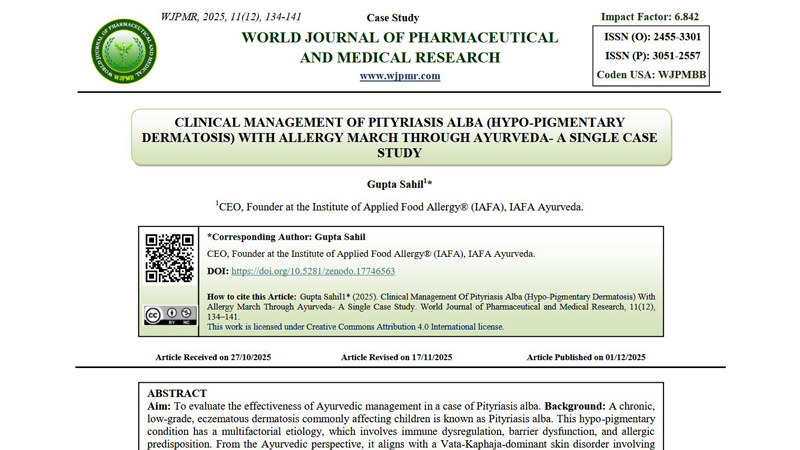
The Institute of Applied Food Allergy® (IAFA) has released a compelling case study highlighting the successful Ayurvedic management of Pityriasis alba, a common childhood hypo-pigmentary skin disorder, along with conditions associated with the allergic march including eczema, allergic rhinitis, food intolerance, and mild asthma.
Authored by Dr. Sahil Gupta, Founder and CEO of IAFA®, the study published in the World Journal of Pharmaceutical and Medical Research documents a three-month treatment protocol administered to a 12-year-old patient. The comprehensive Ayurvedic approach resulted in complete remission of skin lesions, significant improvement in digestive and respiratory symptoms, and no relapse during follow-up.
The therapeutic plan combined internal herbal formulations, external topical applications, and nasal therapies alongside tailored dietary and lifestyle guidelines. This multi-dimensional strategy targeted the root causes described in Ayurveda including Dosha imbalance, Rasa Dhatu impairment, and Srotasa hyperactivity, as well as modern immuno-allergic pathways. Key Outcomes of the Treatment Include:-
- Full restoration of skin pigmentation and resolution of dryness and scaling
- Elimination of eczema symptoms, improved gut function, and normalized bowel habits
- Marked reduction in nasal allergies and asthma-related discomfort
- Sustained recovery without adverse effects
“This case demonstrates the power of targeted Ayurvedic intervention in halting the allergic march and restoring long-term dermatological health,” said Dr. Gupta. “It reinforces Ayurveda’s relevance as an evidence-based, holistic system for managing chronic pediatric conditions.”