

 1645
 Share


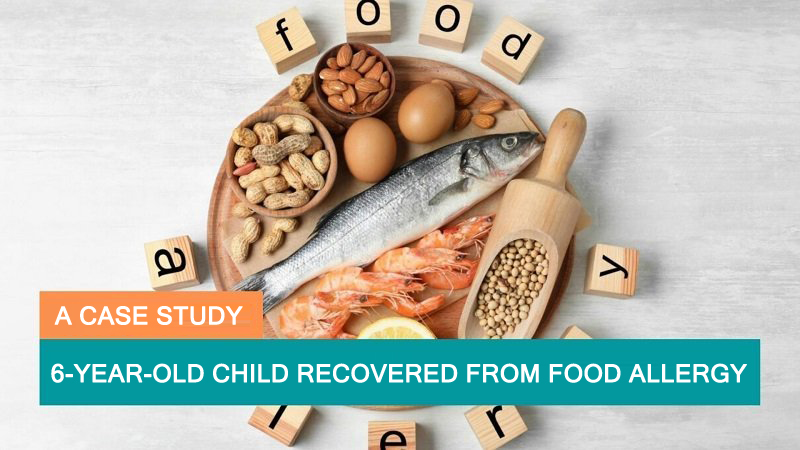
Food allergies in children can be challenging to manage and may require an individualized approach. Ayurveda offers traditional treatment approaches that may be considered as part of a child’s overall care. IAFA® shares its experience in managing allergy-related concerns through this case study, highlighting the approach followed and the patient’s progress during treatment.
Abstract
Food Allergy is an allergic reaction manifested by an abrupt onset of symptoms within minutes to hours after ingesting the food. Some foods are known to cause adverse reactions and toxic effects in some individuals. These abnormal reactions could either be due to food insensitivity, food allergies or food intolerance. In Ayurveda, various food allergic conditions are correlated with Aahar Asatmyata. The present case report deals with a 6-year boy patient of food allergy who came for Ayurvedic treatment at IAFA. Swaras Chikitsa (administration of herbal extracts in liquid form) may be incorporated into an Ayurvedic treatment approach alongside other internal herbal formulations for managing food allergy-related concerns. The patient showed positive progress during the course of treatment, with a noticeable reduction in the reported symptoms. Patient had continued these medicines for three months. His symptoms such as severe headache, fever, nausea and vomiting subsided after taking treatment from IAFA. The understanding of this Ayurvedic ancient wisdom may prove to be of immense importance in the treatment.
Keywords: Food Allergy, Aahar Asatmyata, Swaras Chikitsa
Introduction
In conventional medicine, avoiding the identified food allergen is a key strategy for managing food allergies and preventing allergic reactions. However, maintaining a strict elimination diet can be challenging, particularly for children, as certain food ingredients may be present in a variety of everyday foods. Unfortunately, there are no efficacious drugs available in modern medicine for the management of food allergies and the patients have to be dependent on corticosteroids and antihistamines for the treatment. The present case report deals with a patient of food induced allergic reaction who came for Ayurvedic treatment for Food allergies at IAFA. His parents got the reference of IAFA from one of his close relatives.
Case Description
A 6-year-old boy visited the OPD on 09/01/2019 with chief complaints of continuous fever for more than 10 days, accompanied by dizziness, abdominal pain, nausea, and vomiting after food intake for the past two years. The allergic reaction starts after half an hour of ingesting food items. Allergic reactions start with nausea, vomiting and severe headache. The patient used to take antipyretic, antispasmodic and anti-emetic syrups with corticosteroids before starting Ayurvedic treatment. He was suggested by physicians every time to get admitted in hospitals whenever his fever did not subside even after 10-12 days. The proper diagnosis was not done at that time and only symptomatic treatment was given. Following Ashtavidha Pareeksha (eight-fold Ayurvedic examination), IAFA® evaluated the patient’s symptoms of fever, nausea, and vomiting and considered Aahar Asatmyata (food intolerance or sensitivity) as a possible contributing factor. To further investigate potential dietary triggers, a food intolerance test was recommended to help identify foods that may be associated with the patient’s symptoms.
As per his food intolerance test on 11/01/2019, the food that behaves as an allergen is:
- Cow milk and Casein
- Egg white
- Sheep milk
- Barley, Corn, Wheat, Rye and Spelt
- Amarnath and Pea
- Gliadin
- Yeast (Brewer’s)
Patient has opted for Ayurvedic treatment of food allergy and came to us for the management of acute food induced allergic reaction.
Diagnosis:
The diagnosis of food allergy requires careful recording of the history of the patient’s symptoms as well as his food habits. The main objective of the treatment was to manage food allergy and to prevent anaphylactic shock.
Treatment:
The patient was prescribed an individualized herbal formulation by IAFA®. During the follow-up, improvements in allergy-related symptoms were observed within 15 days of starting the prescribed treatment. The treatment continued for 3 months.
Treatment Plan: Started on 11/01/2019
Dosage:-
- Aahar Amrutham Bindu – 10 drops with 20 ml water empty stomach once in a day in morning.
- Aahar Amrutham Ras – 5 ml twice in a day before meal.
- Kutaja Ghan Vati – 250mg twice in a day with after meal.
- Kachi Haldi Swaras – 5ml once in a day.
1. Aahar Amrutham Bindu
Aahar Amrutham Bindu by IAFA is an herbal formulation that supports digestion of a wide range of foods in children. It gives strength to the digestive system.
Ingredients of Aahar Amruthum Bindu:
- Vacha (Acorus calamus): Vacha herb possesses deepana property that increases digestive fire due to the presence of phytoconstituents. The Vata balancing property of Vacha helps in reducing the accumulation of gas in the intestinal tract.
- Musta (Cyperus rotundus): Musta herb acts as a detoxifier as it removes Ama (endotoxins) from the digestive tract. The phytoconstituents present in musta contribute to its digestant, astringent and anthelmintic properties.
- Parpata (Fumaria indica): Parpata is a traditionally valued Ayurvedic herb known for its Pitta-balancing properties. It is traditionally used to support digestive comfort and maintain digestive balance.
- Bilva (Aegle marmelos): Bilva is an excellent fruit for diarrhoea and indigestion. It supports proper bowel movements by improving the intestinal flora.
- Dadima (Punica granatum): Dadima (Pomegranate) is traditionally valued in Ayurveda for its role in supporting gastrointestinal health. It is commonly used to support digestive function and maintain gut comfort. Pomegranate is also widely recognized for its nutritional value and antioxidant content, making it a beneficial addition to a balanced diet.
- Sariva (Hemidesmus indicus): Sariva has been used for dysentery, dyspepsia, diarrhoea etc. since ages. It is also traditionally used to support digestive comfort and ease gastric and abdominal discomfort.
2. Aahar Amruthum Ras
Aahar Amruthum Ras is an Ayurvedic formulation designed by IAFA for gastro-intestinal balance.
Ingredients of Aahar Amruthum Ras:
- Chotti Dudhi (Euphorbia thymifolia): Chotti Dudhi swaras is antimicrobial in nature and stops the growth of harmful microorganisms in the gastrointestinal tract. It also reduces the formation of ama in the body.
- Shrifal (Aegle marmelos): Shrifal, commonly known as Bael fruit, is antimicrobial in nature that lowers the colonization of harmful bacteria in the gastrointestinal tract. The anti-inflammatory property of shrifal is due to the presence of tannins in it.
- Bhoomi Amla (Phyllanthus niruri): Bhoomi Amla is an excellent herb for liver disorders. It helps in proper secretion of enzymes from the liver and thus helps in digestion of various food items.
- Punarnava (Boerhavia diffusa): Punarnava is commonly known as Hog weed. This herb is rich in fibre and keeps the liver healthy by reducing inflammation.
3. Kutaja Ghan Vati
Kutaj GhanVati is prepared from the bark of the tree Holarrhena antidysenterica. Kutaj is anti-inflammatory in nature which has the properties of expelling toxins from the body. It is a very useful herb for the proper functioning of intestines as it reduces toxins within the system.
4. Kachi Haldi Swaras
Turmeric has been used as a spice and medicine in India for thousands of years. This yellow spice contains compounds called curcuminoids. This compound is a powerful anti-inflammatory in nature and extremely useful in food allergy.
This herbal formulation for children’s gastrointestinal support contains extracts of various Ayurvedic herbs traditionally used to support healthy digestion and overall digestive function. The patient is advised to alternatively rotate positive foods every 5 days and can also be tried. No adverse effects were reported with herbal formulations by the patient. The patient got clinically meaningful improvement with these medicines when these were administered.
Thus, Ayurvedic treatment of food allergy seems to be promising in the management of food induced allergic reactions by specific food intake. The patient expressed satisfaction with the care and treatment received at IAFA®. He appreciated the guidance and support throughout the treatment process and reported an improvement in his food allergy-related symptoms with the prescribed Ayurvedic approach.
Conclusion
In Ayurveda, allergic reactions are explained as independent entities such as Virudham, Ksheeralasaka, Grahani Roga, Sheetpitta, Udarda etc. Various etiological factors such as intake of viruddhahara (incompatible food combinations), mandagni (low digestive fire) etc. play a major role in the causation of allergic reactions. The herbal formulations of IAFA have the properties to control the allergic conditions and improve vyadhikshamatva (immune-modulation) by removing ama (endotoxins) within the system. This Ama leads to the blockage in channels and is responsible for producing many disorders within the system.

The patient showed encouraging progress during the course of treatment with the prescribed herbal formulations. Ayurveda offers traditional approaches that may be explored for managing food allergy-related concerns. This case study highlights the treatment approach adopted by IAFA® and the improvements observed in the patient’s symptoms. Treatment outcomes may vary from person to person, and the safety and suitability of herbal formulations should be assessed individually, especially in children.