

 3029
3029
 Share
Share



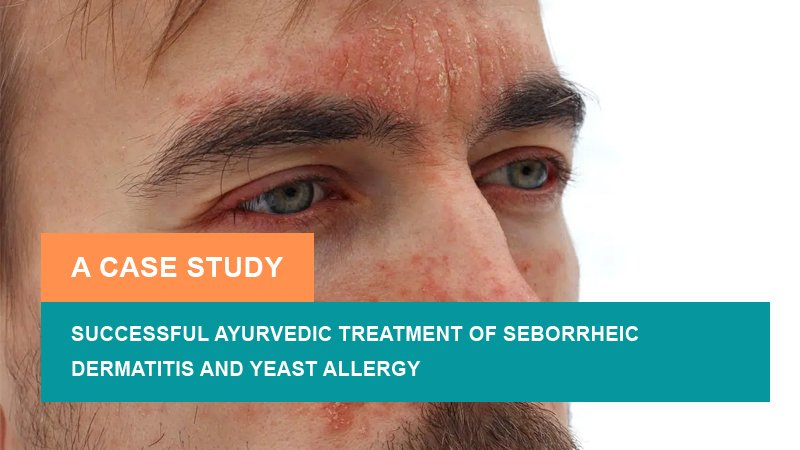
A 36-year-old male patient visited IAFA® to receive natural treatment for Seborrheic Dermatitis and Yeast Allergy. He had been suffering from these conditions for the past 7–8 years and had never felt at ease. Winters were especially difficult for him.
Vaidya Sahil Gupta examined his condition and found that his skin and scalp had become inflamed, scaly, and flaky. You can imagine how severe and chronic a condition becomes when someone has been suffering from it for nearly eight years. He underwent successful Ayurvedic treatment for Seborrheic Dermatitis and Yeast Allergy at IAFA Ayurveda®, India.
The patient’s condition was severe due to a Tridosha imbalance, particularly the aggravation of the Vata and Kapha doshas. Previous treatment approaches had failed to identify the root cause of his condition. Instead, they focused only on managing the external symptoms, providing temporary relief without addressing the underlying cause of the disease.
After learning about IAFA®, he underwent a three-month treatment plan that included herbal medications and an Ayurvedic diet. As a result, he recovered completely. He expressed his gratitude for the treatment he received and is now living a happy and healthy life without worrying about fungal infections.
Now, let’s take a closer look at the patient’s three-month journey and understand how he received natural treatment for his eight-year-long fungal infection. We’ll also explore the Ayurvedic approach to treating Seborrheic Dermatitis and Yeast Allergy, along with the herbal medications and lifestyle changes that helped him achieve long-term wellness.
Case Details
- UID: 5525
- Age: 36 years
- Gender: Male
- DOA: 16/9/2020
Introduction
Darunaka (Seborrheic Dermatitis) is a common fungal skin condition caused by the overgrowth of the yeast Malassezia. It primarily affects the scalp but can also occur in other seborrheic areas of the body where sebaceous glands are present. The affected areas become inflamed, flaky, scaly, and itchy. Patients may also experience persistent dandruff.
Various intrinsic and environmental factors, including excessive sebaceous secretions, fungal overgrowth, individual susceptibility, and stress, contribute to the development of Seborrheic Dermatitis.
Ayurvedic Reference
दारुणा कण्डुरा रुक्षाकेशभूमिःप्रपाट्यते|
कफवातप्रकोपेण विद्याद्दारुणकं तु तम् ||
In Ayurveda, Seborrheic Dermatitis can be correlated with Darunaka. Acharya Vagbhata and Acharya Sharangadhara have described Darunaka as a Kapalagata Roga (disease of the scalp), while Acharya Sushruta, Acharya Bhavamishra (in Bhavaprakasha), and Acharya Madhava have classified it as a Kshudra Roga (minor disease).
Ayurveda offers a holistic approach to the management of Seborrheic Dermatitis and Yeast Allergy by addressing the underlying dosha imbalance, supporting skin health, and promoting overall well-being.
A yeast allergy is a type of allergic reaction that occurs when the body is exposed to yeast or yeast-containing foods. Foods such as bread, cheese, wine, beer, and other fermented products are made using yeast during the fermentation process. However, not everyone tolerates yeast in the same way. In some individuals, exposure to yeast may trigger an allergic reaction or intolerance, which can lead to inflammation and other symptoms in the body.
Ayurvedic Reference
उपशेतेयदौचित्यादोकसात्म्यंतदुच्यते ||
In this Shloka, Acharya Charaka describes Satmya as anything that is suitable for the body and can be easily digested or tolerated. Asatmya, on the other hand, refers to dietary and lifestyle factors (Ahara and Vihara) that are incompatible with an individual’s constitution and may trigger adverse or allergic-like reactions when consumed or practiced.
Symptoms
Seborrheic Dermatitis
Signs and Symptoms are due to the vitiation of Vata and Kapha doshas.
- Daruna (cracked scalp)
- Kandu (itching on the scalp)
- Keshachyuti (falling of hair)
- Swapa (abnormalities of touch sensation on the scalp)
- Rookshata (roughness or dryness of the scalp) and
- Twaksphutana (breaking or cracking of the scalp skin).
- Thick, dried patches of skin.
- Redness and itchy skin.
Yeast Allergy
- Abdominal discomfort
- Stomach pain
- Bloating
- Diarrhea
- Vomiting
- Rashes
- Skin irritation
- Flatulence
- Skin diseases like Eczema and Psoriasis.
The Ayurvedic treatment of Seborrheic Dermatitis and Yeast Allergy is based on a thorough assessment of both the symptoms and the underlying cause of the condition. Ayurveda focuses on identifying and addressing the root cause of the disease rather than only managing its symptoms.
Causes
Seborrheic Dermatitis
- The main reason for seborrheic dermatitis is the overgrowth of the fungus, Malassezia.
- Stress and Depression can exaggerate the condition.
- Change of seasons, like winters, is a nightmare.
- Weakened immune system.
Yeast Allergy
Regular consumption of yeast-containing or yeast-fermented foods, such as bread, cheese, baked goods, certain cereals, beer, wine, and foods containing vinegar, may contribute to symptoms in individuals with a yeast allergy or yeast sensitivity. Avoiding these foods and choosing suitable alternatives may help reduce the severity of symptoms.
Final Diagnosis
- Darunaka (Seborrheic Dermatitis)
- Yeast Allergy
Treatment Plan
Ayurvedic treatment of both the above-mentioned conditions involves external and internal treatment. The Successful Ayurvedic Treatment of Seborrheic Dermatitis and Yeast Allergy can be like we have mentioned below:-
External Treatment
1. IAFA AF-7 Oil:
Apply over the affected area and scalp before head wash.
It is designed in a way to treat fungal infections. It is 100% natural, free from any synthetic additives that can damage the skin. So it is safe for sensitive skin too.
2. IAFA 333 Shampoo:
Method of Usage: Apply on wet hair and rinse thoroughly and wash the lather with clean water. The applied shampoo ingredients will reach the scalp and assist to maintain the scalp’s health.
Indications: Scalp disorders like Psoriasis, Allergic scalp disorders, Seborrheic dermatitis, and Dandruff.
So, along with the above-mentioned external herbal medicines, Vaidya Sahil Gupta also recommends internal herbal medicines which can wind up as Successful Ayurvedic Treatment of Seborrheic Dermatitis and Yeast Allergy.
Internal Treatment
3. IAFA Swaras Chikitsa: Aahar Amrutham Ras:
30 ml twice a day with an equal amount of water half an hour after a meal.
It boosts gut health and improves digestion. The herbs in swaras help to maintain good digestive fire, remove ama visha (toxins), reduce microbial activity in the gut, and provide the best gastrointestinal repair.
4. Changeri Capsules:
1 Cap twice a day during meals with water.
Indications: Useful for Fungal Infections, Superficial Skin Infections, and Immune System Rejuvenation.
5. Kutaja Ghan Vati:
2 tablets twice a day 1 hour after a meal with lukewarm water.
It boosts gut health thereby improving proper digestion and proper digestion means fewer toxins, so less inflammation.
6. Triphala Capsules:
2 Capsules once a day at bedtime with water.
Indications: Constipation, flatulence, abdominal distension, indigestion, low immunity, cold, skin diseases, and improved eyesight.
The Successful Ayurvedic Treatment of Seborrheic Dermatitis and Yeast Allergy not only has external and internal herbal medicines but also a personalized Ayurvedic diet.
Dos’ (Pathya)
- Replace dairy milk with Plant milk or A2 cow milk.
- Always consume light and easily digestible food.
- Eat astringent and bitter taste herbs to detoxify the body and also increase Pitta dosha balancing the vitiated Vata and Kapha doshas.
- Include more fiber-containing fruits and vegetables in your regular diet.
- Eat green foodstuff like leafy veggies, Cucumbers, and Bitter gourd once a day.
- Replace gluten with Quinoa, ragi, whole corn, millet, and oats.
- Take herbs such as fennel, cumin and curry leave regularly in the form of cumin water, and fennel water. This will improve your Agni (digestive fire) and clear away the accumulated toxins from the body.
- Fruits or fresh juice of Pomegranate, Bael, and Apple daily.
Don’ts (Apathya)
- Avoid A1 cow milk and its products like cream cheese, soft cheeses, etc.
- Say a big No to High-fat foods: butter, margarine, and cream, as well as fatty, fried, or greasy food, spicy and sour food.
- Packaged food that contains synthetic additives, colors, and artificial sweeteners is your biggest enemy.
- Must avoid yeast-fermented food and fermented beverage items.
- Avoid seafood, meat, and poultry as much as possible.
- Vegetables: Eggplant, ladyfinger, and mushroom.
- Nuts: Peanut, Cashew Nut, Pistachio Nut.
- Lentils: Kidney beans, chickpeas, pinto beans.
- Fruits: Avocado and Banana
Okay, this pretty much sums up our strategy toward Successful Ayurvedic Treatment of Seborrheic Dermatitis and Yeast Allergy.
A 3-month follow-up has been scheduled by the team IAFA® to tackle the progress of the condition. Let’s see how the patient’s condition has improved in these three months after following the above-mentioned diet pattern and also the personalized therapy by Vaidya Sahil Gupta.
Follow-Up #1
After a month of using herbal medicines and also strictly following the diet of Ayurveda, the patient’s condition seems to be like this:-
- 50% reduction in itching and irritation on the scalp and the skin.
- Stomach upset and frequent abdominal issues have been reduced to around 50%.
Note: we estimate these ranges based on the patient’s previous condition and the progress that has been made in a month. We will consider his improvement in the symptoms of the condition and how well the patient is feeling at ease from the condition.
Follow-Up #2
Vaidya Sahil Gupta hadn’t made any significant changes in the Successful Ayurvedic Treatment of Seborrheic Dermatitis and Yeast Allergy pattern and the herbal medicines of the patient as the patient was responding well and also his condition improved significantly.
- The patient feels itchiness, dryness, and flaking on the scalp and the skin very rarely. He feels far better than before.
- Yeast Allergy has almost disappeared as we have been given herbs to strengthen gut health and immune system and yeast-containing foods have been cut from the diet.
Follow-Up #3
Although the patient’s condition was significantly improved, Vaidya Sahil Gupta has advised the patient to continue the herbal medicines for one more month to prevent chances of recurrence and to eliminate the root cause of the disease.
- No recurrence of Seborrheic dermatitis has been observed.
- No itchy scalp.
- Skin and scalp are clear and don’t have any scales or flakes or dryness.
- Skin feels rejuvenating and healthy as our herbal medicines remove the ama visha (toxins) from the body completely.
- The patient doesn’t feel any stomach issues and can easily digest the food.
Happy Note
The patient expressed his gratitude for the treatment and care he received from Vaidya Sahil Gupta and the IAFA® team. He further shared that he felt fortunate to have found IAFA®, where he received Ayurvedic treatment for Seborrheic Dermatitis and Yeast Allergy.
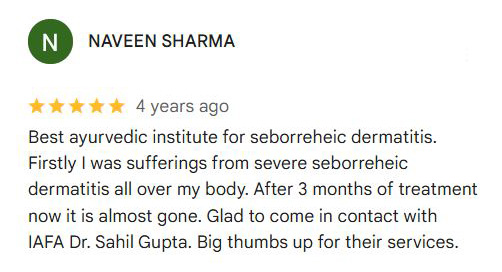
We are so elated to receive such humble feedback from our patients. You can read it here.
A Quick Wrap-Up
Seborrheic Dermatitis and Yeast Allergy had affected our patient for the past eight years. After struggling with these chronic conditions for so long, he underwent a three-month Ayurvedic treatment program at IAFA® and experienced significant improvement. His journey reflects the importance of addressing the root cause of the condition through a personalized approach.
At IAFA®, you will receive care under the guidance of Vaidya Sahil Gupta, an experienced Ayurvedic physician with more than 14 years of clinical experience, supported by a dedicated and well-coordinated team. We offer authentic, high-quality herbal medicines, personalized Ayurvedic diet plans, and guided yoga sessions as part of a comprehensive treatment approach.
IAFA® is not only a trusted provider of Ayurvedic care for various types of allergies but also a registered manufacturer of Ayurvedic herbal medicines. This enables us to maintain high standards of quality and authenticity in the medicines we provide.
If you are looking for an Ayurvedic approach to managing Seborrheic Dermatitis and Yeast Allergy, IAFA® may be able to help. Our treatments are customized according to each patient’s condition and are designed to address the underlying cause while supporting long-term health. Many of our herbal formulations are also suitable for children when prescribed by an Ayurvedic physician.
At IAFA®, we provide Ayurvedic management for:
- Various types of skin allergies, food allergies, nasal allergies, and chronic allergic conditions.
- Chronic health conditions such as asthma, migraines, stomach ulcers, and other lifestyle disorders.
- Food intolerances, including milk intolerance and other dietary sensitivities.

Book an online consultation today and take the first step toward a natural and personalized approach to better health. Our team is here to guide you throughout your wellness journey.
Your Health is Our Priority.