

 3826
3826
 Share
Share



Allergies represent a common and serious health problem in pediatric age groups and account for many outpatient visits. Their chronic nature and association with other comorbid conditions have influenced many parents to seek alternative treatments. Moreover, there is growing concern regarding the long-term, dose-related side effects of antihistamines, corticosteroids, and similar medications.
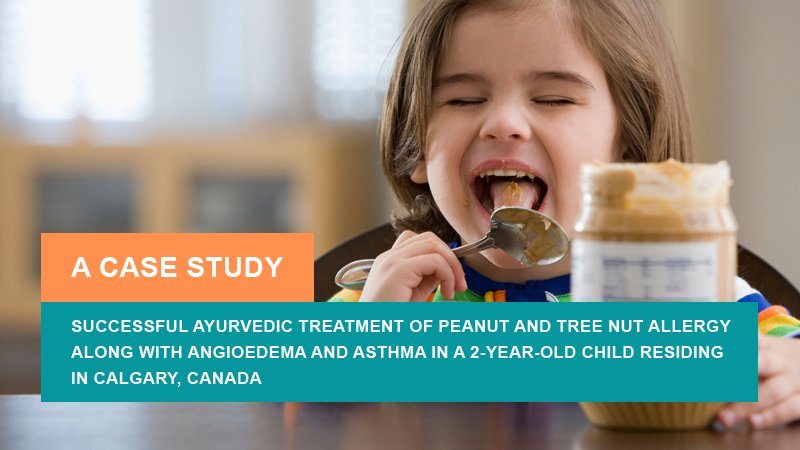
Considering the etiopathogenesis of allergies in children, Ayurvedic herbal treatment may show positive effects in relieving allergy symptoms in the pediatric population. This case study highlights the successful treatment of tree nut allergy, peanut allergy, angioedema, nasal allergies, and asthma in a male child aged over two years through Ayurvedic intervention under the supervision of Dr. Gupta at IAFA.
Abstract
The incidence of allergic disorders in children continues to rise. Allergic diseases often occur in a time-based sequence, beginning with atopic dermatitis and food allergies in infancy and gradually progressing to allergic asthma and allergic rhinitis. This phenomenon is known as the “Allergic March” or “Atopic March.” In modern medicine, the mechanisms underlying the atopic march are still not completely understood.
Here, we review the concept of the atopic march from an Ayurvedic perspective and discuss its successful management through Ayurvedic interventions by Dr. Gupta at IAFA in a male child aged over two years. The child was suffering from food allergies, particularly peanut allergy and tree nut allergy, along with angioedema, especially over the lips, nasal allergy, and associated symptoms. Doctors had suggested the use of inhalers for asthma; however, the child’s mother did not allow their use because of concerns regarding dependency and habitual use.
At IAFA, various Ayurvedic external as well as internal treatments were prescribed. These included herbal formulations and medicated ghrita administered orally to help improve immunity. The patient showed a steady reduction in all symptoms over time. This management not only completely relieved the symptoms but also prevented recurrence.
Keywords: Ayurveda for allergy, Allergy March, Successful treatment of peanut allergy, tree nut allergy, nasal allergy, Ayurvedic intervention, tree nut allergy treatment.
Introduction
The incidence of Allergy March in children has increased in frequency in recent decades. Children with allergy march may develop a typical sequence. Allergy March may be defined as a propensity to produce IgE antibodies and sensitization in response to certain triggers which are generally harmless. The risk of developing allergy march is complex and the temporal pattern may not be a simple progression.
The diagnosis of allergens in children is still a challenge. Allergy March usually has remissions and exacerbations but total relief and maintaining good health is always the expectation. Keeping the whole system healthy without adverse effects is the solution which is gaining maximum demand to opt for Ayurveda management especially in children.
Both Ayurveda and modern medical science agree regarding the Nidana of the disease as host factors. Therefore, Nidana Parivarjanam plays a key role in the management strategy in both sciences.
Ayurvedic Concept
Ayurveda explains the pathology of allergies as immune dysfunction which is due to the formation of Ama (undigested intermediate product) which creates imbalance of the doshas.
Ayurveda has potent herbs and herbal remedies that have immunomodulatory, anti-allergic, anti-inflammatory effects which can be used for breaking the pathology of allergies at various levels and thus give prompt relief to the patient.
Case Report
- UID: 6906
- Age: 2+ years
- Gender: Male
- Date of Consultation: 12/02/2022
Chief Complaints
- Multiple food protein intolerance specifically with tree nuts and peanuts.
- Allergic Response: Angioedema over lips and urticarial rashes over the body after ingesting the allergen (food).
- Nasal Allergy and its associated symptoms.
- Shortness of breath
Health History
- Formula milk was introduced at the time of birth for the first 15 days.
- After that, exclusive breastfeeding up to 2 years and bloating at the time of introduction of any milk other than mother’s feed.
- Symptoms of Atopic Dermatitis (extreme dryness) at the age of 3 months.
Treatment Plan
External Procedure
- For Nasal: Pratimarsha Nasya with: Nasa Yoga Grutham
- For Skin: IAFA Shishu Diaper Rash Oil for Local Application (Enriched with Karanj Oil)
Internal Medication
- IAFA Swaras Chikitsa with: Aahar Amrutham Ras
- Aahar Amrutham Bindu
- Shishu Laxoherb
Dosage/Method of Usage:
- Nasa Yoga Grutham: 1-2 drops of lukewarm grutham to be instilled in bilateral nostrils twice a day in the morning and at bed time.
- IAFA Shishu Diaper Rash Oil: 3-5 ml IAFA Shishu Diaper Rash Oil to be applied over the affected body part during allergic response over the affected area.
- Aahar Amrutham Ras: 7.5 ml to be taken with equal quantity of water after meals.
- Aahar Amrutham Bindu: 1 ml with 10 ml water to be taken twice a day anytime.
- Shishu Laxoherb: 2 ml with 20 ml water to be taken once a day at bedtime.
This treatment was started on 12/02/2022 and is advised to follow the same for three months. In between three months, regular follow-ups were scheduled to track the health status of the patient. After three months, it was found that nasal and skin allergies were settled, so the treatment was modified specifically on food protein intolerances under the guidance of Dr. Gupta.
After Three Months, the Child was Having the Following Complaints
- Multiple food protein intolerances specifically with tree nuts and peanuts.
Treatment Plan Based on the Symptoms
External Procedure:
- For Nasal: Pratimarsha Nasya with: Nasa Yoga Grutham: 1-2 drops of lukewarm grutham to be instilled in bilateral nostrils twice a day in the morning and at bed time.
- For Skin: IAFA Shishu Diaper Rash Oil for Local Application (Enriched with Karanj Oil): 3-5 ml IAFA Shishu Diaper Rash Oil to be applied over the affected area during allergic response.
Internal Medication:
- IAFA Swaras Chikitsa: Aahar Amrutham Ras: 7.5 ml with water twice a day with equal amount of water after meal.
- Anthra Mithram Gulika: 1 tablet to be taken once a day after meals. Mash the tablet and give it with lukewarm water.
- Shishu Laxoherb: 1 ml with 20 ml water once a day at bedtime.
Along with the treatment, the patient’s parents were strictly advised to follow the restrictions in the patient’s diet regarding food.
Do’s (Pathya)
- More fiber and seasonal fruits and vegetables, old rice, buckwheat, ragi, whole corn, millets, gluten free oats, frequent intake of small amounts of lukewarm water.
Don’ts (Apathya)
- High fat foods such as cream, butter, greasy food, spicy food, fermented, stale, preserved and packaged food.
After continuing the modified treatment for one month, the child got significant relief. The sesame seeds on the top of the burger that he was allergic to before is not triggering him now. Till date, not only there is exacerbation of symptoms in the child but there was also complete absence of adverse events reported during the course of treatment under the supervision of Dr. Gupta.
The child’s mother was very happy with the response the child got from Ayurvedic treatment administered by IAFA® in a short duration of time. She is happy with the outcome and left IAFA® with a happy note.
Happy Note
Below is a happy note from the patient’s mother through a video testimonial:
“I searched on Google to know why he’s having such kind of issues. I saw your website and messaged you on WhatsApp and talked to you. Some people de-motivated me by saying that Ayurveda treatment is not good. Then, you made me believe that it will get solved by the time. I have continued the treatment from you and right now, his skin is very clear and there is no patch now, his nasal allergies are fine. He can live in any weather and he does not have any sneezing, runny nose. All his problems are over. Very good medicines. Thanks a ton! Thanks, IAFA for curing my child. My message is that have a faith, try the treatment and definitely you will get rid of allergies.”
Conclusion
The Ayurvedic approach to the management of allergies focuses on strengthening and modulating the individual’s immune system in order to reduce susceptibility to allergens while simultaneously providing symptomatic relief to the patient. Thus, this case study suggests that the treatment provided by IAFA may prove beneficial in managing pediatric allergic disorders by offering effective and long-term solutions, thereby improving the patient’s overall quality of life. This finding is particularly significant considering the severity of the disease, its prognosis, and the limited response to established conventional therapies.

In dealing with allergies of various etiologies, IAFA sincerely hopes to support you on your journey toward achieving a life marked by improved health and wellness for you and your loved ones. IAFA offers quality Ayurvedic products and therapies for peanut allergy treatment, tree nut allergy treatment, asthma management, and the treatment of various other allergic conditions that reflect the goodness of nature. If you or your loved ones are experiencing similar health concerns, book your appointment with IAFA today and take the first step toward natural healing and better health.