

 300
300
 Share
Share



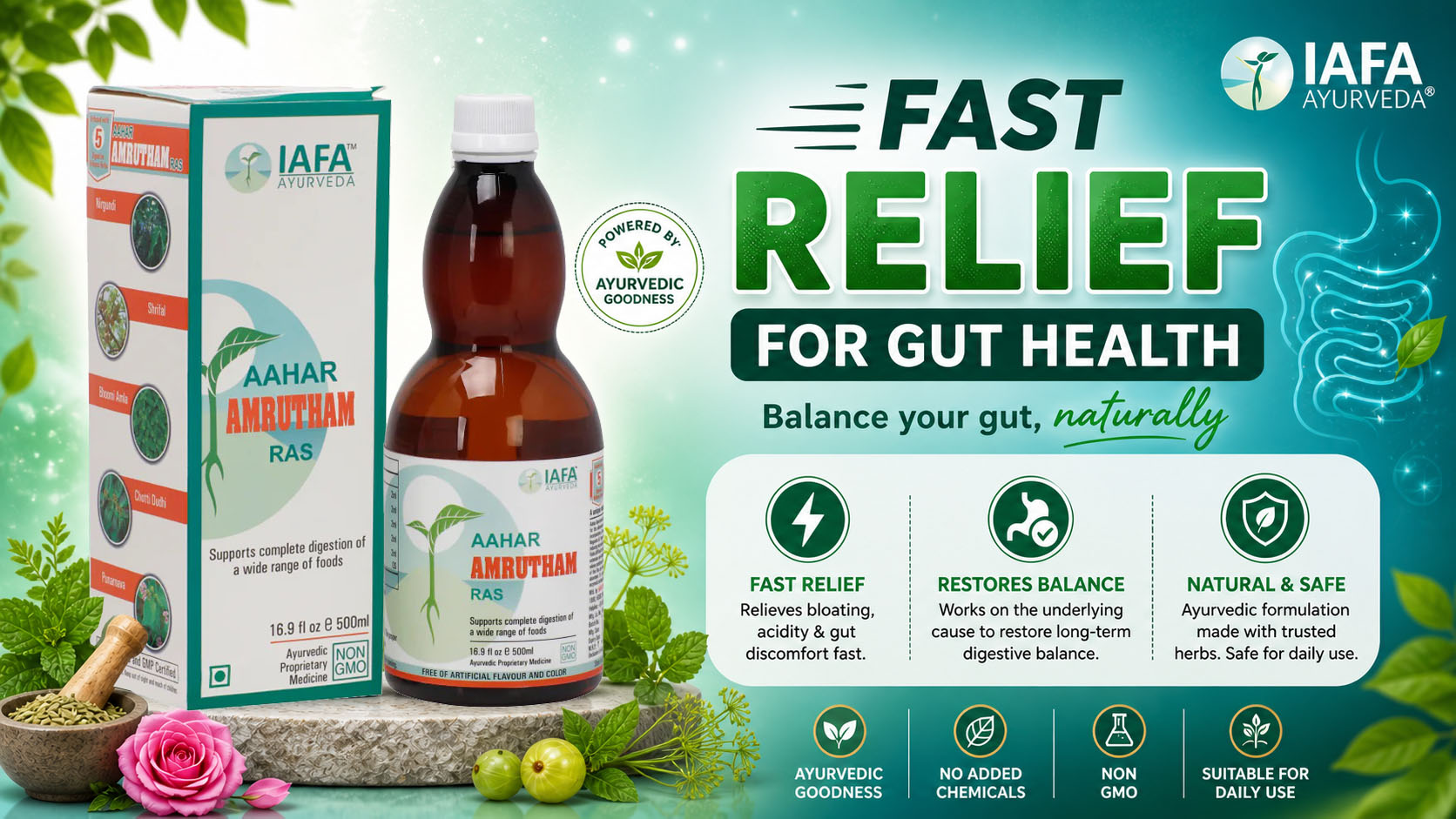
What is Aahar Amrutham Ras?
Aahar Amrutham Ras is prepared as Swarasa Kalpana, the most potent and closest to natural form of herbal medicine in Ayurveda. Its liquid form ensures fast absorption and quick action on various gastrointestinal issues like food intolerance, weak digestion (Agnimandya), toxin formation (Ama), and gut inflammation.
Fast Relief with Root-Level Healing
- Provides quick relief from bloating, acidity, and gut discomfort.
- Simultaneously works on the underlying pathogenesis to restore long-term digestive balance.
Why Swarasa (Liquid Form)?
Swarasa provides a fast-acting and highly effective approach to restoring digestive balance and managing gastrointestinal issues. It is obtained from fresh herbs and is described as a highly effective form for immediate therapeutic action. Due to its liquid nature, it acts directly on Annavaha Strotas (digestive channels) and helps in the rapid correction of digestive function.
Benefits:
- High Potency: Prepared from fresh herbs with minimal processing, it retains the full therapeutic strength of the ingredients.
- Faster Action: Liquid form begins working quickly in the digestive system, making it effective in bloating, acidity, and gut discomfort.
- Better Absorption: Active compounds are readily absorbable, allowing efficient interaction with the gut lining.
- Direct Digestive Action: Acts directly on the gastrointestinal tract, helping correct digestion at its root.
What’s Happening Inside Your Body?
Gastrointestinal issues develop when:
- Digestion becomes weak (Agnimandya)
- Undigested food forms toxins (Ama)
- Toxins block channels (Strotorodha)
- The body starts reacting abnormally (Hypersensitivity)
Result: Bloating, acidity, food intolerance, IBS-like symptoms, Gut dysbiosis, increased intestinal permeability (leaky gut), Eosinophilic disorders (e.g., EoE).
How Aahar Amrutham Ras Corrects It?
This formulation works at multiple levels:
- Enhances digestive fire and enzyme secretion
- Promotes proper breakdown of macronutrients
- Restores gut microbiome balance
- Facilitates proper elimination of metabolic waste
- Improves absorption of micro- and macronutrients
- Modulates immune hypersensitivity reactions
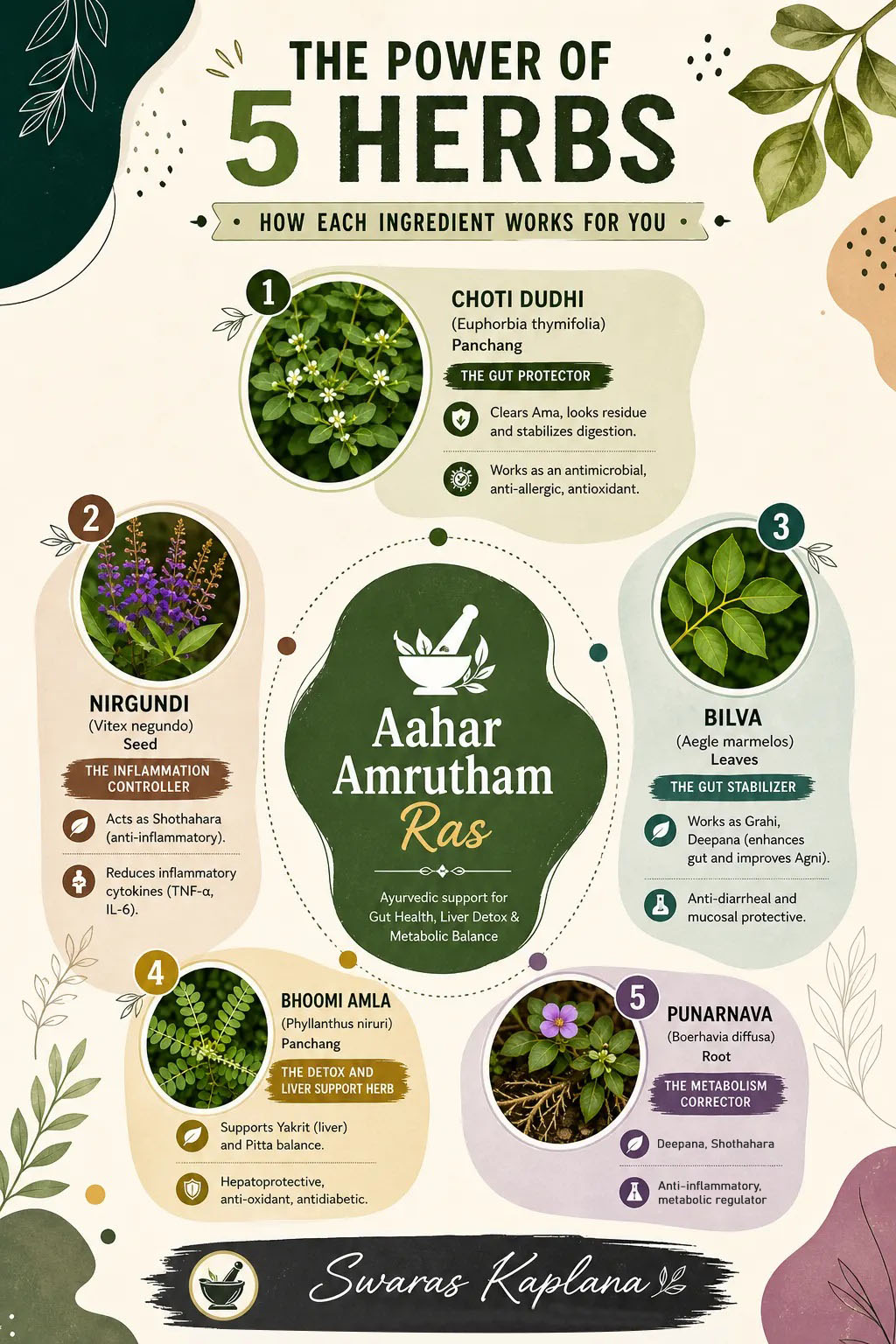
Power of 5 Herbs – How Each Ingredient Works for You?
1. Choti Dudhi (Euphorbia thymifolia) – The Gut Protector
When your gut is irritated, every food becomes a trigger-this herb calms that reactivity.
- Calms irritate intestines and help control loose motions, acidity, and gut infections.
- Reduces food allergic reactions triggered inside the gut
- Protects the intestinal lining from damage
Ayurvedic view: Clears Ama (toxic residue) and stabilizes digestion
Modern view: Works as an antimicrobial, anti-allergic, antioxidant.[1-3]
2. Nirgundi (Vitex negundo) – The Inflammation Controller
Food allergies are not just about digestion- it’s inflammation that has gone wrong. This herb brings it under control.
- Reduces gut inflammation and swelling
- Controls hypersensitivity reactions to food
- Helps relieve discomfort like pain and heaviness
- Anti-helminthic[4]
Ayurvedic view: Acts as Shothahara (anti-inflammatory)
Modern view: Reduces inflammatory cytokines (TNF-α, IL-6)[5]
3. Bilva (Aegle marmelos) – The Gut Stabilizer
If your gut is unstable, nothing gets absorbed properly. This herb brings stability back
- Improves digestion and stops frequent loose motions[6]
- Restores intestinal mucosal barrier and strengthens intestinal lining[7]
- Reduces gas, bloating, and irregular bowel movements
- Pre and pro-biotic effect[8]
Ayurvedic view: Works as Grahi, Deepana (stabilizes gut and improves Agni)
Modern view: Anti-diarrheal and mucosal protective.[6-7]
4. Bhoomi Amla (Phyllanthus niruri) – The Detox and Liver Support Herb
A weak liver results in poor digestion, which means more toxins, and this herb breaks that cycle.
- Supports liver function, hence, improves food metabolism
- Reduces acidity (Pitta Balance) and gut irritation
- It helps the body handle complex foods better
- Reduce ulcer formation[9]
Ayurvedic view: Supports Yakrit (liver) and Pitta balance
Modern view: Hepatoprotective, anti-ulcer, antioxidant[9-11]
Gastric issues are often a slow metabolic issue; this herb resets that balance
- Reduces bloating and fluid retention
- Improves digestion and nutrient absorption
- Helps control chronic low-grade inflammation[12]
- Healthy bowel movement
- Anti-ulcer Activity[13]
Ayurvedic view: Deepana, Shothahara
Modern view: Anti-inflammatory, metabolic regulator[14-15]
What Makes this Formulation Powerful?
5 Miraculous Herbs Work in 5 Levels
Aahar Amrutham Ras
Swarasa Kalpana
Fast Action • Root-Level Correction
LEVEL 1 – DIGESTIVE ACTIVATION
↑ Agni (Deepana–Pachana)
↑ Digestive Enzymes and Bile
↑ Breakdown of Food
RESULT: Complete and Efficient DigestionLEVEL 2 – AMA CLEARANCE
↓ Toxic Metabolites (Ama)
↓ Fermentation / Putrefaction
RESULT: Reduced Toxic LoadLEVEL 3 – MICROBIOME RESET
Restores Gut Microbiota
↓ Pathogens
↑ Beneficial Flora
RESULT: Balanced Gut EnvironmentLEVEL 4 – MUCOSAL HEALING
↑ Gut Barrier Integrity
↓ Leaky Gut
↑ Nutrient Absorption
RESULT: Stronger Gut LiningLEVEL 5 – IMMUNE MODULATION
↓ Cytokines (TNF-α, IL-6)
↓ Hypersensitivity
RESULT: Reduced InflammationFINAL OUTCOME
✔ Normal Digestion
✔ Improved Food Tolerance
✔ Reduced Inflammation
✔ Balanced Microbiome
✔ Long-term Gut Stability
How Aahar Amrutham Ras Breaks Pathogenesis?
Food intolerance and related gut disorders develop through a chain of internal disturbances. Aahar Amrutham Ras works by correcting each stage of this process from its root.
The disease process begins with:
- Agnimandya (impaired digestive fire)
Improper digestion leads to the incomplete breakdown of food
- Ama Formation (toxic metabolites)
Undigested food transforms into sticky, toxic substances
- Srotorodha (channel obstruction)
Ama blocks Annavaha and Rasavaha Srotas, disturbing circulation and metabolism.
- Dosha Imbalance (Kapha-Pitta predominance)
Leads to inflammation, hypersensitivity, and abnormal reactions to food
How Aahar Amrutham Ras Corrects This?
By acting on both Ayurvedic and modern levels, the formulation:
- Restores Agni through Deepana and Pachana action
- Digests and eliminates Ama, reducing toxic load
- Clears Srotas, improving nutrient flow and absorption
- Balances Doshas, especially Kapha and Pitta, reducing reactivity
- Enhancing digestive efficiency and enzyme activity
- Reducing pathogenic microbial load
- Providing anti-inflammatory effects through cytokine modulation
- Supporting gut mucosal protection and repair
- Regulating immune response and hypersensitivity
This results in normalization of digestion and reduction of hypersensitivity.
Therapeutic Indications
“Fix your digestion, and your body stops reacting to food.”
Aahar Amrutham Ras is indicated in a wide range of digestive, metabolic, and hypersensitivity disorders, arising from Agnimandya, Ama formation, and Srotas dysfunction. Suitable for both acute digestive complaints and chronic functional gastrointestinal disorders, especially where root pathology involves Agni impairment and Ama accumulation.
Digestive Disorders
- Agnimandya (Indigestion / low digestive enzyme activity)
- Ajeerna (Functional dyspepsia)
- Adhmana (Bloating and abdominal distension)
- Amlapitta (Acid reflux/gastritis / hyperacidity)
- Atisara (Diarrhea, including infective and functional)
- Grahani Dosha (Malabsorption syndrome / IBS-like conditions)
Functional Gastrointestinal Disorders
- Grahani Roga (irritable bowel syndrome – IBS)
- Parinama Shoola / Udar Shoola (Abdominal pain, colic, functional bowel pain)
- Annavaha Srotas Dushti (Gut dysmotility / digestive imbalance)
Food Intolerance, Hypersensitivity, and Gut Barrier Dysfunction
- Anna Asatmya / Viruddha Ahara Janya Vikara (Food intolerance/food sensitivity)
- Ama Janya Vyadhi (Toxin-mediated metabolic and inflammatory disorders, Dysbiosis, Leaky gut)
- Rasavaha- Raktavaha Dushti (Allergic reactions, including skin manifestations)
Inflammatory & Immune-Related Conditions (Supportive Care)
- Pittaja and Kaphaja Grahani (Inflammatory bowel conditions)
- Raktadushti (Chronic inflammatory and allergic conditions)
- Eosinophilic disorders (e.g., Eosinophilic Esophagitis – EoE)
Gut-Liver & Metabolic Support
- Yakrit Dushti (Helps in maintaining a healthy lipid profile- Liver dysfunction affecting digestion and metabolism)
- Ama Sanchaya (Accumulation of metabolic toxins/dysbiosis)
- Mandagni Janya Vikara (Metabolic sluggishness and poor assimilation)
Associated Systemic Manifestations
- Kandu, Twak Vikara (Ama Janya) (Allergic skin conditions, itching, rashes, urticaria, etc.)
- Alasya, Guruta (Post-meal fatigue, heaviness)
- Aruchi (Loss of appetite)
This formulation is particularly useful in conditions involving:
- Food-related hypersensitivity and intolerance
- Impaired digestion
- Toxic metabolite accumulation (Disturbed lipid profile)
- Gut inflammation and microbial imbalance
Why Choose Aahar Amrutham Ras?
- Fast-acting liquid formulationsitivity.
- Works on root cause, not just symptoms
- Combines Ayurvedic wisdom and modern research
- Multi-targeted: Digestion, gut, and immunity
Aahar Amrutham Ras
Clinical Evidence
A comprehensive review published in the World Journal of Pharmaceutical and Medical Research (WJPMR) has highlighted the role of Aahar Amrutham formulations in the Ayurvedic management of food intolerance. The study emphasizes its effectiveness in improving digestive function, reducing Ama formation, and modulating gut hypersensitivity through correction of Agnimandya and restoration of gut homeostasis. (AYURVEDIC TREATMENT FOR FOOD INTOLERANCE: A COMPREHENSIVE REVIEW OF IAFA FOR ALLERGY- AAHARA AMRUTHAM FORMULATIONS-Vol-11, Issue-10, 2025)
Frequently Asked Questions (FAQs)
Q1. What is Aahar Amrutham Ras Used for?
Ans. Aahar Amrutham Ras is an Ayurvedic liquid formulation primarily used to manage digestive disorders such as indigestion (Agnimandya), acidity (Amlapitta), bloating (Adhmana), and IBS-like conditions (Grahani). It also supports gut health by reducing toxin formation (Ama), improving digestion, and balancing the gut microbiome.
Q2. How does Aahar Amrutham Ras Improve Digestion?
Ans. Aahar Amrutham Ras works by enhancing digestive fire (Agni), promoting enzyme secretion, and improving the breakdown and absorption of nutrients. It also helps eliminate toxins (Ama), restore gut flora balance, and strengthen the intestinal lining for long-term digestive stability.
Q3. Is Aahar Amrutham Ras Effective for Food Intolerance and Gut Sensitivity?
Ans. Yes, Aahar Amrutham Ras is beneficial in managing food intolerance and gut hypersensitivity. It reduces inflammatory responses, supports immune modulation, and improves gut barrier function, helping the body tolerate a wider range of foods without adverse reactions.
Q4. Why is Swarasa (Liquid Form) Important in Aahar Amrutham Ras?
Ans. Swarasa (fresh herbal extract) is considered the most potent Ayurvedic preparation because it is made from fresh herbs with minimal processing. Its liquid form ensures faster absorption, quicker action, and direct impact on the digestive system compared to tablets or powders.
Q5. Can Aahar Amrutham Ras be Used for Chronic Digestive Disorders like IBS?
Ans. Yes, Aahar Amrutham Ras can be used as supportive management for chronic digestive conditions such as IBS (Grahani Roga). It addresses the root causes like weak digestion, toxin accumulation, gut inflammation, and microbiome imbalance, offering both symptomatic relief and long-term gut correction.
References
1. SR Kane, VA Apte, SB Patil, CS Magdum. Antimicrobial Potential of Euphorbia thymifolia Linn. Research J. Pharm. and Tech. 2 (1): Jan.-Mar. 2009; Page 208- 209.
2. Parmar G, Pundarikakshudu K, Balaraman R. Anti-anaphylactic and antiasthmatic activity of Euphorbia thymifolia L. on experimental animals. J Tradit Complement Med. 2018 Apr 30; 9 (1):60- 65. doi: 10. 1016/ j. jtcme. 2018. 03. 002. PMID: 3067- 1367; PMCID: PMC 6335472.
3. Lin CC, Cheng HY, Yang CM, Lin TC. Antioxidant and antiviral activities of Euphorbia thymifolia L. J Biomed Sci. 2002 Nov-Dec; 9 (6 Pt 2): 656- 64. doi: 10. 1159/ 000067281. PMID: 12432232.
4. Khan FA, Swarnkar CP, Soni LK, Sharma SR. Phytochemicals, antioxidant ability, and in vitro anthelmintic activity of crude extracts from Vitex negundo leaves against Haemonchus contortus. J Parasit Dis. 2024 Jun; 48 (2): 257- 268. doi: 10. 1007/ s12639- 024- 01660-8. Epub 2024 May 7. PMID: 38840874; PMCID: PMC 11147997.
5. Kulkarni RR, Virkar AD, D’mello P. Antioxidant and Antiinflammatory Activity of Vitex negundo. Indian J Pharm Sci. 2008 Nov; 70 (6): 838- 40. doi: 10. 4103/ 0250- 474X. 49140. PMID: 21369459; PMCID: PMC 3040892.
6. Brijesh S, Daswani P, Tetali P, Antia N, Birdi T. Studies on the antidiarrhoeal activity of Aegle marmelos unripe fruit: validating its traditional usage. BMC Complement Altern Med. 2009 Nov 23; 9: 47. doi: 10. 1186/ 1472- 6882- 9- 47. PMID: 19930- 633; PMCID: PMC- 2788518.
7. Sahu M, Kaushik A, Mishra AU, Rout PK, Sundaresan V, Shanker K, Mani DN, Shukla AK. Aegle marmelos effectively attenuates DSS-induced colitis by restoring the intestinal mucosal barrier and alleviating inflammation through modulation of gut microbiota in mice. Phytomedicine. 2025 Dec; 149: 157538. doi: 10. 1016/ j. phymed .2025. 157538. Epub 2025 Nov 11. PMID: 4127- 3865.
8. Tiwari, Sakshi & Singh, Vandana. (2021). Evaluation of Bael Fruit (Aegle marmelos) as a Prebiotic and its antibacterial activity.
9. Mostofa R, Ahmed S, Begum MM, Sohanur Rahman M, Begum T, Ahmed SU, Tuhin RH, Das M, Hossain A, Sharma M, Begum R. Evaluation of anti-inflammatory and gastric anti-ulcer activity of Phyllanthus niruri L. (Euphorbiaceae) leaves in experimental rats. BMC Complement Altern Med. 2017 May 16; 17 (1): 267. doi: 10. 1186/ s12906- 017- 1771- 7. PMID: 28511679; PMCID: PMC- 5434621.
10. Ezzat MI, Okba MM, Ahmed SH, El-Banna HA, Prince A, Mohamed SO, Ezzat SM. In-depth hepatoprotective mechanistic study of Phyllanthus niruri: In vitro and in vivo studies and its chemical characterization. PLoS One. 2020 Jan 15; 15 (1): e0226185. doi: 10. 1371/ journal. pone. 0226185. PMID: 31940365; PMCID: PMC 6961881.
11. Giribabu N, Rao PV, Kumar KP, Muniandy S, Swapna Rekha S, Salleh N. Aqueous Extract of Phyllanthus niruri Leaves Displays In Vitro Antioxidant Activity and Prevents the Elevation of Oxidative Stress in the Kidney of Streptozotocin-Induced Diabetic Male Rats. Evid Based Complement Alternat Med. 2014; 2014: 834815. doi: 10.1155/ 2014/ 834815. Epub 2014 Jun 1. PMID: 24991228; PMCID: PMC4058581.
12. Rawat AK, Mehrotra S, Tripathi SC, Shome U. Hepatoprotective activity of Boerhaavia diffusa L. roots–a popular Indian ethnomedicine. J Ethnopharmacol. 1997 Mar; 56 (1): 61- 6. doi: 10. 1016/ s0378- 8741 (96) 01507-3. PMID: 9147255.
13. Das S, Singh PK, Ameeruddin S, Kumar Bindhani B, Obaidullah WJ, Obaidullah AJ, Mishra S, and Mohapatra RK (2023) Ethnomedicinal values of Boerhaavia diffusa L. as a panacea against multiple human ailments: a state-of-the-art review. Front. Chem. 11: 1 – 297300. doi: 10. 3389/ fchem.2023. 1297300
14. Aviello G, Canadanovic-Brunet JM, Milic N, Capasso R, Fattorusso E, Taglialatela-Scafati O, Fasolino I, Izzo AA, Borrelli F. Potent antioxidant and genoprotective effects of boeravinone G, a rotenoid isolated from Boerhaavia diffusa. PLoS One. 2011; 6 (5): e19628. doi: 10. 1371/ journal. pone. 0019628. Epub 2011 May 20. PMID: 21625488; PMCID: PMC- 3098844.
15. Giresha AS, Pramod SN, Sathisha AD, Dharmappa KK. Neutralization of Inflammation by Inhibiting In vitro and In vivo Secretory Phospholipase A2 by Ethanol Extract of Boerhaavia diffusa L. Pharmacognosy Res. 2017 Apr- Jun; 9 (2): 174- 181. doi: 10. 4103/ 0974- 8490. 204650. PMID: 28539742; PMCID: PMC 5424559.