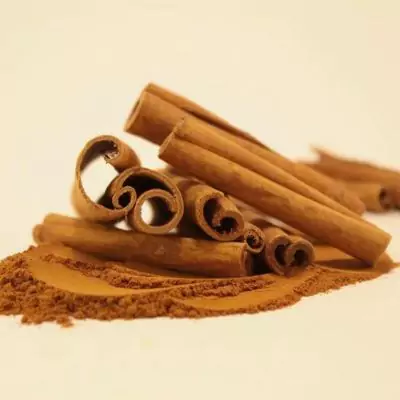
Tvak (Cinnamomum zeylanicum)
Discover Tvak (Cinnamomum zeylanicum), an important Ayurvedic herb known for its digestive, anti-inflammatory, antimicrobial, and antiallergic properties, along with its uses, dosage, and benefits.
On This Page


-
 4438
4438
 4438
4438
 Share
ShareSummarise this article using AI




Introduction
Tvak is commonly known as cinnamon bark. Tvak is the Sanskrit name for cinnamon. Since the bark is the useful part of the plant, it is called Tvak. It is one of the major spices used in India. It acts as an appetizer and helps in the proper digestion of food by stimulating the secretion of digestive enzymes. It possesses numerous medicinal properties and is an important herb in Ayurveda. The inner bark of the plant is primarily used for medicinal and culinary purposes.
Dr. Gupta’s IAFA has been consistently working on the Tvak plant to discover more of its medicinal properties. Our experts have found that the plant exhibits antiallergic, anti-inflammatory, antimicrobial, antibacterial, antifungal, antidiabetic, anticancer, and hypolipidemic activities. They have also conducted numerous studies on this plant and found that Cinnamomum zeylanicum contains aldehydes, acetates, alcohols, terpenes, flavonoids, alkaloids, anthraquinones, coumarins, phenols, steroids, and several other bioactive compounds.
Action of Tvak (Cinnamomum zeylanicum) in Allergies
IAFA has been conducting various studies on Tvak to explore its antiallergic and anti-inflammatory properties. The plant also acts as an expectorant. Cinnamomum zeylanicum contains several bioactive phytoconstituents, including aldehydes, acetates, alcohols, terpenes, flavonoids, alkaloids, anthraquinones, coumarins, phenols, saponins, tannins, carboxylic acids, hydrocarbons, camphene, fatty acids, lignans, steroids, and propenoids. The presence of these phytoconstituents contributes to its anti-inflammatory and antioxidant properties.
Vernacular Names
| Sanskrit Name | त्वक्, स्वाद्वी, किंवा त्वक्स्वाद्वी, तनुत्वक् तथा दारुसिता |
| Hindi Name | Dalchini |
| English Name | Cinnamon |
| Malayalam Name | Karuvapatta |
| Kannada Name | Chakke |
| Telungu Name | Dalchinichakka |
Botanical Name
Cinnamomum zeylanicum
Family
Lauraceae
Morphology of Tvak (Cinnamomum zeylanicum)
- Grows upto 10-15 metres.
- Bark – thick, smooth
- Bark peeled off when tree gets matured.
- Leaves – ovate, dark green in colour
- Flowers – numerous, in silky pubescent panicles
- Fruit – dark purple colored, oblong or ovoid oblong
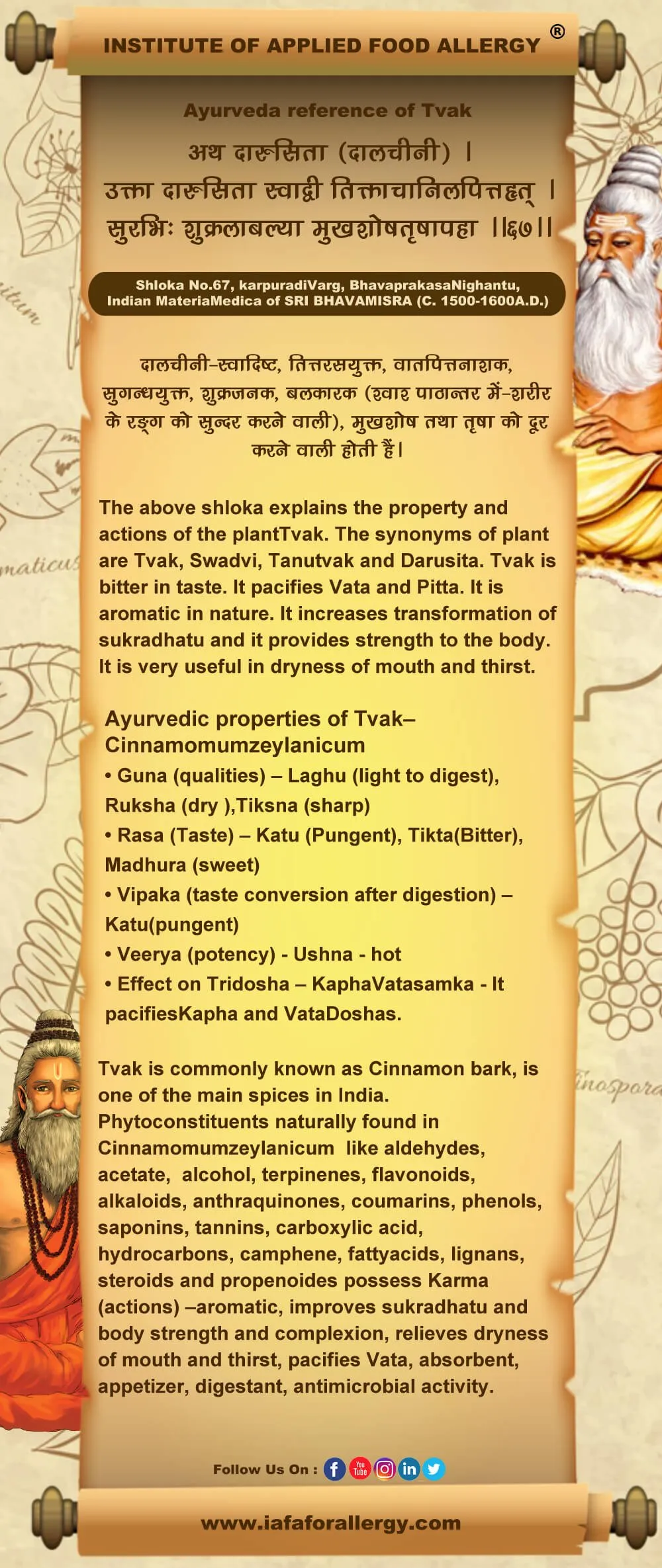
Ayurveda Reference of Tvak (Cinnamomum zeylanicum)
Geographical Distribution of Tvak (Cinnamomum zeylanicum)
The plant is distributed across various parts of the world. It is commonly found in Sri Lanka, the Western Ghats of India, Malaysia, Myanmar, and other Southeast Asian countries.
Phytoconstituents of Tvak (Cinnamomum zeylanicum)
The plant contains several phytoconstituents, including essential oils, cinnamaldehyde, and eugenol in the leaves and bark; camphor in the root bark; trans-cinnamyl acetate and caryophyllene in the fruits; and terpene hydrocarbons and oxygenated terpenoids in the buds.
Parts Used of Tvak (Cinnamomum zeylanicum)
- Stem bark
- Leaves
- Oil
Dosage of Tvak (Cinnamomum zeylanicum)
- Stem bark powder – 1-3 gms
- Leaves powder – 500 mg -1 gm
- Oil – 2-5 drops
Medicinal Properties of Tvak (Cinnamomum zeylanicum)
- Sugandhi – aromatic
- Sukrajanaka – increases the transformation of sukradhatu
- Balya – gives body strength
- Varnya – improves skin complexion
- Mughasosaghna – relieves dryness of mouth
- Trusnanigraha – alleviates thirst
- Grahi – absorbent
- Dipana – appetizer
- Pacaka – digestant
- Sonitasthapana – stops bleeding
- Krmighna – anti-microbial action

Have A Health Issue?
Consult Online
- Dr. Sahil Gupta (B.A.M.S., M.H.A.)
Ayurvedic Allergy Specialist
CEO & Founder of IAFA®
Home Remedies of Tvak (Cinnamomum zeylanicum)
Ayurvedic treatment is based on naturally available medicinal plants and herbs. Dr. Gupta’s IAFA has been conducting extensive studies on the medicinal plants described in classical Ayurvedic texts and has identified a wide range of therapeutic uses for these plants. Tvak is one such plant that possesses numerous medicinal properties. Some of its important medicinal uses are described below.
- In Dryness of mouth (Mukhasosa) – Tvak, Musta and Ela are taken in equal quantity of 20 gms and crushed, added to 200 ml of water and reduced to 60 ml . Then the filtered solution is used for holding inside mouth( gandusha) for 5-10 minutes.
- In Indigestion (Ajirna) – 5 gms of powder of Tvak is taken orally with honey.
- In vomiting (Vamana) – A small piece of Tvak is kept in mouth for half an hour
- In Diarrhea (Atisara) – 50 gm of Tvak is taken ,added with 200 ml of water ,boiled and reduced to 60 ml . This decoction is taken orally .
- In excess menustrual bleeding (Pradara) – 10 gm of Tvak powder is mixed with 20 ml juice of flowers of the plant Asoka and taken internally.
- In cough (Kasa) – Tvak (2gm), Ela(4 gm ),Pippali (8 gm) and Sugar (16 gms) powdered and taken with honey and ghee.
- In diabetes (Prameha) – Intake of 1 -3 gms of Tvak powder daily lowers blood sugar level.
- In Acne (Mukhadushika) – Powder of Tvak along with honey is applied over face and remove after 20 minutes.

Dr. Gupta’s IAFA is one of the safest organization to provide pure and non toxic Ayurvedic medicines. Our treatment protocols are strictly based on Ayurvedic principles. We mainly focuses on alleviating allergic disorders by using naturally available herbs which have less to no side effects. We ensures the safety of our customers by subjecting our products to various tests.
Reach IAFA for safe herbal remedies for all your ailments!!!


Was this Page Helpful?
Read More Articles
-

Kasini (Cichorium intybus)
Know about the uses, benefits, and medicinal properties of Chicory, Kasini (Cichorium…
-
-