


 2264
2264
 Share
Share



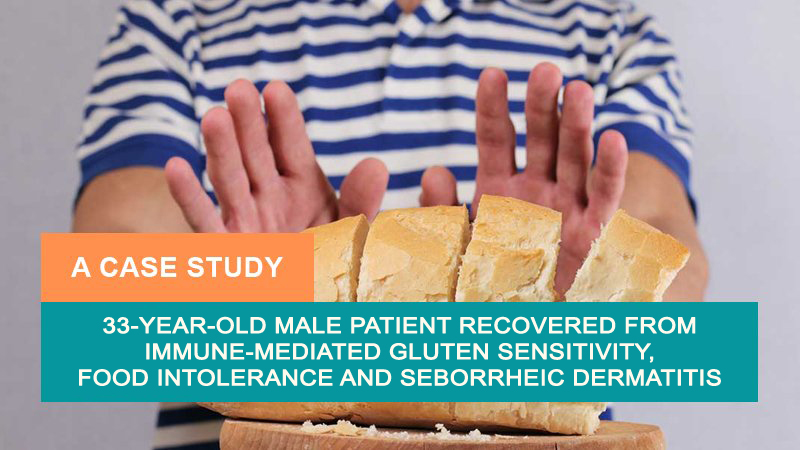
Abstract
Background: Gluten sensitivity is an emerging immune-mediated gastrointestinal disorder often associated with extra-intestinal manifestations such as skin lesions and scalp dermatitis. Ayurveda correlates such presentations with Grahani Roga arising from Agnimandya, Ama (toxin) formation, and Strotas Atipravritti.
Objective: To evaluate the role of individualized Ayurvedic management in a patient with gluten sensitivity, seborrheic dermatitis, and yeast intolerance.
Materials and Methods: A 33-year-old male with laboratory-confirmed gluten sensitivity (tTG-IgA positive), gastrointestinal symptoms, and chronic scalp dermatitis was treated with Ayurvedic gut-stabilizing formulations and topical dermatological care from January to April 2022.
Results: Marked improvement was observed in gastrointestinal symptoms within 4 weeks, followed by gradual resolution of skin lesions and dandruff over three months.
Conclusion: Ayurvedic management targeting Grahani Roga, Agnimandya, and food intolerance provided effective control of gluten sensitivity and its systemic manifestations.
Introduction
Gluten sensitivity is an immune-mediated gastrointestinal disorder that may present with a wide spectrum of intestinal and extra-intestinal manifestations. Patients commonly report abdominal pain, bloating, gastroesophageal reflux, altered bowel habits, fatigue, and skin disorders.
In many cases, serological markers such as tissue transglutaminase IgA, i.e., tTG-IgA, are positive, indicating immune reactivity against dietary gluten proteins. Besides classic gastrointestinal symptoms, gluten sensitivity is increasingly associated with dermatological and scalp conditions such as chronic pruritic rashes and seborrheic dermatitis, reflecting a systemic inflammatory response mediated through the gut-skin axis.
Food intolerance rarely remains limited to a single protein. The present case showed intolerance not only to gluten but also to yeast and baker’s yeast, which are widely used in processed and fermented foods. Yeast intolerance results in immunoglobulin-mediated inflammatory responses, producing abdominal distension, flatulence, reflux, fatigue, and musculoskeletal discomfort. Such reactions represent an immune recognition of normally harmless food antigens, leading to chronic low-grade inflammation and persistent symptomatology.
Seborrheic dermatitis is a chronic inflammatory dermatosis characterized by dandruff, erythematous scaly plaques over the scalp, beard, chest, and back. It is strongly influenced by gastrointestinal dysbiosis, altered immune tolerance, and fungal overgrowth, especially in individuals with food hypersensitivity. In the present case, the coexistence of gluten sensitivity, yeast intolerance, and seborrheic dermatitis highlights a disturbed gut-immune-skin axis, rather than isolated organ pathology.
From the Ayurvedic perspective, these manifestations are best explained under Grahani Roga, a disorder arising from Agnimandya, i.e., impairment of digestive fire leading to the formation of Ama, i.e., toxins. Grahani is described as the seat of digestion and absorption, and its derangement results in improper digestion, hypersensitivity to food, and multisystem disease.
The condition is further worsened by Strotasam Atipravritti, which means hyper-reactivity of the body channels, particularly the Annavaha Strotas, the gastrointestinal tract, Rasavaha Srotas, and Tvaka. This hyper-reactivity manifests clinically as food intolerance, abdominal symptoms, chronic skin disorders, and immune dysregulation.
In Ayurveda, food intolerance is categorized as Asatmyata, where substances unsuitable to an individual’s constitution provoke pathological responses. Gluten and yeast act as Asatmya Aahara in this case, producing repeated Agni-vitiation, Ama (toxin) accumulation, and chronic inflammatory manifestations involving the gut and skin. Seborrheic dermatitis is understood as Twaka Dosha involving vitiation of Kapha and Pitta with Rakta and Twak Dishti, often secondary to long-standing Grahani pathology.
In modern science, management of gluten sensitivity depends primarily on dietary elimination and symptomatic treatment, which often fails to address the underlying digestive-immune dysfunction. Ayurveda adopts a causative approach by restoring Agni, eliminating Ama, stabilizing Grahani function, regulating Strotas activity, and correcting food intolerance through individualized therapeutic protocols.
This case report highlights the successful Ayurvedic management of a patient with immune-mediated gluten sensitivity, yeast intolerance, and seborrheic dermatitis, and also illustrates the role of Grahani Roga as the main pathology linking gastrointestinal, immune, and dermatological manifestations.
Case Presentation
A 33-year-old male presented with a one-year history of gastrointestinal intolerance to gluten-containing foods associated with abdominal pain, bloating, acidity, and gastroesophageal reflux. The patient also reported chronic pruritic skin rashes over the chest and back, along with persistent dandruff involving the scalp and beard.
Symptoms were aggravated after intake of wheat-based and yeast-fermented food products. Serological testing showed positivity for tissue transglutaminase IgA (tTG-IgA), indicating immune-mediated gluten sensitivity. The clinical presentation suggested a multisystem disorder involving gastrointestinal, immune, and dermatological systems, correlating with Grahani Roga in Ayurveda.
1) Patient Details
- Age / Sex – 33 years / Male
- Date of first consultation – 26th January 2022
- Laboratory finding – tTG-IgA positive
2) Chief Complaints
For the Past 1 year, the patient has been suffering from:-
- Abdominal pain, bloating, gas, acidity, and GER after gluten intake
- Chronic skin rashes over the chest and back
- Persistent dandruff involving the scalp and beard
- Fatigue and digestive intolerance
3) Diagnosis
| Ayurvedic Diagnosis | Modern Correlation |
| Grahani Roga | Immune-mediated gluten sensitivity |
| Asatmyaja Aahara Sevana Janya Vyadhi | Food intolerance |
| Twak-Dosha with Kapha-Pitta predominance | Seborrheic dermatitis |
4) Triggers and Exacerbating Factors
| Factor | Clinical Observation |
| Wheat and gluten-containing foods | Abdominal pain, bloating, reflux |
| Yeast-fermented and bakery products | Worsening of digestive symptoms |
| Spicy, oily, and processed foods | Aggravation of skin rashes |
| Irregular meals and leftovers | Increased indigestion and fatigue |
| Cold and dry climate | Exacerbation of dandruff and itching |
Materials and Methods
1) Intervention Protocol
The patient was managed through an individualized Ayurvedic treatment protocol focusing on correction of Grahani dysfunction, i.e., Agnimandya, elimination of Ama (toxins), stabilization of the gut-immune-skin axis, and strict dietary regulation.
Therapy included internal herbal formulations in Swarasa (juice), Vati (tablets), and capsule forms, along with topical scalp and skin care measures. Treatment was administered from January to April 2022 with regular monthly follow-ups.
2) Ayurvedic Pathogenesis (Samprapti Ghataka)
Table 1: Ayurvedic Samprapati ghataka with their observations
| Samprapti Ghataka | Observation |
| Dosha | Kapha-Pitta with Vata association |
| Dushya | Rasa, Rakta, Twak |
| Strotas | Annavaha, Rasavaha |
| Srotodushti | Atipravritti, Sanga |
| Agni | Mandagni |
| Udbhava Sthana | Annavaha Srotas (Grahani) |
| Vyaktasthana | Udar, Twak, Kapala |
| Roga Marga | Abhyantara and Bahya |
3) Ayurvedic Treatment Protocol
Internal therapy was aimed at Agni-Deepana, Ama-Pachana, Grahani stabilization, and immune modulation. External therapy focused on the correction of Twak Dosha and seborrheic manifestations.
Table 2. Formulations used along with their Dosage, frequency, and route
| Formulations | Dose | Frequency | Route |
| Aahar Amrutham Rasa | 30 ml with an equal amount of water | Twice daily | Oral |
| Aahar Amrutham Gulika | 2 tablets | Twice daily | Oral |
| Kutaja Ghanavati | 2 tablets | Twice daily | Oral |
| Anthra Mithram Gulika | 1 tablet | Twice daily | Oral |
| Triphala Capsules | 2 capsules | Bedtime | Oral |
| Pitpapra Capsules | 1 capsule | Twice daily | Oral |
| IAFA 333 Shampoo | As required | Once daily | Topical |
| AF-7 Oil | As advised | Twice daily | Topical |
4) Phase-wise Therapeutic Strategy and Clinical Outcomes
Table 3: Phase-wise therapeutic objective along with its clinical outcomes
| Phase | Timeline | Therapeutic Objective | Clinical Outcome |
| Phase 1 | Jan 2022 | Correction of Agnimandya, Ama-Pachana, initiation of gluten elimination | Reduction in bloating, gas, and acidity |
| Phase 2 | Mar 2022 | Grahani stabilization, immune modulation | Marked improvement in bowel habits, reduced reflux |
| Phase 3 | Apr 2022 | Twak- Dosha correction, gut–skin axis stabilization | The resolution of skin rashes and dandruff was reduced significantly |
5) Monitoring and Evaluation
Clinical monitoring was conducted at each follow-up visit.
Table 4: Monitoring of symptoms and their assessment method
| Symptoms | Assessment Method |
| Abdominal pain and bloating | Symptom severity scale |
| GER symptoms | Frequency of reflux episodes |
| Skin rashes | Visual examination |
| Dandruff severity | Clinical grading |
| Dietary trigger response | Food recall diary |
| Adverse events | Patient reporting |
6) Dietary and Lifestyle Measures
Table 5: Advised Dietary Measures
| Pathya (Recommended) | Apathya (Restricted) |
| Old rice, millets, buckwheat, ragi | Wheat, pasta, bakery items |
| Moong dal, Urad dal | Yeast-fermented food |
| Cumin and fennel water | Dairy products |
| Fruits like banana, apple, and pomegranate | Cashew, peanut |
| Light, warm, freshly cooked meals | Leftover, spicy, sour foods |
| Lukewarm water frequently | Packaged & processed foods |
Lifestyle Advice:
- Regular meal timings
- Avoid suppression of natural urges
- Maintain scalp hygiene
- Avoid cold exposure and stress
Results
At baseline, i.e., Jan 2022, the patient exhibited severe gastrointestinal symptoms following gluten intake, including abdominal pain, bloating, acidity, and gastroesophageal reflux. Dermatological manifestations were present as persistent pruritic rashes over the chest and back, along with moderate-to-severe dandruff involving the scalp and beard. Following initiation of the Ayurvedic treatment, progressive improvement was observed.
1) Clinical Outcomes
Table 6: Various clinical outcomes from baseline, Jan 2022 to April 2022
| Time period | Gastrointestinal Symptoms | Skin Rashes | Dandruff or Scalp Involvement | Overall Wellbeing |
| Baseline, i.e., Jan 2022 | Severe pain, bloating, frequent GER (Gastro-esophageal reflux) | Persistent erythematous rashes | Severe dandruff, pruritus | Poor |
| 4 Weeks | Mild bloating, GER occasional | Reduced intensity | Moderate | Fair |
| 8 Weeks | Absent pain, minimal reflux | Nearly resolved | Mild | Good |
| 12 Weeks | Asymptomatic | Completely resolved | Minimal | Very good |
2) Symptom Severity Score
Table 7: Parameters along with their symptoms’ severity score
| Parameter | Baseline | 4 Weeks | 8 Weeks | 12 Weeks |
| Abdominal pain (0-3) | 3 | 2 | 1 | 0 |
| Bloating / Gas (0–3) | 3 | 2 | 1 | 0 |
| GER symptoms (0–3) | 3 | 2 | 1 | 0 |
| Skin rash severity (0–3) | 3 | 2 | 1 | 0 |
| Dandruff severity (0–3) | 3 | 2 | 1 | 1 |
*(0 – Absent, 1- Mild, 2- Moderate, 3- Severe
3) Overall Treatment Outcome
| Outcome Measure | Observation |
| Digestive tolerance to food | Restored |
| Frequency of symptom relapse | Nil during treatment period |
| Dermatological improvement | Complete resolution |
| Adverse drug reactions | None reported |
Discussion
Gluten sensitivity is increasingly recognized as a systemic immune-mediated disorder rather than an isolated gastrointestinal disease. The present case demonstrated classical gut-immune-skin axis involvement, where gluten intolerance was accompanied by yeast hypersensitivity and chronic seborrheic dermatitis.
The patient had persistent abdominal pain, bloating, gastro-esophageal reflux, positive tTG-IgA, and chronic inflammatory scalp and skin lesions, indicating immune dysregulation secondary to impaired digestive tolerance. Gluten peptides induce increased intestinal permeability, allowing antigen translocation across the mucosal barrier and triggering immune activation.
Yeast proteins further increase this immune burden, leading to chronic low-grade inflammation. Seborrheic dermatitis in such patients is now understood as an immune-modulated dermatosis linked to gut dysbiosis and systemic inflammatory mediators.
Ayurveda provides an explanation of these issues through the concept of Grahani Roga, in which Agnimandya results in improper digestion and the formation of Ama (toxins). Ama acts as a toxic metabolic substrate that provokes Strotasam Atipravritti, leading to hypersensitivity of Annavaha, Rasavaha Strotas, and Twaka.
This hyper-reactivity clinically manifests as food intolerance, immune dysregulation, and chronic inflammatory skin disorders. Thus, gluten sensitivity, yeast intolerance, and seborrheic dermatitis are not separate entities but sequential expressions of a single digestive-immune pathology.
The favorable outcome in this case demonstrates that restoration of the digestive system through Ayurveda can correct systemic immune imbalance and prevent progression of chronic inflammatory disease.
1) Ayurvedic Pathophysiological Understanding
In this case, long-term intake of gluten-containing and yeast-fermented foods acted as Asatmya Ahara, a mean food that is unsuitable to the individual. Repeated consumption of such food weakened the digestive fire, i.e., Agnimandya, leading to incomplete digestion and formation of toxic metabolic waste known as Ama.
This Ama accumulated in the digestive tract and disturbed the normal function of the Grahani, the organ responsible for digestion and absorption. As a result, the patient developed persistent abdominal pain, bloating, acidity, and gastroesophageal reflux (GER).
With continued Agni impairment, Ama entered the circulation and produced hyper-reactivity of body channels, i.e., Strotasam Atipravritti, especially Annavaha Strotas (gut) and Rasavaha Strotas (nutritional circulation). This hypersensitive internal environment triggered abnormal immune responses against food proteins such as gluten and yeast, explaining the positive tTG-IgA and chronic food intolerance.
Further circulation of Ama along with vitiated Kapha and Pitta affected Rasa, Rakta, and Twak Dhatu, leading to chronic skin inflammation. Clinically, this represents persistent rashes and seborrheic dermatitis involving the scalp and beard. Thus, in Ayurvedic terms, gluten sensitivity, yeast intolerance, and skin disease in this patient represent different stages of a single disease rooted in Grahani dysfunction and chronic Ama formation.
2) Formulations and Their Therapeutic Role
| Formulation | Ayurvedic mode of action | Modern correlation |
| Aahar Amrutham Rasa | Agni- Deepana, Ama- Pachana | Digestive enzyme modulation |
| Aahar Amrutham Gulika | Grahani- Balya | Gut mucosal stabilization |
| Kutaja Ghanavati | Grahani healer | Anti-diarrheal, mucosal healing |
| Anthra Mithram Gulika | Rasayana, Balya | Immune modulation |
| Triphala | Anulomana, Rasayana | Microbiome regulation |
| Pitpapra Capsules | Pitta- Shaman | Anti-reflux activity |
| 333 Shampoo and AF-7 oil | Twak- Dosha Hara | Anti-inflammatory scalp care |
3) Role of Gut-Immune-Skin Axis
The present case provides a clear clinical demonstration of the gut-immune-skin axis, where prolonged gluten and yeast intolerance resulted in a sequence of gastrointestinal, immune, and dermatological manifestations. Persistent exposure to these food antigens impaired the intestinal barrier, allowing partially digested proteins to interact directly with mucosal immune cells.
This triggered abnormal immune activation, evidenced by the presence of tTG-IgA and chronic food-related symptom exacerbations. The immune dysregulation did not remain localized to the gut but spread systemically, producing inflammatory mediators that affected peripheral tissues, particularly the skin, leading to seborrheic dermatitis and recurrent rashes.
Ayurveda explains this pathological condition through Grahani dysfunction and chronic Ama formation. When digestion is weak, Grahani fails to properly transform food into assimilable nutrients, resulting in circulating metabolic toxins that disturb Annavaha and Rasavaha Strotas.
This disturbance results in hypersensitivity reactions, while further involvement of Twakavaha Strotas produces chronic inflammatory skin conditions. Thus, the patient’s digestive intolerance, immune hyper-reactivity, and dermatological disease represent the sequence of a single pathological axis rather than independent disorders.
The Ayurvedic management further supports this interpretation. Restoration of digestive function preceded resolution of immune and skin manifestations. As Agni was strengthened and Ama eliminated through Ayurvedic treatment, gastrointestinal symptoms subsided first, followed by gradual clearance of seborrheic dermatitis and skin rashes.
This chronological pattern strongly suggests that correction of gut pathology directly modulated immune balance and cutaneous health. The case, therefore, validates the Ayurvedic concept that management of chronic allergic and inflammatory skin disorders must begin with normalization of digestive and metabolic functions.
The gut is the primary site of immune tolerance. Loss of digestive competence allows antigen penetration and immune sensitization. In this patient, gluten and yeast proteins functioned as persistent immune triggers, producing systemic inflammatory responses reflected in seborrheic dermatitis.
Ayurvedic intervention corrected the root pathology, i.e., Grahani dysfunction, thereby restoring immune tolerance and eliminating secondary skin disease. This also confirms the classical principle “Sarva Roga Mulam Mandagni.” i.e., All diseases originate from impaired digestion.
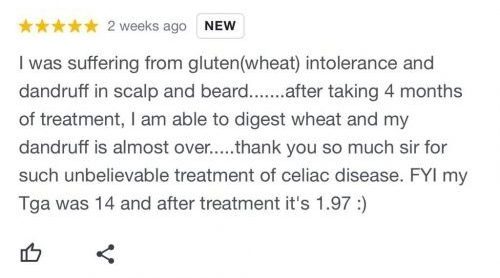
Happy Note
Conclusion
This case demonstrates that gluten sensitivity with associated yeast intolerance and seborrheic dermatitis is not an isolated gastrointestinal condition but a disorder involving disturbed digestive function, immune dysregulation, and chronic skin inflammation. The patient’s symptoms originated from impaired digestion, leading to immune hypersensitivity and secondary cutaneous involvement.
An individualized Ayurvedic treatment protocol focusing on restoration of digestive fire, elimination of metabolic toxins, stabilization of gut function, and strict dietary and lifestyle regulation resulted in complete resolution of gastrointestinal symptoms and gradual clearance of skin manifestations.

The clinical outcome supports the Ayurvedic concept that Grahani Roga forms the pathological basis of chronic food intolerance and its systemic symptoms. Correction of digestive pathology proved fundamental for restoring immune tolerance and skin health. This case highlights the potential role of Ayurveda as a safe and effective approach in the management of immune-mediated gluten sensitivity involving the gut-immune-skin axis.
References
- Gao T, Wang X, Li Y, Ren F. The Role of Probiotics in Skin Health and Related Gut-Skin Axis: A Review. Nutrients. 2023 Jul 13; 15 (14): 3123. Doi: 10. 3390/ nu- 15143123. PMID: 3751- 3540; PMCID: PMC- 10385652.
- De Pessemier B, Grine L, Debaere M, Maes A, Paetzold B, Callewaert C. Gut-Skin Axis: Current Knowledge of the Interrelationship between Microbial Dysbiosis and Skin Conditions. Microorganisms. 2021 Feb 11; 9 (2): 353. doi: 10. 3390/ microorganisms 9020353. PMID: 3367- 0115; PMCID: PMC- 7916842.
- Verdelli A, Corra A, Mariotti EB, Aimo C, Quintarelli L, Ruffo di Calabria V, Donati ME, Bonciolini V, Antiga E, Caproni M. Skin gluten-related disorders: new and old cutaneous manifestations to be considered. Front Med (Lausanne). 2023 May 17; 10: 1155288. doi: 10. 3389/ fmed. 2023. 1155288. PMID: 3726- 5490; PMCID: PMC- 10229844.
- Cenni S, Sesenna V, Boiardi G, Casertano M, Russo G, Reginelli A, Esposito S, Strisciuglio C. The Role of Gluten in Gastrointestinal Disorders: A Review. Nutrients. 2023 Mar 27; 15 (7): 1615. doi: 10. 3390/ nu0 15071615. PMID: 3704- 9456; PMCID: PMC- 10096482.
- Zhao Y, Yu C, Zhang J, Yao Q, Zhu X, Zhou X. The gut‑skin axis: Emerging insights in understanding and treating skin diseases through gut microbiome modulation (Review). Int J Mol Med. 2025 Dec; 56 (6): 210. doi: 10. 3892/ ijmm. 2025. 5651. Epub 2025 Oct 3. PMID: 4104- 1846; PMCID: PMC- 12494302.
- Salem I, Ramser A, Isham N, Ghannoum MA. The Gut Microbiome as a Major Regulator of the Gut-Skin Axis. Front Microbiol. 2018 Jul 10; 9: 1459. doi: 10. 3389/ fmicb. 2018. 01459. PMID: 3004- 2740; PMCID: PMC- 6048199.
- Garrido-Mesa J, Galvez J, Garrido-Mesa N. Editorial: The gut-immune axis: a complex training ground impacting inflammatory pathologies. Front Immunol. 2023 Aug 23; 14: 1274761. doi: 10. 3389/ fimmu. 2023. 1274761. PMID: 3768- 0634; PMCID: PMC- 10482236.
- Ellis SR, Nguyen M, Vaughn AR, Notay M, Burney WA, Sandhu S, Sivamani RK. The Skin and Gut Microbiome and Its Role in Common Dermatologic Conditions. Microorganisms. 2019 Nov 11; 7 (11): 550. doi: 10. 3390/ microorganisms- 7110550. PMID: 3171- 7915; PMCID: PMC- 6920876.
- Navarro Triviño FJ, Velasco Amador JP, Rivera Ruiz I. Seborrheic Dermatitis Revisited: Pathophysiology, Diagnosis, and Emerging Therapies-A Narrative Review. Biomedicines. 2025 Oct 9; 13 (10): 2458. doi: 10. 3390/ biomedicines- 13102458. PMID: 41153741; PMCID: PMC- 12562114.
- Zimmermann J, De Fazio L, Kaden-Volynets V, Hitzmann B, Bischoff SC. Consumption of Yeast-Fermented Wheat and Rye Breads Increases Colitis and Mortality in a Mouse Model of Colitis. Dig Dis Sci. 2022 Sep; 67 (9): 4422- 4433. Doi: 10. 1007/ s10620- 022- 07462- 3. Epub 2022 Apr 8. PMID: 3539- 4589; PMCID: PMC- 9352744.
- Ye L, Zheng W, Li X, Han W, Shen J, Lin Q, Hou L, Liao L, Zeng X. The Role of Gluten in Food Products and Dietary Restriction: Exploring the Potential for Restoring Immune Tolerance. Foods. 2023 Nov 20; 12 (22): 4179. doi: 10. 3390/ foods- 12224179. PMID: 3800- 2235; PMCID: PMC- 10670377.
- Asri N, Rostami-Nejad M, Anderson RP, Rostami K. The Gluten Gene: Unlocking the Understanding of Gluten Sensitivity and Intolerance. Appl Clin Genet. 2021 Feb 11; 14: 37- 50. doi: 10. 2147/ TACG. S276596. PMID: 3360- 3437; PMCID: PMC- 7886246.
- Wange M From the proceedings of Insight Ayurveda 2013, Coimbatore. 24th and 25th May 2013. PA03. 22. Importance of Agni Chikitsa in the management of Grahani Disease with respect to Lavanabhaskara Churna. Anc Sci Life. 2013 Jan; 32(Suppl 2): S91. Doi: 10. 4103/ 0257- 7941. 123920. PMCID: PMC- 4147567.
- Chakraborty, Swagata & Das, Aparajita. (2021). MANAGEMENT OF GRAHANI ROGA IN AYURVEDA: A CASE STUDY. World Journal of Pharmaceutical Research. 9. 953. 10. 20959/ wjpr. 202015- 19220.
- Bhoir, Mrunal. (2025). Management of Grahani Roga in Ayurved -A Single Case Study. 15. 86544.
- Sorathiya AP, Vyas SN, Bhat PS. A clinical study on the role of ama in relation to Grahani Roga and its management by Kalingadi Ghanavati and Tryushnadi Ghrita. Ayu. 2010 Oct; 31 (4): 451- 5. doi: 10. /0974-8520. 82041. PMID: 22048538; PMCID: PMC- 3202250.
- Patil, Sachinkumar. (2022). Grahani Roga management by Ayurveda principles and lifestyle modification. World Journal of Advanced Research and Reviews. 16. 1053- 1057. 10. 30574/ wjarr. 2022. 16. 3. 1428.
- Meshram, Sonali & Dhamankar, Swati. (2025). A CONCEPTUAL REVIEW OF GRAHANI ROGA WITH SPECIAL REFERENCE TO GASTROINTESTINAL DISEASES – AN AYURVEDIC PERSPECTIVE. International Ayurvedic Medical Journal. 13. 2200-2203. 10. 46607/ iamj- 1713082025.
- Wallace RK. The Microbiome in Health and Disease from the Perspective of Modern Medicine and Ayurveda. Medicina (Kaunas). 2020 Sep 11; 56 (9): 462. doi: 10. 3390/ medicina- 56090462. PMID: 32932766; PMCID: PMC- 7559905.