

 2132
2132
 Share
Share



Abstract
Aim: To evaluate the efficacy of Ayurvedic formulations in managing Tinea Versicolor through internal and external interventions.
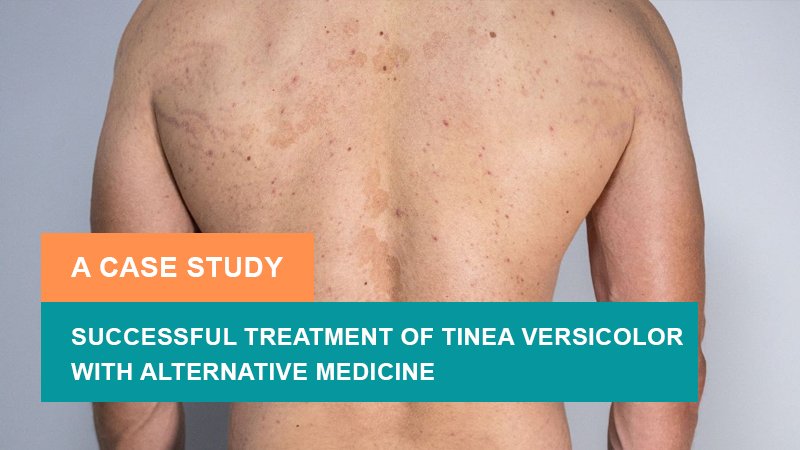
Materials and Methods: A 31-year-old male patient presented with discoloration on the back, shoulders, and chest since his teenage years, aggravated by sweating and associated with scalp dryness. The diagnosis was confirmed as Tinea Versicolor, which is often correlated as Sidhma Kustha in Ayurveda. A comprehensive Ayurvedic regimen including IAFA formulations was prescribed for three months with follow-ups.
Results: Within two and a half months, skin discoloration normalized, scaling subsided, and no recurrence occurred, and along with this, three-month maintenance therapy was followed to prevent recurrence. Mild dandruff persisted but was manageable.
Conclusion: The multi-formulation Ayurvedic approach demonstrated marked antifungal, immunomodulatory, and Rasayana effects, ensuring recovery from the condition without recurrence.
Introduction
A superficial fungal infection of the skin caused primarily by Malassezia species is Tinea Versicolor, also known as Pityriasis Versicolor. It is characterized by hypo- or hyperpigmented patches, often with fine scaling, commonly affecting the chest, back, and shoulders. The condition can cause cosmetic concern, recurrent episodes, and psychological discomfort, particularly in adolescents and young adults, although it is generally considered a benign condition.
Conventional management typically involves topical or systemic antifungal agents, including azoles and selenium sulfide-based formulations. However, challenges such as recurrence, drug resistance, and potential side effects necessitate exploration of complementary therapeutic approaches. From an Ayurvedic point of view, this condition closely resembles Sidhma Kusthha, one of the Kshudra Kustha (minor skin disorders) described in Charaka Samhita and Madhava Nidana.
The term Sidhma denotes a thin, fine-scaled eruption occurring predominantly over the Uras (chest) and Skandha (shoulders) regions, with mild itching and dryness features that align well with the clinical presentation of Tinea versicolor. According to Ayurvedic pathology, Sidhma Kustha arises from the vitiation of Vata and Kapha Doshas, which in turn contaminate the Twak (skin), Rakta (blood), Mamsa (muscle tissue), and Lasika (lymph), the principal Dusyas involved in Kustha pathogenesis.
Vata induces Rukshta (dryness) and Tanu Tvak Sparsha (thin skin texture), whereas Kapha contributes to Kandu (itching), Snigdhata (unctuousness), and Mandala Samsthana (macular formation). Ayurvedic management of Sidhma Kustha follows a comprehensive approach targeting Dosha Shamana (pacification), Rakta Shuddhi (blood purification), and Kleda Shoshana (absorption of pathological moisture).
Ayurvedic management emphasizes an approach that involves Dosha Shamana, Rakta Prasadana, Agni Deepana, and Twak Shodhana to restore normal skin physiology. It includes the use of herbal formulations with Tikta- Katu Rasa predominance, Shita-Virya, and Kashaya Guna, which exhibit antimicrobial, anti-inflammatory, and skin-pigment-restoring properties. External applications like Lepa, Churna, and Taila, combined with internal Rasayana therapy, aim to correct the Doshic imbalance, restore skin health, and reduce recurrence. Integrating modern dermatological understanding with Ayurvedic principles offers a basis for therapeutic intervention.
This case study presents a patient with Tinea Versicolor managed exclusively through an Ayurvedic regimen, highlighting clinical outcomes, pharmacological properties of herbs used in formulation, and the potential role of traditional therapy in managing superficial fungal infections.
Keywords: Tinea versicolor, Kustha, Sidhma Kustha, IAFA Ayurveda, herbs.
Case Presentation
A 31-year-old male presented on 1st April 2023 with a history of discolored patches on the back, shoulders, arms, and below the chest, which he reported having had since his teenage years. The lesions were asymptomatic, with no itching, but were aggravated by sweating. He also reported dry scalp with dandruff. Clinical examinations revealed multiple well-defined hypo and hyperpigmented patches with fine scaling on the trunk and upper limbs.
From an Ayurvedic perspective, the condition was correlated with Sidhma Kustha, attributed to vitiation of Vata and Kapha doshas, manifesting as discolored and scaly patches. The patient was managed with a comprehensive Ayurvedic regimen including external therapies such as IAFA AF-7 Bar, IAFA 333 Shampoo, and AF-7 Cream, and internal medicines including Aahar Amrutham Gulika, Kutaj Ghanvati, Changeri Capsules, and Triphala Capsules, alongside dietary and lifestyle modifications. Over follow-up visits until 14/07/2023, the Tinea Versicolor lesions resolved, while scalp dandruff persisted mildly, demonstrating the effectiveness of an integrative Ayurvedic approach for chronic superficial fungal infections like tinea versicolor.
1. Patient Details:
- Age/Sex: 31/ M
- Address: Canada
- Date of first consultation: 1st April 2023
2. Chief Complaints:
At the time of the first consultation, the patient reported:
Hypopigmented patches on the back, shoulders, and chest since the teenage years.
Dryness and dandruff on the scalp.
3. Diagnosis:
Sidhma Kustha (Tinea Versicolor)
4. Triggers and Exacerbating Factors:
Aggravation with sweating
Methods
1. Intervention Protocols
The patient, diagnosed with Sidhma Kustha (Tinea Versicolor), was managed using an integrative Ayurvedic approach. The intervention aimed at restoring dosha balance, reducing fungal proliferation, alleviating scaling, and improving skin health. The treatment was divided into external therapies, internal medicines, and supportive dietary and lifestyle modifications.
2. Ayurvedic Treatment Protocol
Therapeutic Plan:
External: IAFA AF-7 Bar for daily bathing on affected areas, IAFA AF-7 Cream applied 2–3 times daily on lesions, and IAFA 333 Shampoo twice weekly for scalp cleansing and dandruff control.
Internal: Aahar Amrutham Gulika (1 tablet twice daily before meals with lukewarm water), Kutaj Ghanvati (2 tablets twice daily after meals), Changeri Capsules (1 capsule twice daily after meals), and Triphala Capsules (2 capsules at bedtime).
Diet and Lifestyle modification: Pathya Ahara, including fresh fruits, vegetables, and easily digestible food, and avoidance of fermented, oily, sweet, and dairy-based items. Maintain personal hygiene, use loose cotton clothing, and keep skin dry. Regular mild exercise, early sleep, and stress management through Pranayama and meditation were advised.
3. Ayurvedic Treatment Protocol for Different Follow-Ups
Table 1: Formulations used along with their dosage, frequency, route, time of administration, and duration
| Formulation | Dosage and Frequency | Route and Time of Administration | Duration |
| IAFA AF-7 Bar | Use daily during bath | External application over affected areas; wash off with lukewarm water | April- October 2023 |
| IAFA AF-7 Cream | Apply 2–3 times daily | Topical over affected areas | April- October 2023 |
| IAFA 333 Shampoo | Twice weekly | Apply to a wet scalp, leave for 3–5 minutes, rinse thoroughly | July- October 2023 |
| Aahar Amrutham Gulika | 1 tablet twice daily before meals with lukewarm water | Oral | April- October 2023 |
| Kutaj Ghanvati | 2 tablets twice daily after meals | Oral | April- October 2023 |
| Changeri Capsules | 1 capsule twice daily after meals | Oral | April- October 2023 |
| Triphala Capsules | 2 capsules once daily at bedtime | Oral | April- October 2023 |
Table 2: Ayurvedic Treatment Phases along with their Clinical Outcome and Objectives
| Phase / Date | Clinical Outcome | Objective | Scientific Validation |
| Phase I- Initiation (01 Apr – 15 Apr 2023) | Dryness of lesions and reduction in scaling within 2 weeks. No new patches appeared. Itching is absent throughout. | Eliminate Kapha-Pitta Dushti, improve Twak Agni, and reduce fungal colonization. | Detoxification and Dosha-pacification initiated with IAFA AF-7 Bar and AF-7 Cream externally. Internal therapy included Aahar Amrutham Gulika, Kutaj Ghanvati, Changeri Capsule, and Triphala. Herbs like Nimba, Haridra, and Kutaja show proven antifungal and keratolytic actions against Malassezia furfur. |
| Phase II- Stabilization (16 Apr – 15 May 2023) | Around 60–70% improvement noted. Discoloration lightened, scaling nearly resolved, lesions flattened. | Strengthen Rasa-Rakta Dhatu, restore epidermal balance, and stabilize immune defense. | Continue the same regimen, emphasizing Pathya-Apathya Ahara and hydration. Guduchi, Changeri, and Triphala offered antioxidant, immunomodulatory, and epithelial healing effects. |
| Phase III – Maintenance and Long-Term Therapy (14 Jul- Oct 2023) | No recurrence of tinea versicolor patches, only mild dandruff persisted. Skin tone and texture normalized. | Maintain skin microbiome equilibrium, prevent fungal recolonization, and ensure Dhatu recovery. | Based on the July follow-up, IAFA AF-7 Bar, IAFA 333 Shampoo, and AF-7 Cream were continued for 3 months. The polyherbal blend supports antifungal, sebum-balancing, and barrier-restoring functions. |
| Phase IV – Observation and Relapse Prevention (Nov – Dec 2023) | No relapses after stopping internal medicines. Scalp health is maintained. Patients reported stable results and satisfaction. | Maintain epidermal integrity and suppress recurrence. | Immuno-dermal stabilization achieved through Pathya-based lifestyle- adequate sleep, stress control, and light, non-fermented diet, ensuring long-term remission. |
Table 3: Monitoring Parameters and Clinical Outcomes
| Parameter | Frequency | Outcome |
| Lesion status | Every 15 days for the first month, then monthly | Scaling and discoloration resolved by the 3rd week, normal pigmentation restored by the end of the 3rd month. |
| Symptom scoring (itching, dryness) | Each follow-up | Scores dropped to 0 by the 2nd month and remained at 0 throughout treatment. |
| Digestive health | Weekly | Appetite normalized, bowel pattern regular, no digestive complaints reported. |
| Skin texture and sensitivity | Monthly | Smooth skin surface, no irritation, mild dandruff persisted until the 3rd month. |
| Diet and lifestyle adherence | Weekly | Approx. 90% adherence maintained, improved energy, sleep, and general well-being |
| Relapse monitoring | Nov- Dec 2023 | No relapse or new lesions during the two-month observation phase |
Observation Protocol: All clinical outcomes were monitored through structured video consultations and guided self-inspection, simulating visual and physical examination. The patient was instructed to show affected skin areas during video calls for real-time assessment of scaling, discoloration, and lesion spread. Report symptoms such as itching, dryness, and tenderness using a 0–5 Visual Analogue Scale (VAS).
4. Dietary and Lifestyle Monitoring
Recommended Diet and Habits (Pathya):
- Include more fruits and vegetables in daily meals (e.g., pomegranate, gooseberry, apples).
- Drink lukewarm water regularly to maintain adequate hydration.
- Take easily digestible and freshly cooked foods, always eat warm and fresh meals.
- Include green gram (mung beans) for protein and digestion support.
- Take meals only after complete digestion of the previous meal.
- Incorporate herbal drinks like cumin water (Jeeraka Jala) and curry leaves infusion.
- Practice mild to moderate daily exercise.
- Maintain personal hygiene: use separate personal items, wear loose and dry garments, and change clothes and bed sheets regularly.
- Expose skin to mild sunlight during morning and evening.
- Ensure adequate sleep, approx.7 hours/day, and maintain a positive, stress-free mind.
- Maintain healthy social relations for psychological well-being.
Apathya (Foods and Habits to Avoid):
- Excessive sweet, salty, spicy, and sour foods.
- Milk and dairy products
- Fried or heavy-to-digest meals.
- Yeast-fermented foods (brewers and bakers), packaged snacks, and artificial colors or flavors.
- Eating before the complete digestion of the previous meal.
- Daytime sleep, lack of exercise, or insufficient nighttime sleep.
- Stress, mental tension, and negative emotions.
- Poor hygiene, exchange of personal items, and wearing tight or unclean garments.
Results
Table 4. Changes in Major Symptoms
| Date / Phase | Main Symptoms | Symptom Severity (0–5 Scale*) | Progress Summary |
| 01 Apr 2023 (Before Treatment) | Discolored patches on the back and shoulders, fine scaling, mild dandruff, no itching | Discoloration:5Scaling: 4Dandruff: 3Itching: 0 | Chronic condition since teenage years, aggravated by sweating. |
| 15 Apr 2023 | Scaling has reduced slightly, no new patches | Discoloration: 4 Scaling: 2 Dandruff: 3 Itching: 0 | The lesions became dry and started flattening. |
| 15 May 2023 | Marked reduction in patches and scaling, color starting to even out | Discoloration: 2 Scaling: 1Dandruff: 2Itching: 0 | Around 70% improvement seen. |
| 15 Jul 2023 | Only faint marks left, no scaling, mild scalp dryness | Discoloration: 1 Scaling: 0 Dandruff: 2 Itching: 0 | No new lessons appeared. |
| 15 Oct 2023 | Skin tone is almost normal, and mild dandruff persists | Discoloration: 0Scaling: 0Dandruff: 1Itching: 0 | Recovery from Tinea Versicolor. |
| 15 Dec 2023 (Follow-up) | Skin is clear and healthy, no recurrence | Discoloration: 0Scaling: 0Dandruff: 0–1Itching: 0 | Maintained results with external care only. Mild dandruff persisted. |
*Severity: 0 = None, 1 = Mild, 2 = Moderate, 3 = Marked, 4 = High, 5 = Severe.
Discussion
The present case demonstrates an Ayurvedic management approach for chronic Tinea Versicolor, a superficial fungal infection caused by Malassezia furfur. The treatment was structured in phases from April to December 2023, each addressing a distinct pathological layer starting with lesion control and fungal suppression, followed by stabilization and tissue repair, maintenance therapy for relapse prevention, and finally, long-term observation with lifestyle reinforcement. The results indicate that phase-wise therapy rooted in Dosha-pacification, Twak-Agni enhancement, and Rasayana principles can effectively restore epidermal health, reduce fungal colonization, and prevent recurrence.
1. Pathophysiological Understanding
From an Ayurvedic perspective, the clinical presentation reflected Vata-Pitta vitiation in the Twak Dhatu. The chronicity and relapsing nature suggested deep-seated Dosha-Dushya Sammurchana involving Rasa, Rakta, and Twak Dhatu, with Ama accumulation impairing local skin metabolism and predisposing to fungal overgrowth. Therapeutic objectives were twofold, i.e., Ama-pachana and Agni- Deepana to restore metabolic efficiency and clear toxins. Along with this, Srotoshodhana and Rasayana support to normalize epidermal function, immune defense, and barrier integrity.
2. Phase-wise Therapeutic Protocol
Phase I – Initiation (01 Apr – 15 Apr 2023)
This phase targeted fungal suppression and acute lesion management. External therapy included IAFA AF-7 Bar and AF-7 Cream, applied topically over affected areas. Ayurvedic action involved Vata-Pitta pacification, Twak Agni stimulation, and Kleda reduction. Internal formulations such as Aahar Amrutham Gulika, Kutaj Ghanvati, Changeri Capsules, and Triphala capsules were prescribed to detoxify the gastrointestinal tract, support Rasa- Rakta Dhatu, and enhance systemic immunity. Pharmacologically, these herbs possess antifungal, keratolytic, anti-inflammatory, antioxidant, and immunomodulatory effects, resulting in drying of lesions, reduction in scaling, and prevention of new patches. Clinical outcome showed cessation of new lesion formation within two weeks.
Phase II – Stabilization (16 Apr – 15 May 2023)
Stabilization is aimed at tissue repair, immune modulation, and pigmentation normalization. The same topical and internal therapies were continued, along with dietary regulation (Pathya- Apathya) and hydration. Ayurvedic goals included strengthening Rasa- Rakta Dhatu, restoring epidermal balance, and pacifying residual Vata-Pitta dosha. Herbs like Guduchi (Tinospora cordifolia), Changeri, and Triphala, etc., present in formulations contributed antioxidant, immunomodulatory, and anti-inflammatory effects, supporting flattening of lesions, lightening of discoloration, and mucosal barrier restoration. Clinical observation showed 60–70% improvement, indicating successful stabilization.
Phase III – Maintenance and Long-Term Therapy (14 Jul- Oct 2023)
Maintenance therapy focuses on relapse prevention and long-term skin health. Based on the July follow-up, AF-7 Bar, AF-7 Cream, and IAFA 333 Shampoo were continued for three months. It helps to sustain Dosha balance, maintain Twak Dhatu integrity, and promote Rasayana effects. Pharmacologically, this phase targeted antifungal maintenance, sebum regulation, barrier restoration, and microbiome equilibrium. Internal therapy continued with Aahar Amrutham Gulika, Kutaj Ghanvati, Changeri, and Triphala, supporting systemic immunity, digestive efficiency, and complete Dhatu recovery. Clinically, no recurrence of tinea patches and normalization of skin texture were observed.
Phase IV – Observation and Relapse Prevention (Nov – Dec 2023)
In the final observation phase, focus shifted to long-term remission and lifestyle reinforcement. Topical and internal therapy were tapered, while strict adherence to the Pathya-Apathya diet, hygiene, and lifestyle practices was emphasized. The primary objective of this phase is Rasayana support, Dhatu stability, and Kapha-Pitta equilibrium. Pharmacologically, herbs continued to exert antifungal, barrier-restoring, and immunomodulatory effects, ensuring no relapse and maintenance of epidermal integrity. Patient follow-up via video consultation and visual inspection confirmed sustained remission, normalization of skin tone, and, however, mild dandruff persisted.
3. Pharmacological Correlation
Table 5: Pharmacological Correlation of Formulations and Herbs used externally
| Formulation | Key Ingredients | Therapeutic Actions |
| IAFA AF-7 Bar | Lodhra (Symplocos racemosa), Madhuka (Glycyrrhiza glabra), Nimba (Azadirachta indica), Asana (Pterocarpus marsupium), Chakramarda (Cassia tora), Rakta Chandana (Pterocarpus santalinus), coconut oil | Antifungal, antimicrobial, anti-pruritic, soothing, removes scaling and maintains moisture balance. |
| IAFA AF-7 Cream | Haridra (Curcuma longa), Daru Haridra (Berberis aristata), Nimba (Azadirachta indica), Sirisa (Albizia lebbeck), Tulsi (Ocimum sanctum), Sigru (Moringa oleifera), Seena (Cassia angustifolia), Chakramarda (Cassia tora), Coconut oil (Cocos nucifera oil) | Reduces inflammation, fungal load, and redness, promotes epithelial healing and pigmentation recovery. |
| IAFA 333 Shampoo | Kumari (Aloe barbadensis), Saptala (Acacia concina), Medhika (Trigonella foenum-graecum), Japapushpa (Hibiscus rosa-sinensis), Inderjo (Wrightia tinctoria), Bakuchi (Psoralea corylifolia), Triphala, Aragwadha (Cassia fistula), Karanja (Pongamia glabra), Chakramarda (Cassia tora), Neeli (Indigofera tinctoria), Darvi (Berberis aristata) | Antidandruff, antiallergic, keratolytic, pigment-balancing, scalp strengthening |
Table 6: Pharmacological Correlation of Formulations and Herbs used internally
| Formulation | Key Ingredients | Therapeutic Actions |
| Aahar Amrutham Gulika | Vacha (Acorus calamus), Musta (Cyperus rotundus), Parpata (Fumaria indica), Tagar (Valeriana wallichii), Bilva (Aegle marmelos), Shati (Hedychium spicatum), Dadima (Punica granatum), Sariva (Hemidesmus indicus), Nagara (Zingiber officinale) | Improves digestion and metabolism (Agni Depana), reduces Ama, corrects Pitta-Kapha imbalance, and improves skin clarity |
| Kutaj Ghanvati | Kutaja (Holarrhena antidysenterica), Ativisha (Aconitum heterophyllum) | Antimicrobial, Kaphahara, Pittahara, improves gut-skin detox axis |
| Changeri Capsules | Changeri (Oxalis corniculata extract) | Antifungal, antioxidant, immune restorative, skin detoxifier |
| Triphala Capsules | Amalaki (Phyllanthus emblica), Haritaki (Terminalia chebula), Vibhitaki (Terminalia bellirica) | Rasayana, an antioxidant, supports detoxification and gut cleansing. |
4. Integrative Perspective
The phase-wise Ayurvedic therapy successfully integrated classical principles with pharmacological actions. The steady improvement, with resolution by October 2023 and no relapses after tapering, indicates effective epidermal restoration, immune modulation, and microbiome stabilization. This demonstrates that systematic Ayurvedic intervention can correct root Doshic imbalance and restore skin homeostasis, complementing modern understanding of fungal infections and barrier function.m IAFA® analysed the patient, he was free from Dandruff, dry scalp and Tinea Versicolor.
Happy Note
Source:- https://goo.gl/maps/izm7DRSNuubqZL8D6
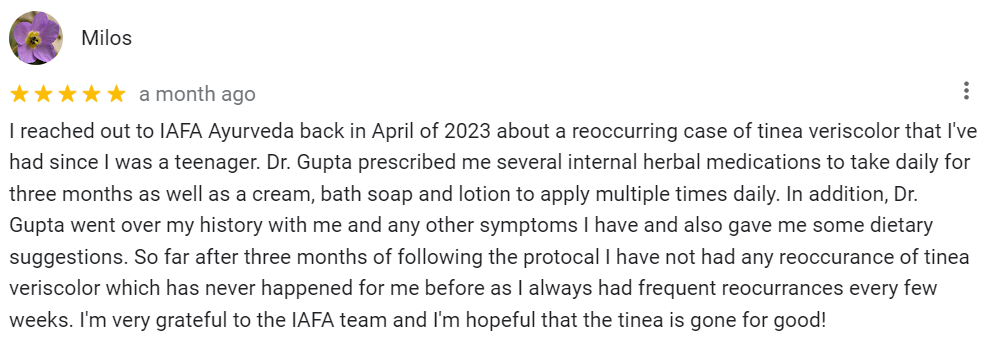
Reviews like this are what keep us going and serve the people with ages-old miraculous medicine, Ayurveda. If you’re just like Milos and suffering from any kind of skin infection, book your online consultation now and enjoy a scheduled appointment with our Ayurvedic expert Dr. Sahil Gupta, who has around 15+ years of experience in treating patients with allergies and infections from all around the world.

Conclusion
This case study illustrates that Ayurvedic treatment can effectively manage chronic Tinea Versicolor using a phase-wise, integrative approach. The combination of Ayurvedic formulations, diet regulation, and lifestyle modification enhanced Agni, reduced Ama, pacified Dosha, and restored Twak Dhatu integrity. Phase-wise therapy ensured rapid symptomatic relief, sustained remission, and prevention of relapse without adverse effects. The approach highlights Ayurveda’s potential for safe, holistic management of superficial fungal infections, with correlations to modern anti-fungal and immunomodulatory mechanisms.
References
- K, Geethu & Madhu, P. (2025). Ayurvedic Management of Sidhma Kushta: An Evidence-Based Case Report. International Journal of Ayurveda and Pharma Research. 43- 49. 10. 47070/ ijapr. v13i3. 3624.
- Agnivesha, Charaka, Dridhabala. In: Charaka Samhita, ed. Vaidya Jadavaji Trikamji Aacharya, editor. Varanasi: Chaukhamba Sanskrit Sansthan; 2009.
- Sushruta. In: Sushruta Samhita, Sutra Sthana, ed. Vaidya Jadavji Trikamji Acharya, editor. Varanasi: Choukhambha Orientalia; 2005.
- Vagbhata. In: Ashtanga Hrudaya, 9th ed. Anna Moreshwar Kunte, Krishnashastri Navarre, Harishastri, editors. Varanasi: Choukhambha Orientalia; 2005.
- Yadav, Dr & Meshram, Rajesh, & Sharma, Vivek. (2024). Ayurvedic Treatment in Tinea Versicolor W.S.R. Sidhma-Case Study.
- Leung AK, Barankin B, Lam JM, Leong KF, Hon KL. Tinea versicolor: an updated review. Drugs Context. 2022 Nov 14; 11: 2022- 9- 2. doi: 10. 7573/ dic. 2022- 9-2. PMID: 36452877; PMCID: PMC9677953.
- Labednz, N., & Pietkiewicz, P. (2023). Pityriasis Versicolor- A Narrative Review on Diagnosis and Management. Life, 13 (10), 2097. https:// doi. org/ 10. 3390/ life- 13102097
- Dhurve, Sanjay & Patil, Pallavi. (2022). A REVIEW ON “A CLINICAL STUDY OF GANDHAKADI LEPA IN SIDHMA WITH SPECIAL REFERENCE TO TINEA VERSICOLOR (PITYRIASIS VERSICOLOR).
- Bamford, J. T., Ray, S., Bigby, M., & Arkoncel, M. (2018). Interventions for the treatment of pityriasis versicolor. The Cochrane Database of Systematic Reviews, 2018(6), CD011208. https:// doi. org/ 10. 1002/ 14651858. CD011208. pub2
- Borelli D, Jacobs PH, Nall L. Tinea versicolor: epidemiologic, clinical, and therapeutic aspects. J Am Acad Dermatol. 1991 Aug; 25 (2 Pt 1): 300- 5. doi: 10. 1016/ 0190- 9622 (91) 70198- b. PMID: 1918469.
- Shinde, Dattatraya & Patil, Vishakha. (2022). A Detailed Review on Sidhma Kushtha with Special Reference to Tinea Versicolor. (Pityriasis Versicolor). 10. 2455- 6211.