Ayurvedic Treatment for Oral Lichen Planus
Learn about Ayurvedic Treatment for Oral Lichen Planus, including its symptoms, causes, recurrence triggers and personalized Ayurvedic management for lasting oral health support.
On This Page


-
 292
292
 292
292
 Share
ShareSummarise this article using AI




What is Oral Lichen Planus?
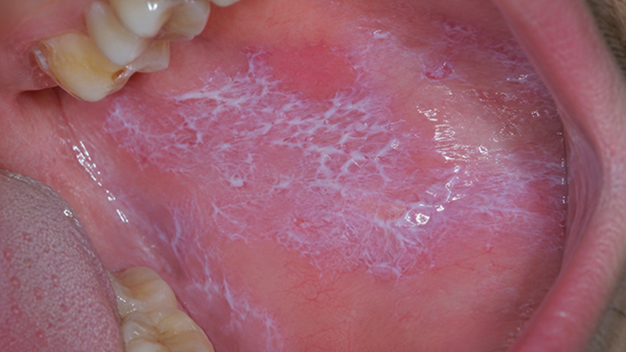
Oral Lichen Planus (OLP) is a chronic inflammatory disease affecting the oral mucosa. It commonly appears as white lace-like streaks (Wickham striae), red inflamed patches, burning sensation, oral discomfort, or recurrent erosions. Modern medicine considers OLP an immune-mediated disorder involving T-cell attack on oral epithelial cells. From an Ayurvedic perspective, OLP can be understood predominantly as Vata-Pittaja Mukharoga associated with Rakta Dushti due to its inflammatory, degenerative, recurrent, and burning nature.
Although Oral Lichen Planus appears white clinically, its burning sensation, recurrence, inflammation, and tissue degeneration suggest predominant involvement of Vata, Pitta, and Rakta rather than Kapha alone.
Oral Lichen Planus at A Glance
| Feature | Oral Lichen Planus (OLP) |
| Disease Type | Chronic inflammatory oral disorder |
| Main Symptoms | White streaks, burning sensation, oral ulcers |
| Cause | Immune-mediated (exact trigger not fully understood) |
| Ayurvedic Correlation | Vata-Pittaja Mukharoga is associated with Rakta Dushti |
| Main Doshas Involved | Vata, Pitta, Rakta |
| Recurrence | Common |
| Cancer Risk | Low but possible; requires regular monitoring |
| Stress Effect | Frequently aggravates the disease and may trigger flare-ups |
What are the Symptoms of Oral Lichen Planus?
- Gum discomfort
- White lace-like streaks
- Burning sensation
- Pain while eating spicy food
- Red patches
- Oral ulcers
- Sensitivity to hot beverages
- Recurrent lesions
Why is the Oral Lichen Planus More Complex Than it Appears?
“Why does Oral Lichen Planus look calm like Kapha… but burn like an aggravated Pitta and return again and again like disturbed Vata?”
Do You Know?
Oral Lichen Planus is one of the most misleading diseases of the mouth.
At first glance, it looks harmless.
- Just thin white lines.
- Just a small white patch.
- Sometimes it is almost painless.
But beneath those innocent-looking white streaks, a silent battle may already be happening.
The mouth may be:
- Inflamed
- Hypersensitive
- Slowly degenerating
- Under continuous immune attack
That is why many patients say: “It looks small… but feels terrible.”
Where It Gets Interesting?
If we judge the disease only by its white color, we may think, “This must be Kapha.”
But then the patient says:
- “Vaidya, it burns badly.”
- “I cannot tolerate spicy food.”
- “The ulcers keep coming back.”
- “Sometimes it becomes red and painful.”
Now, suddenly, the disease no longer behaves like simple Kapha.
Because Kapha disorders are usually:
- Cool,
- Heavy
- Thick
- Stable
- Less painful
But Oral Lichen Planus is often:
- Burning,
- Irritated,
- Recurrent,
- Dry,
- Emotionally stress-sensitive.
So, What Is Really Happening?
It is almost as if Pitta is setting the mouth on fire, while Vata quietly continues to damage and dry the underlying tissue.
That is why:
- The lesion burns like Pitta,
- Recurs like Vata,
- Yet appears white like Kapha.
And this is exactly what makes Oral Lichen Planus so interesting from an Ayurvedic perspective.
Surprising Fact
Stress can worsen Oral Lichen Planus. [8,9]
When do patients with Oral Lichen Planus experience flare-ups?
Many patients experience flare-ups during: [8,9]
- Anxiety
- Emotional stress
- Overthinking
- Poor sleep
- Mental exhaustion.
Modern medicine explains this through immune dysregulation. Ayurveda explains it beautifully too by:
- A disturbed mind aggravates Vata,
- Aggravated Vata disturbs Pitta,
- And inflammation worsens inside the oral mucosa.
That is why Oral Lichen Planus is not just a white patch.
It is a hidden inflammatory fire covered beneath delicate white lines.
Understanding Oral Lichen Planus Through Modern Science
Can every modern disease be matched with one exact Ayurvedic name?
Probably not, and Oral Lichen Planus is one of the best examples of this challenge.
OLP is a chronic inflammatory mucocutaneous disease affecting the oral mucosa (epithelium). [1,2]
What Exactly Happens in OLP?
“The body starts attacking its own oral mucosa.”
Modern pathology describes OLP as:[3-5]
Chronic T-cell-mediated inflammatory disorder. Cytotoxic CD8+ T-cells attack basal epithelial cells, leading to:
- Epithelial degeneration
- Inflammatory infiltration
- Abnormal keratinization
- Chronic mucosal damage
Do You Know?
Histopathology of OLP commonly shows: [6,7]
- Basal cell degeneration
- Hyperkeratosis
- Civatte bodies
- Saw-tooth ridges
- Dense lymphocytic infiltration
This means the disease is not merely superficial whitening; it is a deep inflammatory epithelial disorder.
Patients commonly suffer from:
- Burning sensation
- Painful oral lesions
- White lace-like streaks
- Recurrent erosions
- Discomfort while eating spicy food
The patient complains of the above symptoms because OLP involves inflammation and degeneration simultaneously.
What are the Types of Oral Lichen Planus? [10-12]
Do You Know?
Not all cases of Oral Lichen Planus look the same. In some patients, it appears as harmless white lines. In others, it becomes painful, red, ulcerative, and severely uncomfortable. That is why understanding the different clinical types of OLP is important.
1. Reticular Oral Lichen Planus- “The classic lace-like pattern.”
This is the most common form of OLP. It appears as:
- Thin white lines,
- Interlacing streaks,
- Lace-like patterns inside the mouth.
These characteristic white lines are called Wickham’s striae. Usually seen on the bilateral buccal mucosa.
Interesting Fact
Many patients with reticular OLP may not even notice the disease initially because symptoms are often mild or absent. However, a burning sensation may appear when:
- Spicy food
- Hot beverages
- Stress aggravates the lesion
2. Erosive Oral Lichen Planus- “The painful inflammatory form.”
This is one of the most symptomatic and clinically important forms. It presents with:
- Red erosive areas,
- Shallow ulcers,
- Intense burning sensation,
- Pain while eating.
Patients often complain that even normal food burns inside the mouth. Unlike reticular OLP, this form significantly affects quality of life.
Why is it important?
Erosive lesions are more inflammatory, more painful, and require closer monitoring. From an Ayurvedic perspective, this type strongly reflects Pitta-Rakta aggravation.
3. Atrophic Oral Lichen Planus- “When the mucosa becomes thin and red.”
In this type, the oral mucosa appears erythematous, shiny, and thinned out.
The normal healthy mucosal texture gradually reduces.
Patients commonly experience:
- Soreness
- Burning
- Sensitivity to food
This form is often associated with chronic mucosal inflammation and tissue degeneration.
4. Plaque-Type Oral Lichen Planus- “The thick white patch-like form.”
This type appears as:
- Dense white patches
- Slightly elevated plaque
- Resembling leukoplakia in some cases
Commonly seen on:
- Tongue
- Dorsal mucosa
- Buccal mucosa
Compared to erosive OLP, symptoms may be milder.
This is one form where secondary Kapha association may appear more prominent because lesions become thicker, more stable, and less inflamed.
5. Bullous Oral Lichen Planus – “The rare blister-forming type.”
This is an uncommon presentation. Fluid-filled blisters may develop inside the oral cavity, which later rupture to form painful erosions. Because the oral mucosa is delicate, intact blisters are rarely seen for long durations.
Patients may complain of sudden pain, raw mucosa, and difficulty eating.
6. Mixed Presentation: Many patients do not show only one type.
For example:
Reticular white lesions may coexist with erosive areas, or plaque-like lesions may later become inflamed. Thus, OLP is often dynamic and fluctuating rather than fixed.
“Oral Lichen Planus is not a single-looking disease.”
- Sometimes it whispers silently through harmless-looking white lines.
- Sometimes it burns aggressively through painful erosions.
- And that changing nature itself reflects the complex interplay of inflammation, degeneration, and chronic immune disturbance.
“Not all white lesions behave like Kapha.”
This is where superficial interpretation fails.
The white lesions in OLP are not due to slimy Kapha accumulation or thick mucus deposition. Instead, they result from altered keratinization,[13] epithelial injury, and inflammatory degeneration. That changes the entire Ayurvedic perspective.
What Causes Oral Lichen Planus?
Modern medicine proposes several factors:
- Dental restorations
- Altered immunity
- Stress
- Anxiety
- Oxidative stress
- Drugs
- Tobacco irritation
Why Does Stress Worsen Oral Lichen Planus?
Stress alters immune regulation and inflammatory cytokines. Ayurveda explains that Raja aggravates Manas, Vata becomes unstable, Pitta increases, and inflammation worsens. Thus, OLP beautifully demonstrates psychosomatic interaction.
Why Does Oral Lichen Planus Keep Returning?
Modern medicine attributes recurrence to persistent immune dysregulation, chronic inflammatory signaling, stress-related immune changes, and ongoing mucosal susceptibility.
From an Ayurvedic perspective, recurrence reflects Vata Vishamata. Once aggravated, Vata repeatedly disturbs Pitta and Rakta; inflammation may subside temporarily but tends to reappear when triggering factors such as stress, dietary irritants, or poor sleep return. Patients often notice flare-ups during:
- Emotional stress
- Anxiety
- Sleep deprivation
- Spicy food intake
- Tobacco exposure
Oral Lichen Planus vs Leukoplakia: What is the Difference? [17-18]
Do You Know?
Both Oral Lichen Planus and Leukoplakia may appear as white lesions inside the mouth. However, they differ significantly in their clinical behavior, underlying pathology, and associated symptoms.
| Feature | Oral Lichen Planus (OLP) | Leukoplakia |
| White Lesion | Present | Present |
| Burning Sensation | Common, especially in erosive forms | Usually absent or less common |
| Wickham’s Striae | Characteristically present | Absent |
| Immune-Mediated Disorder | Yes | No |
| Bilateral Distribution | Common | Less common |
| Recurrence | Common | Variable |
| Inflammation | Prominent | Usually less prominent |
| Pain or Oral Discomfort | Frequently present | Often asymptomatic |
| Typical Appearance | Lace-like white streaks | Homogeneous or non-homogeneous white patch |
| Ayurvedic Perspective | Predominantly Vata-Pitta-Rakta involvement | May vary depending on lesion characteristics |
Clinical Pearl
The presence of Wickham’s striae, burning sensation, bilateral involvement, and recurrent inflammatory episodes strongly favors Oral Lichen Planus over Leukoplakia. However, any persistent white lesion of the oral cavity should be evaluated carefully, and a biopsy may be required when the diagnosis is uncertain.
Potential for Malignant Transformation [14-16]
Oral Lichen Planus (OLP), particularly its erosive and atrophic variants, has been recognized as a potentially malignant disorder due to its chronic inflammatory nature and persistent epithelial damage. Although the overall rate of malignant transformation remains relatively low, long-standing lesions require careful clinical observation and periodic follow-up.
Continuous inflammation, epithelial degeneration, oxidative stress, and repeated mucosal injury are believed to contribute to dysplastic changes in susceptible cases. Clinically, lesions showing persistent ulceration, non-healing erosions, induration, or progressive surface changes warrant closer evaluation and, when indicated, histopathological reassessment. Therefore, long-term monitoring is considered an important component in the management of chronic Oral Lichen Planus, especially in symptomatic erosive lesions.

At IAFA Ayurveda, Vaidya Sahil Gupta and his team follow a comprehensive and individualized approach for Oral Lichen Planus. Management is according to the patient’s Dosha involvement, symptom profile, recurrence pattern, and overall health status.
The treatment strategy focuses on reducing inflammation, supporting oral mucosal healing, balancing Vata-Pitta-Rakta involvement, correcting dietary and lifestyle triggers, and minimizing future flare-ups.
The overall objective is to improve oral comfort, enhance quality of life, and support long-term disease management through a holistic Ayurvedic approach.
Book your consultation today and get rid of this problem naturally.
– Vaidya Sahil Gupta (B.A.M.S., M.H.A.)
Ayurvedic Allergy Specialist
CEO & Founder of IAFA®
Ayurvedic Understanding of Oral Lichen Planus [19-23]
The Biggest Diagnostic Mistake- “White lesion means Kaphaja disease.” This is incomplete Ayurvedic thinking. Ayurveda never diagnoses disease through color alone.
It studies Guna, pain, tissue change, chronicity, inflammation, and disease behavior.
Which Ayurvedic Diseases Resemble OLP?
Different features of OLP resemble:
- Mukhapaka
- Pittaja Mukharoga
- Vataja Mukharoga
- Sarvasara Mukharoga
- Pittaja Vrana
- Raktadushti conditions
- Tridoshaja Mukharoga (in chronic stages)
No single entity perfectly explains the entire disease.
That is why Doshic interpretation becomes more important than literal naming.
Correlation of Oral Lichen Planus with Mukhapaka
Why Mukhapaka?
OLP commonly presents with oral burning, ulceration, inflammation, pain during eating, and mucosal irritation. These strongly resemble Pittaja Mukhapaka.
Why Pitta Dominance in Oral Lichen Planus?
Patients experience Daha (burning), Raga (redness), ulceration, heat sensitivity, and inflammatory erosions. These are the symptoms that appear when Pitta is dominant, or there will be Pitta and Rakta Dushti.
Role of Rakta Dushti
Can inflammation exist without Rakta involvement?
Rarely. Rakta involvement becomes evident through:
- Erythema
- Burning
- Inflammatory vascularity
- Chronic mucosal irritation
Thus, many features of OLP strongly indicate Rakta-Pitta pathology.
But Is Pitta Alone Enough?
If OLP is purely Pittaja or with Raktaja involvement, then why:
- Chronic recurrence?
- Dryness?
- Rough reticular lesions?
- Epithelial degeneration?
- Irregular healing?
These are not classical Pitta features alone. They indicate Vata involvement.
Role of Vata Dosha
Vata explains:
- Rukshata (dryness)
- Khara guna (rough reticular texture)
- Chronicity
- Degeneration
- Dhatu kshaya
- Recurrent course
The reticular white patterns may represent altered epithelial architecture caused by Vata-associated roughness and degeneration. Thus, many cases are better understood as Vata-Pittaja Mukharoga.
Is Kapha Completely Absent?
Not necessarily. Kapha may contribute to:
- Plaque-type lesions,
- Thickened mucosa,
- Chronic fibrosis,
- Less inflammatory stages.
But clinically, most symptomatic OLP lesions are dry, burning, painful, and erosive.
This behavior is far more suggestive of Vata-Pitta predominance than primary Kapha pathology.

Have A Health Issue?
Consult Online
- Vaidya Sahil Gupta (B.A.M.S., M.H.A.)
Ayurvedic Allergy Specialist
CEO & Founder of IAFA®
At last, Easier Oral Lichen Planus Management

Trusted by
More than 90,000 Patients

Convenient
at-Home Treatments

9.2 / 10
Customer Satisfaction Score
Ayurvedic Samprapti (Pathophysiology)
Nidana
– Ati ushna ahara
– Tikshna ahara
– Viruddha ahara
– Stress
– Tobacco irritation
Dosha Prakopa
– Pitta aggravation
– Vata aggravation
Dushya
– Rakta
– Rasa
– Mamsa
Srotodushti
– Rasavaha strotas
– Raktavaha strotas
– Mukha strotas
Manifestation
– Daha
– Raga
– Shweta rekha
– Mukhadaha
– Vrana
– Toda



Committed to Holistic Healing through Alternative Medicine Since 2008
Comparative Understanding of the Modern and Ayurvedic Perspectives of OLP
| Modern Symptoms | Ayurvedic Interpretation |
| T-cell-mediated inflammation | Pitta-Rakta Dushti |
| Basal cell degeneration | Vata-induced Dhatu Kshaya |
| Burning sensation | Pittaja Lakshana |
| White reticular lesions | Vata-associated Khara-Ruksha changes |
| Erosions | Pittaja Vrana |
| Chronic recurrence | Vata Vishamata |
| Stress-induced flare | Raja-induced Vata-Pitta aggravation |
Oral Lichen Planus is a chronic immune-mediated inflammatory disorder characterized by epithelial degeneration, burning sensation, reticular lesions, and recurrent mucosal damage. From an Ayurvedic perspective, the disease cannot be satisfactorily explained through a purely Kaphaja framework simply because of its white appearance. Instead, the most rational correlation appears to be Vata-Pittaja Mukharoga with prominent Rakta Dushti.
Where:
- Pitta explains inflammation, redness, burning, and ulceration,
- Vata explains chronicity, degeneration, dryness, and reticular changes,
- Rakta explains persistent inflammatory mucosal pathology.
- Kapha may participate secondarily in chronic plaque-like lesions, but it is usually not the primary pathological driver in symptomatic erosive Oral Lichen Planus.
Oral Lichen Planus Ayurvedic Treatment
The Ayurvedic management of Oral Lichen Planus (OLP) is individualized and depends on the patient’s Dosha predominance, symptom severity, recurrence pattern, digestive status, stress levels, and overall health condition. Since OLP commonly exhibits burning sensation, inflammation, recurrent flare-ups, epithelial degeneration, and oral discomfort, management is primarily directed toward balancing Vata and Pitta while addressing associated Rakta Dushti.
Treatment Goals
The primary objectives of Ayurvedic management include:
- Reducing burning sensation and oral discomfort
- Controlling inflammation and mucosal irritation
- Promoting healing of oral lesions and erosions
- Supporting Vata-Pitta balance and Rakta Prasadana
- Reducing recurrence tendency
- Identifying and correcting dietary and lifestyle triggers
- Managing stress-related aggravating factors
- Improving overall oral health and quality of life
Common Herbs Used in Oral Lichen Planus
| Herb | Ayurvedic Relevance | Reported Pharmacological actions |
| Yashtimadhu (Glycyrrhiza glabra) | Mukharoga, Vrana Ropana, Pitta-Shamana | Anti-inflammatory, antioxidant, mucosal protective [24] |
| Haridra (Curcuma longa) | Pitta-Rakta Shamana, Shothahara | Anti-inflammatory, antioxidant, immunomodulatory [25] |
| Kumari (Aloe vera) | Daha-Shamana, Vrana Ropana | Wound healing, soothing, anti-inflammatory [26] |
| Guduchi (Tinospora cordifolia) | Rasayana, Tridosha balancing | Immunomodulatory, antioxidant [27] |
| Amalaki (Emblica officinalis) | Pitta-Shamana, Rasayana | Antioxidant, tissue protective [28] |
| Khadira (Acacia catechu) | Mukharoga, Rakta-Shodhana | Astringent, anti-inflammatory, oral tissue supportive [29] |
Ayurvedic Therapeutic Approach
Depending on the clinical presentation, Ayurvedic management may involve:
- Measures aimed at Vata-Pitta pacification
- Rakta-Pitta balancing strategies
- Supportive care for oral mucosal healing
- Dietary correction and avoidance of aggravating foods
- Lifestyle modification and stress management
- Personalized herbal and classical Ayurvedic formulations as indicated
Dietary and Lifestyle Considerations
Patients are generally advised to avoid factors that may aggravate oral irritation, including:
- Very spicy foods
- Excessively hot foods and beverages
- Tobacco products
- Alcohol-containing oral irritants
- Chronic sleep deprivation
- Excessive psychological stresson becomes more important than literal naming.
When Should You Consult an Ayurvedic Practitioner?
Seek professional evaluation if you experience:
- A burning sensation lasting longer than two weeks
- Recurrent oral ulcers or erosions
- White patches or streaks inside the mouth
- Difficulty eating spicy, hot, or acidic foods
- A previous diagnosis of Oral Lichen Planus (OLP)
- Frequent flare-ups triggered by stress or anxiety
At IAFA Ayurveda, Vaidya Sahil Gupta provides personalized assessment and Ayurvedic management for Oral Lichen Planus (OLP). Book your Appointment Now!!!
Frequently Asked Questions (FAQs)
Q1. What is Oral Lichen Planus?
Ans. Oral Lichen Planus is a chronic inflammatory condition of the oral mucosa that commonly appears as white lines, burning patches, or painful oral lesions.
Q2. Is Oral Lichen Planus Autoimmune?
Ans. Modern medicine considers OLP an immune-mediated disorder in which immune cells attack the oral mucosa.
Q3. Why Does OLP Cause a Burning Sensation?
Ans. Inflammation and mucosal irritation remain active beneath the lesions, especially in erosive forms.
Q4. Is Oral Lichen Planus Contagious?
Ans. No. OLP does not spread through touch, saliva, or food sharing.
Q5. Why Do White Lesions Appear in OLP?
Ans. The white appearance occurs due to abnormal keratinization and epithelial changes in the oral mucosa.
Q6. Can Stress Worsen Oral Lichen Planus?
Ans. Yes. Stress is one of the most common triggering and aggravating factors in OLP.
Q7. Which Doshas are Mainly Involved in OLP?
Ans. OLP mainly shows features of Vata, Pitta, and Rakta Dushti.
Q8. Why is OLP Not Considered Purely Kaphaja?
Ans. Most symptomatic lesions are burning, painful, dry, erosive, and recurrent features more suggestive of Vata-Pitta pathology.
Q9. Which Ayurvedic Conditions Resemble OLP?
Ans. OLP may resemble Mukhapaka, Pittaja Mukharoga, Sarvasara Mukharoga, Pittaja Vrana.
Q10. Can Ayurveda Help in Oral Lichen Planus?
Ans. Ayurveda aims to reduce inflammation, balance doshas, improve mucosal healing, and reduce recurrence tendency.
Q11. Which Foods May Aggravate OLP?
Ans. Very spicy, acidic, hot, tobacco-based, and irritant foods commonly worsen symptoms.
Q12. Does Oral Lichen Planus Always Cause Pain?
Ans. No. Some reticular lesions may remain painless, while erosive forms can be severely painful.
Q13. Why Does OLP Keep Recurring?
Ans. Because it is a chronic inflammatory and immune-related condition influenced by stress, immunity, and inflammatory triggers.
Q14. Why is Long-Term Follow-Up Important in Oral Lichen Planus?
Ans. Regular follow-up helps monitor disease activity, assess treatment response, identify recurrences early, and evaluate any suspicious changes in chronic lesions.
Q15. What is the Aim of Ayurvedic Treatment in Oral Lichen Planus?
Ans. The primary goals are to reduce burning sensation, promote healing of oral lesions, control inflammation, improve oral comfort, and reduce the frequency of flare-ups.
Q16. Can Oral Lichen Planus Become Cancer?
Ans. Certain forms of Oral Lichen Planus, particularly erosive and atrophic variants, carry a low but recognized risk of malignant transformation. Regular monitoring and follow-up are therefore recommended.
Q17. Which Type of Oral Lichen Planus is Most Painful?
Ans. Erosive Oral Lichen Planus is generally considered the most painful form and is commonly associated with burning sensation, ulceration, and difficulty eating.
Q18. How is OLP Managed at IAFA Ayurveda Under Vaidya Sahil Gupta?
Ans. At IAFA Ayurveda, Vaidya Sahil Gupta and his team follow an individualized approach focusing on Dosha balancing, reducing inflammation, supporting oral mucosal healing, correcting dietary triggers, and minimizing recurrence.
Q19. Can Oral Lichen Planus Go Away On its Own?
Ans. Some mild lesions may remain stable for long periods, but OLP is generally considered a chronic condition that requires monitoring and management.
Need Professional Guidance?
Oral Lichen Planus is a chronic condition that often requires long-term monitoring and individualized management. If you are experiencing persistent oral burning, recurrent lesions, or difficulty eating, professional evaluation is important.
For personalized Ayurvedic consultation, patients may consult Vaidya Sahil Gupta and the team at IAFA Ayurveda for a comprehensive assessment and individualized management plan. Book Your Appointment Now!!!
References
- Alrashdan MS, Cirillo N, McCullough M. Oral lichen planus: a literature review and update. Arch Dermatol Res. 2016 Oct; 308 (8): 539- 51. doi: 10. 1007/ s00403- 016- 1667- 2. Epub 2016 Jun 27. PMID: 2734- 9424.
- Nukaly HY, Halawani IR, Alghamdi SMS, Alruwaili AG, Binhezaim A, Algahamdi RAA, Alzahrani RAJ, Alharamlah FSS, Aldumkh SHS, Alasqah HMA, Alamri A, Jfri A. Oral Lichen Planus: A Narrative Review Navigating Etiologies, Clinical Manifestations, Diagnostics, and Therapeutic Approaches. J Clin Med. 2024 Sep 5; 13 (17): 5280. doi: 10. 3390/ jcm- 13175280. PMID: 3927- 4493; PMCID: PMC- 11396719.
- Roopashree MR, Gondhalekar RV, Shashikanth MC, George J, Thippeswamy SH, Shukla A. Pathogenesis of oral lichen planus- a review. J Oral Pathol Med. 2010 Nov; 39 (10): 729- 34. doi: 10. 1111/ j. 1600-0714. 2010. 00946. x. Epub 2010 Oct 4. PMID: 2092- 3445.
- Sugerman PB, Savage NW, Walsh LJ, Zhao ZZ, Zhou XJ, Khan A, Seymour GJ, Bigby M. The pathogenesis of oral lichen planus. Crit Rev Oral Biol Med. 2002; 13 (4): 350- 65. doi: 10. 1177/ 154411- 130201300405. PMID: 12191961.
- Walsh LJ, Savage NW, Ishii T, Seymour GJ. Immunopathogenesis of oral lichen planus. J Oral Pathol Med. 1990 Oct; 19 (9): 389- 96. doi: 10. 1111/ j. 1600- 0714. 1990. tb00866. x. PMID: 2269934.
- Anitua E, Piñas L, Alkhraisat MH. Histopathological features of oral lichen planus and its response to corticosteroid therapy: A retrospective study. Medicine (Baltimore). 2019 Dec; 98 (51): e18321. doi: 10. 1097/ MD. 000000- 0000018321. PMID: 31860983; PMCID: PMC- 6940162.
- Fernandez-Gonzalez, Francisca & Vazquez alvarez, Rocio & Reboiras-López, Maria & Gandara, Pilar & García-García, Abel & Gándara-Rey, José. (2011). Histopathological findings in oral lichen planus and their correlation with the clinical manifestations. Medicina oral, patología oral y cirugía bucal. 16. e641- 6. 10. 4317/ medoral. 16983.
- Chaudhary S. Psychosocial stressors in oral lichen planus. Aust Dent J. 2004 Dec; 49 (4): 192- 5. doi: 10. 1111/ j. 1834- 7819. 2004. tb00072. x. PMID: 15762340.
- De Porras-Carrique T, González-Moles MÁ, Warnakulasuriya S, Ramos-García P. Depression, anxiety, and stress in oral lichen planus: a systematic review and meta-analysis. Clin Oral Investig. 2022 Feb; 26 (2): 1391- 1408. doi: 10. 1007/ s00784- 021- 04114- 0. Epub 2021 Aug 30. PMID: 34460001; PMCID: PMC- 8816610.
- Jolehar M, Mohseni R, Farhadi S. Correlation between WHO and Modified WHO Classification Systems in the Histopathologic Diagnosis of Oral Lichen Planus Using Intraobserver and Interobserver Variability. Int J Prev Med. 2021 Sep 29; 12: 126. doi: 10. 4103/ ijpvm. IJPVM- 566- 18. PMID: 34760- 137; PMCID: PMC- 8551796.
- Ślebioda, Z., Drożdżyńska, J., Karpińska, A., Krzyżaniak, A., Kasperczak, M., Tomoń, N., Wiśniewska, P., & Wyganowska, M. L. (2023). Oral Lichen Planus: Clinical Presentation, Demographic Characteristics, and Risk Factors in a Retrospective Study of 186 Polish Patients. Journal of Clinical Medicine, 13 (23), 7363. https:// doi. org/ 10. 3390/ jcm- 13237363
- Gupta S, Jawanda MK. Oral Lichen Planus: An Update on Etiology, Pathogenesis, Clinical Presentation, Diagnosis, and Management. Indian J Dermatol. 2015 May- Jun; 60 (3): 222- 9. doi: 10. 4103/ 0019- 5154. 156315. PMID: 26120146; PMCID: PMC-4458931.
- Liao SC, Hsieh PC, Huang JS, Hsu CW, Yuan K. Aberrant keratinization of reticular oral lichen planus is related to elastolysis. Oral Surg Oral Med Oral Pathol Oral Radiol. 2012 Jun;113 (6): 808- 16. doi: 10. 1016/ j. oooo. 2012. 02. 007. Epub 2012 Mar 30. PMID: 2266- 8709.
- González-Moles MÁ, Ramos-García P. Malignant transformation of oral lichen planus: where are we now? Med Oral Patol Oral Cir Bucal. 2025 Jan 1; 30 (1): e65- e75. doi: 10. 4317/ medoral. 26834. PMID: 3939- 6138; PMCID: PMC- 11801671.
- Gonzalez- Moles MA, Ruiz- Avila I, Gonzalez- Ruiz L, Ayen A, Gil-Montoya JA, Ramos-Garcia P. Malignant transformation risk of oral lichen planus: A systematic review and comprehensive meta-analysis. Oral Oncol. 2019 Sep; 96: 121- 130. doi: 10. 1016/ j. oraloncology. 2019. 07. 012. Epub 2019 Jul 22. PMID: 3142- 2203.
- Won KV, Cuddy KK, Chugh D, Magalhaes M. Risk of Malignant Transformation of Oral Lichen Planus and Oral Lichenoid Lesions: A Single Centre, 10-Year Review. Head Neck. 2025 Jun; 47 (6):1567- 1575. doi: 10. 1002/ hed. 28070. Epub 2025 Jan 16. PMID: 3982- 2030.
- Jurczyszyn K, Kozakiewicz M. Differential diagnosis of leukoplakia versus lichen planus of the oral mucosa based on digital texture analysis in intraoral photography. Adv Clin Exp Med. 2019 Nov; 28 (11): 1469- 1476. doi: 10. 17219/ acem/ 104524. PMID: 30916899.
- Mortazavi H, Safi Y, Baharvand M, Jafari S, Anbari F, Rahmani S. Oral White Lesions: An Updated Clinical Diagnostic Decision Tree. Dent J (Basel). 2019 Feb 7; 7 (1): 15. doi: 10. 3390/ dj7010015. PMID: 30736423; PMCID: PMC 6473409.
- Tripathi R, Charak Samhita, Volume 2, Mukha Roga Chikitsa, edited by Chaukhamba Sanskrit Pratishthan, Delhi, 2017; p 85.
- Patel KR, Rajagopala M, Vaghela DB, Shah A. A pilot study on Ayurvedic management of oral submucous fibrosis. Ayu. 2015 Jan-Mar; 36 (1): 34- 40. doi: 10. 4103/ 0974- 8520. 169018. PMID: 2673- 0136; PMCID: PMC- 4687236.
- Acharya YT, editor. Sushruta Samhita of Sushruta, 3rd ed. Varanasi: Chaukhambha Surbharati Prakashana; 2010.
- Paradakara PH, editor. Ashtanga Hridaya of Vagabhatta, Uttaratantra,6th ed (Reprint) Varanasi: Chaukhambha Surbharati Prakashana; 2010.
- Acharya YT, editor. Sushruta Samhita of Sushruta, Chikitsasthana, 3rd ed. Varanasi: Chaukhambha Surbharati Prakashana; 2010.
- Leite CDS, Bonafé GA, Carvalho Santos J, Martinez CAR, Ortega MM, Ribeiro ML. The Anti-Inflammatory Properties of Licorice (Glycyrrhiza glabra)-Derived Compounds in Intestinal Disorders. Int J Mol Sci. 2022 Apr 8; 23 (8): 4121. doi: 10. 3390/ ijms 23084121. PMID: 35456938; PMCID: PMC 9025446.
- Fuloria S, Mehta J, Chandel A, Sekar M, Rani NNIM, Begum MY, Subramaniyan V, Chidambaram K, Thangavelu L, Nordin R, Wu YS, Sathasivam KV, Lum PT, Meenakshi DU, Kumarasamy V, Azad AK, Fuloria NK. A Comprehensive Review of the Therapeutic Potential of Curcuma longa Linn. in Relation to its Major Active Constituent Curcumin. Front Pharmacol. 2022 Mar 25; 13: 820806. doi: 10. 3389/ fphar. 2022. 820806. PMID: 35401176; PMCID: PMC- 8990857.
- Hekmatpou D, Mehrabi F, Rahzani K, Aminiyan A. The Effect of Aloe Vera Clinical Trials on Prevention and Healing of Skin Wound: A Systematic Review. Iran J Med Sci. 2019 Jan; 44 (1): 1- 9. PMID: 30666070; PMCID: PMC- 6330525.
- Sood, Tanvi & Navneet, Vaidya. (2025). Giloye – Root of Immortality for Past, Present & Future at an Affordable Price. AYUSHDHARA. 222- 231. 10. 47070/ ayushdhara. v12i1. 1881.
- Shukla V, Vashistha M, Singh SN. Evaluation of antioxidant profile and activity of amalaki (Emblica officinalis), spirulina, and wheat grass. Indian J Clin Biochem. 2009 Jan; 24 (1): 70- 5. doi: 10. 1007/ s12291- 009- 0012- 3. Epub 2009 May 8. PMID: 23105810; PMCID: PMC 3453465.
- Stohs SJ, Bagchi D. Antioxidant, Anti-inflammatory, and Chemoprotective Properties of Acacia catechu Heartwood Extracts. Phytother Res. 2015 Jun; 29 (6): 818- 24. doi: 10. 1002/ ptr. 5335. Epub 2015 Mar 20. PMID: 2580- 2170; PMCID: PMC 6680240.


Was this Page Helpful?
So, IAFA’s Root-Cause Treatment for Oral Lichen Planus is Just 3 Steps Away!

01. Connect With Us
Share Your History of Illness or Book Your Appointment Now.

02. Consult With Us
Vaidya Gupta A Certified Ayurvedic Allergy Specialist.

03. Root Cause Treatment
Get An Accurate Diagnosis, Medicine, Diet and Lifestyle Guidance.
Real Case Studies – Successfully Treated Patients
Real Case Studies of Successfully Treated Patients from All Around the World by IAFA Ayurveda®
-

32-Year-Old Female Patient Recovered from Chronic Urticaria and Leaky Gut Syndrome – A Case Study
This case study highlights the successful Ayurvedic treatment of chronic urticaria associated…
-
5-Year-Old Shih Apso Dog Recovered from Canine Peripheral Neuropathy – A Case Study
This case study presents a 5-year-old Shih Tzu-Lhasa Apso crossbreed dog (pet)…
-
9 Year Old Female Patient Recovered from Chronic Allergic Bronchitis – A Case Study
This case study presents a 9-year-old female patient who has successfully recovered…
-
12-Year-Old Child Recovered from Solar Urticaria (Chronic Sun-Sensitivity) – A Sun Allergy Case Study
This is a case study of a 12-year-old child who has successfully…

Read More Articles
-

Oral Lichen Planus
Learn about Ayurvedic Treatment for Oral Lichen Planus, including its symptoms, causes,…
-
Jock Itch (Tinea Cruris)
Discover safe and effective Ayurvedic treatment for Jock Itch (Tinea Cruris). Relieve…
-
Polymorphous Light Eruption (PMLE)
Learn about Polymorphous Light Eruption Ayurvedic Treatment, PMLE symptoms, causes, natural care,…