

 1341
1341
 Share
Share



Abstract
Background: Urticaria in children is often recurrent and associated with food intolerance and allergic March. Ayurveda describes such conditions under Sheetapitta with involvement of Aahar Asatmyata, Ksheeralasaka, and Vata-Kaphaja Pratishyay.
Objective: To evaluate the effectiveness of integrated Ayurvedic therapy, dietary regulation, and lifestyle modifications in chronic pediatric urticaria with cow milk protein allergy.
Materials and Methods: A 3-year-old female child with recurrent urticaria, constipation, nasal blockage, and cow milk allergy was treated with IAFA Swaras formulations, Nasya, detoxification therapy, and strict dietary regulation from October 2021 to May 2024. Outcome was assessed on clinical resolution and recurrence frequency.
Results: Complete resolution of urticarial hives was achieved within 2 months. Gastrointestinal and respiratory symptoms are also resolved gradually with sustained remission over 2.5 years.
Conclusion: The present case demonstrates that Ayurvedic protocol focusing on Sheetapitta Samprapti, correction of Aahar Asatmyata, and elimination of cow milk protein intolerance can achieve sustained remission in chronic pediatric urticaria. Ayurveda treatment, such as the use of various formulations, Nasya, and individualized dietary regulation, provided long-term control without relapses, indicating its potential as a safe and effective approach for managing childhood allergic disorders.
Introduction
Urticaria is a common allergic skin disorder in children, characterized by recurrent erythematous wheals associated with intense itching and episodic angioedema. In pediatric populations, chronic urticaria often presents along with gastrointestinal and respiratory symptoms and is frequently linked with food protein intolerance, particularly cow’s milk protein allergy.
Modern immunology explains this condition as a mast cell-mediated hypersensitivity reaction, in which food antigens, environmental allergens, or microbial metabolites trigger the release of histamine, leukotrienes, and pro-inflammatory cytokines, resulting in vascular permeability, dermal edema, and pruritus. In early childhood, immaturity of the gastrointestinal barrier and enzyme systems allows incompletely digested proteins to cross the intestinal mucosa.
These antigens activate Th2-mediated immune responses, promoting IgE sensitization and systemic allergic manifestations. This process is clinically recognized as the Allergic March, where infants initially develop atopic dermatitis or urticaria and later progress to allergic rhinitis and bronchial asthma. Cow’s milk protein allergy is a well-established initiating factor in all these diseases.
Ayurveda correlates urticaria with Sheetapitta, a condition arising from the vitiation of Vata and Kapha dosha, which combine with Pitta and manifest over the skin as Varatidamshtra Vatashotha (nettle-sting-like eruptions), Kandu (itching), and Toda (pricking pain). The disease is considered a consequence of Srotasam Atipravrutti, meaning hyper-reactivity of internal body channels, especially Annavaha, Rasavaha, and Pranavaha Strotas, representing gastrointestinal, circulatory-nutritional, and respiratory systems, respectively.
Food protein intolerance is described in Ayurveda as Aahar Asatmyata or Viruddha Bhojana, wherein incompatible or improperly digested food vitiates all three doshas and produces systemic manifestations, including urticaria, abdominal pain, constipation, nasal congestion, and recurrent respiratory infections. Cow milk allergy in infancy is specifically described as Ksheeralasaka, a severe multisystem disorder caused by vitiated breast milk (Dushit Ksheera) or milk protein intolerance, producing gastrointestinal, dermatological, and respiratory features.
Modern management of pediatric urticaria depends mainly on antihistamines and dietary elimination, which often provides temporary relief and does not treat the underlying digestive-immune dysfunction. Ayurveda adopts an approach targeting the deep-rooted pathology through correction of digestive fire (Agni), removal of metabolic toxins (Ama), regulation of the Strotas function, and strengthening of the immune system, using various Ayurvedic formulations, Nasya therapy, and strict dietary modifications etc.
This case study presents the longitudinal management of a child with chronic recurrent urticaria associated with cow milk protein intolerance and allergic rhinitis, highlighting the effectiveness of Ayurvedic protocol in achieving sustained remission and preventing progression of allergic march in the child.
Case Presentation
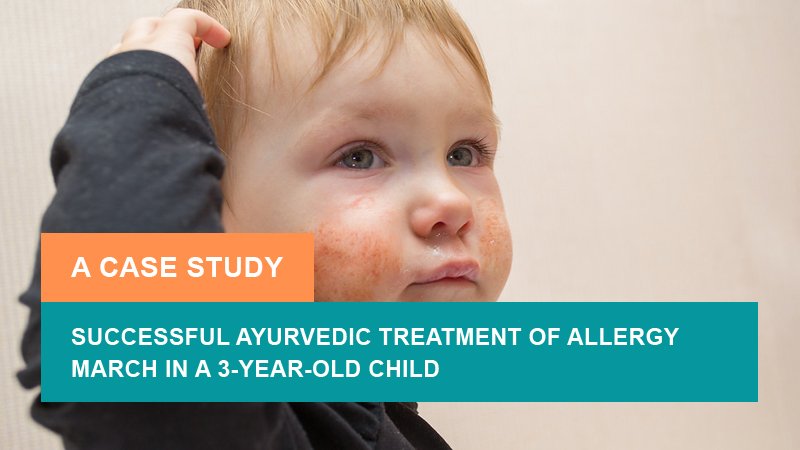
A 3-year-old female child presented with recurrent episodes of urticarial wheals associated with itching, constipation, and persistent nasal blockage since infancy. The condition showed a relapsing course with partial relief followed by frequent exacerbations, particularly after dietary exposure to specific food items. The child had a documented history of early introduction of formula feed and cow’s milk, suggesting a strong possibility of food protein intolerance as the underlying etiology.
1) Patient Details
Age/Sex: 3-year-old / Female
Date of first visit: 8th October 2021
2) Chief Complaints
- Recurrent urticarial hives with boils over the face, hands, and legs since infancy
- Severe chronic constipation
- Recurrent nasal blockage and sneezing
- Food intolerance
3) Diagnosis
Based on clinical features and Ayurvedic assessment, the child was diagnosed with:
| Ayurvedic Diagnosis | Modern Diagnosis Correlation |
| Sheetapitta | Chronic Urticaria |
| Aahar Asatmyata | Food Protein Intolerance |
| Ksheeralasaka | Cow Milk Protein Allergy |
| Vata-Kaphaja Pratishyay | Allergic Rhinitis |
4) Triggers and Exacerbating Factors
- Cow’s milk and dairy products
- Egg consumption
- Cold exposure
- Processed and packaged foods
Materials and Methods
1) Intervention Protocol
Ayurvedic treatment was initiated on 08th October 2021 at the Institute of Applied Food Allergy (IAFA). The therapeutic objective was to pacify Vata–Kapha predominance, eliminate Ama, correct Aahar Asatmyata, restore Annavaha and Pranavaha Strotas’ integrity, and prevent allergic march progression. The treatment included the use of various formulations like Swaras, Vati, Pratimarsha Nasya, topical skin therapy, respiratory-gut supportive formulation, and strict dietary regulation.
2) Ayurvedic Pathogenesis
Table 1. Samprapti Ghataka
| Samprapti Ghataka | Analysis |
| Dosha | Vata-Kapha Pradhana with Pitta Anubandha |
| Dushya | Rasa, Rakta, Twak |
| Strotas | Annavaha, Rasavaha, Pranavaha |
| Srotodushti | Atipravrutti, Sanga, Ama |
| Udbhava Sthana | Annavaha Srotas |
| Vyaktasthana | Twak, Nasa |
| Roga Marga | Bahya and Abhyantara |
| Adhishthana | Twak, Annavaha |
3) Ayurvedic Treatment Protocol
Ayurvedic treatment focused on Sheetapitta Shamana, correction of digestive hypersensitivity, immune modulation, and long-term stabilization. External therapies included Pratimarsha Nasya with Nasa Yoga Ghrutam and local application of Shishu Diaper Rash Oil and 333 Cream. Internal therapy involved Swaras-based formulations, Pitta Shamaka drugs, gut healing formulations, and respiratory support as per the phase of disease.
Table 2: Formulations Used
| Medicine | Dose | Frequency | Route |
| Nasa Yoga Ghrutam | 2-4 drops | Twice daily | Nasal |
| Shishu Diaper Rash Oil | 3–5 ml | Thrice daily | Topical |
| Aahar Amrutham Ras | 5 ml | Twice daily | Oral |
| Aam Visha Balance Tablet | ½ tab | Once daily | Oral |
| Skin Detox Drops | 2 ml | Thrice daily | Oral |
| Durva Swaras Drops | 1 ml | Thrice daily | Oral |
| Anthra Mithram Gulika | ½ tab | Once daily | Oral |
| Kutaj Ghana Vati | ½ tab | Once daily | Oral |
| Shishu Laxoherb | 2 ml | Once daily | Oral |
| Respiratory care X drops | 1 ml | Twice daily | Oral |
| Respiratory detox formula | 1 gram | Once daily | Oral |
| Nilavembu Kudineer | ½ gram | Once daily | Oral |
| Triphala Swarasa drops | 5 ml | Once daily | Oral |
| 333 creams | As required | Thrice daily | Topical |
| Akshi Tarpan Grutham | One drop in both eyes | Once daily | Topical |
| Jwarahara Swarasa | 10 ml | Twice daily | Oral |
| Sitopladi Churna Vati | 1 tab | Twice daily | Oral |
4) Date-wise Phased Therapeutic Strategy
Table 3. Phase-wise Ayurvedic Treatment and its objectives
| Phase | Date | Active symptoms | Treatment given | Therapeutic Objective |
| Phase 1-Acute Detox and Digestive Reset | 08-10-2021 | Severe urticaria with boils, severe constipation, nasal blockage, CMPA | Nasa Yoga Ghrutam, Shishu Diaper Rash Oil, Aahar Amrutham Ras, Aam Visha Balance Tab, Skin Detox Drops, Durva Swaras Drops | Pacify Sheetapitta, remove Ama, correct Annavaha Strotas dysfunction |
| Phase 2- Gut Healing and Stabilization | 16-11-2021 | Persistent hives, constipation, nasal allergy | Nasa Yoga Ghrutam, Shishu Diaper Rash Oil, Aahar Amrutham Ras, Aam Visha Balance Tab, Skin Detox Drops, Durva Swaras Drops, Anthra Mithram Gulika, Kutaj Ghanvati | Strengthening the gut, controlling food intolerance, and stabilizing urticaria |
| Phase 3-Remission Induction | 07-12-2021 | Hives resolved, mild constipation, and nasal allergy | Nasa Yoga Ghrutam, Shishu Diaper Rash Oil, Nasal All Clear Spray, Aahar Amrutham Ras, Anthra Mithram Gulika, Shishu Laxoherb, Respiratory Care X Drops, Respiro Detox Formula, Nilavembu Kudineer | Prevent relapses, stabilize the respiratory-gut axis |
| Phase 4 – Maintenance and Food Trigger Control | 25-01-2022 | No hives, nasal and GI symptoms controlled | Nasa Yoga Ghrutam, Nasal All Clear Spray, 333 Cream, Shishu Diaper Rash Oil, Aahar Amrutham Ras, Anthra Mithram Gulika, Aahar Amrutham Bindu, Durva Swaras Drops (SOS), Shishu Laxoherb, Triphala Swaras | Maintain remission, strengthen digestion and nutrition |
| Phase 5- Mild Relapse (Egg Trigger) | 25-05-2023 | Small red rashes with itching, appetite loss, and dry eyes | Shishu Diaper Rash Oil, Akshi Tarpan Ghrita, Bhoomi Amla Swaras, Skin Detox Drops, Aahar Amrutham Bindu, Durva Swaras Drops, Shishu Laxoherb | Control relapses, improve digestion, and ocular dryness |
| Phase 6- Respiratory Exacerbation Phase | 16-04-2024 | Chest congestion, breathlessness, constipation | Nasal All Clear X Drops, Nasal All Clear Spray, Shishu Diaper Rash Oil, Total Care 3X Rasa, Aahar Amrutham Bindu, Anthram Mithram Gulika, Shishu Laxoherb | Prevent allergic march progression |
| Phase 7-Febrile Respiratory Flare | 06-05-2024 | Wet cough, mild fever | Nasal All Clear X Drops, Nasal All Clear Spray, Shishu Diaper Rash Oil, Total Care 3X Rasa, Jwarhar Swaras (SOS), Respiratory Care X Drops, Sitopaladi Choornam Vati | Acute respiratory support and immune stabilization |
Table 4. Phase-wise Therapeutic Focus and Clinical Outcome
| Phase | Timeline | Therapeutic Focus | Clinical Outcome |
| Phase 1-Acute Detox and Digestive Reset | 08-10-2021 to 15-11-2021 | Pacification of Sheetapitta, Ama Pachana, correction of Annavaha srotas dysfunction, initiation of allergen elimination | Reduction in intensity and frequency of urticarial wheels, mild improvement in bowel habits |
| Phase 2-Gut Healing and Stabilization | 16-11-2021 to 06-12-2021 | Strengthening digestive capacity, management of food protein intolerance, stabilization of immune hyper-reactivity | Marked decrease in wheels, itching significantly reduced |
| Phase 3- Remission Induction | 07-12-2021 to 24-01-2022 | Respiratory-gut axis regulation, prevention of relapses, and correction of residual Dosha imbalance | Complete resolution of urticaria, normalization of bowel and nasal symptoms |
| Phase 4-Maintenance and Trigger Control | 25-01-2022 to 24-05-2023 | Maintenance of remission, nutritional sufficiency, and control of dietary triggers | Sustained remission with only occasional mild flare after egg exposure |
| Phase 5- Relapse Management | 25-05-2023 | Control of food triggered relapses, appetite restoration, and ocular dryness management. | Rapid resolution of rashes and improvement in appetite |
| Phase 6-Respiratory Stabilization | 16-04-2024 | Prevention of allergic march progression, respiratory-gut axis strengthening | Chest congestion and breathlessness resolved, no urticarial lesions |
| Phase 7- Acute Respiratory Flare Care | 06-05-2024 | Acute immune modulation, management of wet cough and fever | Fever and cough subsided without recurrence of urticaria |
5) Monitoring and Evaluation
Clinical monitoring was performed at each follow-up visit through parent-reported symptom tracking and physician observation. Evaluation focused on the frequency and severity of urticarial wheels, intensity of itching, bowel regularity, nasal symptoms, and recurrence pattern after food exposure. A retrospective grading system was adopted to document symptomatic improvement over successive visits.
Table 5. Clinical Monitoring Parameters
| Parameter | Assessment Method |
| Frequency of urticarial wheels | Clinical observation and parental reporting |
| Itching severity (VAS 0–10) | Parent-reported Visual Analogue Scale |
| Bowel habit regularity | Stool frequency and consistency chart |
| Nasal congestion or sneezing | Symptom as reported |
| Trigger response | Dietary recall and flare correlation |
| Adverse events | Parental feedback and clinical observation |
Table 6. Symptom Evaluation Scale
| Parameter | Baseline | Phase 1 End | Phase 3 End | Phase 7 End |
| Wheal frequency | Frequent (daily) | Occasional | Absent | Absent |
| Itching (VAS) | 8/10 | 4/10 | 1/10 | 0 |
| Constipation | Severe | Mild | Absent | Absent |
| Nasal blockage | Persistent | Occasional | Absent | Absent |
The child was closely monitored for safety and tolerability throughout the treatment period. No adverse drug reactions were reported during any phase, and long-term follow-up demonstrated sustained remission without disease progression.
6) Dietary and Lifestyle Measures:-
Dietary and lifestyle modifications were an important part of the management of Sheetapitta, correcting Aahar Asatmyata and preventing recurrence.
Pathya (Recommended Diet)
| Category | Dietary Advice |
| Dairy | Lactose-free milk initially, later buffalo milk diluted with ¼th water |
| Cereals and Grains | Old basmati rice (>3 months), barley, jowar atta, buckwheat, ragi, whole corn, millets, gluten-free oats |
| Pulses | Moong dal, Urad dal, yellow and green lentils |
| Fruits | Banana, mango, lime, kiwi, bael, apple |
| Vegetables | Green leafy vegetables, fiber-rich vegetables (well-cooked) |
| Nuts and Seeds | Almonds, water chestnuts |
| Spices and Herbs | Fennel, cumin, curry leaves, coriander, saffron |
| Fluids | Frequent intake of small quantities of lukewarm water, rice water |
| Others | Non-dairy creamers (after label check), green food once daily, honey |
Apathya (Dietary Restrictions)
| Category | Food to Avoid |
| Dairy | Cow milk, cream cheese, soft cheese, high-lactose foods |
| Proteins | Eggs, meat, poultry, seafood |
| Grains | Wheat, gluten-containing products, pasta |
| Vegetables | Eggplant, ladyfinger, capsicum, spinach, mushroom, cabbage, celery, potato, beans |
| Fruits | Orange, plum, pomegranate, fig, raspberry, red grapes |
| Nuts and Pulses | Brazil nut, cashew, hazelnut, peanut, pistachio, kidney beans, soya beans |
| Processed Foods | Packaged foods, food additives, dyes, and artificial sweeteners |
| Others | Fermented food and beverages, alcohol-based cough syrup, vinegar, mustard, spicy, sour, salty foods, white sugar, and leftovers |
| General | Viruddha Bhojana (incompatible food combinations) |
Lifestyle Recommendations
- Daily hot water bath
- Avoid exposure to the cold breeze
- Do not suppress natural urges
- Maintain a regular sleep routine, avoid day-sleep after lunch
- Use chemical-free personal care products
Result
At the time of the first consultation, the child exhibited frequent daily urticarial wheels, intense pruritus, severe constipation, and persistent nasal blockage, with a clear history of dietary triggers, particularly cow’s milk. The disease showed a chronic relapsing pattern affecting the skin, gastrointestinal, and respiratory systems simultaneously. Following initiation of the Ayurvedic treatment at IAFA, a stepwise and progressive clinical response was observed.
Within the first month, there was a noticeable decline in the frequency and intensity of wheels, with pruritus reducing by more than 50% and bowel habits improving from severe constipation to regular soft stools. Nasal blockage and sneezing episodes also decreased significantly. By the end of the second month of treatment, urticarial lesions had completely resolved, and the child remained free from itching, constipation, and nasal symptoms.
Clinical stability was maintained over the next year with only one mild flare following egg ingestion, which subsided rapidly after short-term therapeutic modification. During long-term follow-up extending to May 2024, the child demonstrated no recurrence of urticaria, normal gastrointestinal function, and minimal respiratory symptoms.
Importantly, no adverse drug reactions or treatment intolerance were reported at any stage of management. Overall, the Ayurvedic protocol resulted in early remission, sustained symptom control, and prevention of disease progression, confirming its effectiveness in managing chronic pediatric urticaria associated with food protein intolerance.
Discussion
Chronic pediatric urticaria is increasingly recognized as a systemic immune-mediated disorder rather than an isolated dermatological disease. The present case shows classical features of the allergic march, beginning with food protein intolerance, progressing to gastrointestinal dysfunction, cutaneous urticaria, and later respiratory involvement. Cow’s milk protein and egg acted as clear antigenic triggers, confirming a dominant gut-immune dysregulation.
Ayurveda correlates these clinical symptoms as Sheetapitta with Aahar Asatmyata, Ksheeralasaka, and Vata-Kaphaja Pratishaya, wherein incompatible food intake and impaired digestion produce Ama (toxin) that hyper-stimulates Annavaha, Rasavaha, and Pranavaha Strotas, leading to multisystem hypersensitivity.
The treatment of this case is based on the principle of Samprapti Vighatana, treating disease origin rather than symptomatic suppression. The approach used in IAFA was phase-wise, in which digestive correction, immune detoxification, skin barrier restoration, and respiratory stabilization are done.
1) Ayurvedic Pathophysiological Understanding
Sheetapitta occurs from the dominance of Vata-Kapha that, upon association with Pitta, shows symptoms as Varatidamshtra-Vatashotha, Kandu, and Toda. The presence of Aahar Asatmyata leads to chronic Ama formation, which obstructs micro-channels and results in immune hyper-reactivity. In this case, early introduction of formula milk and cow’s milk led to the development of Ksheeralasaka, producing constipation, abdominal discomfort, and recurrent allergic manifestations. Simultaneously, involvement of Pranavaha Srotas resulted in Vata-Kaphaja Pratishyay with nasal blockage and cough, completing the allergic march.
2) Formulations and their therapeutic role
The formulations were selected to correct each part of the pathogenesis, i.e., gut, blood, skin, and respiratory system.
Table 7. Internal formulations with their actions
| Formulations | Ayurvedic mode of action | Modern Pharmacology |
| Aahar Amrutham Ras | Agni-deepana, Ama-Pachana, Annavaha Stroras Shodhana | Digestive enzyme modulation, gut barrier support |
| Aam Visha Balance Tablet | Pitta-Shamana, Rakta-Prasadana | Antacid, mucosal protective, detoxifying |
| Skin Detox Drops | Rakta-Shodhana, Kandughna, Twak-Strotoshodhana | Anti-allergic, immunomodulatory |
| Durva Swaras Drops | Daha-shamana, Raktapitta-Hara | Antipruritic, anti-inflammatory |
| Anthra Mithram Gulika | Grahani Balya, Aahar-Asatmyatahara | Intestinal barrier repair |
| Shishu Laxoherb | Anulomana, Mala-ravartaka | Bowel motility regulation |
| Respiratory Care X Drops | Pranavaha- Shodhana | Anti-allergic, bronchodilator |
| Respiratory Detox Formula | Kapha-Vilayana, Ama Pachana | Expectorant, immunomodulatory |
| Nilavembu Kudineer | Jwarahara, Vishaghna | Antiviral, antipyretic |
| Triphala Swarasa | Rasayana, Anulomana | Microbiome modulation |
| Jwarahara Swarasa | Jwarahara, Agni-deepana | Antipyretic |
| Sitopaladi Churna Vati | Kasa-Shwasahara, Kapha-Shamana | Antitussive, mucolytic |
Table 8. External formulation with its mode of action
| Therapy | Ayurvedic mode of action | Modern pharmacology |
| Nasa Yoga Grutham | Pranavaha Strotas Shodhana | Nasal mucosal modulation |
| Shishu Diaper Rash Oil | Kandughna, Vranaropana | Barrier repair, antimicrobial |
| 333 Cream | Twachya, Snigdha-guna | Emollient, anti-inflammatory |
| Akshi Tarpan Ghrita | Chakshushya, Pittashamana | Lubricating, soothing |
3) Integrative Impact of treatment on the case
The combined phase-wise use of these formulations restored digestive tolerance, removed inflammatory metabolites, stabilized immune response, repaired skin barrier, and strengthened respiratory channels. The child achieved complete remission within two months and remained urticaria-free over a 2.5-year follow-up, demonstrating that Ayurvedic treatment can effectively halt allergic march progression when started at early pediatric stages.
Happy Note

Source:- https://share.google/ Amhw7XHd4sBVIFVdu
Conclusion
This case shows that chronic urticaria in children is not only a skin problem, but a disorder linked with poor digestion, food intolerance, and repeated allergic reactions. Early exposure to cow’s milk and unsuitable food habits led to digestive weakness and immune overreaction, which appeared as urticaria, constipation, and nasal allergy.

With a step-by-step Ayurvedic treatment plan that focused on improving digestion, removing toxins, calming allergic response, strengthening the gut and respiratory system, and correcting diet, the child showed complete recovery within two months. The improvement was maintained for more than two and a half years without recurrence or side effects.
This case supports the Ayurvedic approach that can safely and effectively control chronic pediatric urticaria and prevent future allergic complications.
References
- Meyer R, Fleming C, Dominguez-Ortega G, Lindley K, Michaelis L, Thapar N, Elawad M, Chakravarti V, Fox AT, Shah N. Manifestations of food protein-induced gastrointestinal allergies presenting to a single tertiary paediatric gastroenterology unit. World Allergy Organ J. 2013 Aug 6; 6 (1): 13. doi: 10. 1186/ 1939- 4551- 6- 13. PMID: 23919257; PMCID: PMC- 3828- 665.
- Kayiran MA, Akdeniz N. Diagnosis and treatment of urticaria in primary care. North Clin Istanb. 2019 Feb 14; 6 (1): 93- 99. doi: 10. 14744/ nci. 2018. 75010. PMID: 3118- 0381; PMCID: PMC- 6526- 977.
- Novembre E, Cianferoni A, Mori F, Barni S, Calogero C, Bernardini R, Di Grande L, Pucci N, Azzari C, Vierucci A. Urticaria and urticaria-related skin condition/disease in children. Eur Ann Allergy Clin Immunol. 2008 May; 40 (1): 5- 13. PMID: 18700- 329.
- Hao L, Wang S, Ji W. Cow’s milk protein allergy: A comprehensive review of epidemiology, pathogenesis, clinical manifestations, diagnostics, and management strategies. Asia Pac J Clin Nutr. 2025 Jun; 34 (3): 298- 307. doi: 10. 6133/ apjcn. 202506- 34 (3). 0004. PMID: 4041- 9390; PMCID: PMC- 1212- 6303.
- Caffarelli, C., Giannetti, A., Buono, E. V., Cunico, D., Carbone, R., Tonello, F., & Ricci, G. (2024). Cow’s Milk Allergy in Breastfed Infants: What We Need to Know About Mechanisms, Management, and Maternal Role. Nutrients, 17 (11), 1787. https:// doi. org/ 10. 3390/ nu- 1711- 1787
- Ensina LF, Min TK, Félix MMR, de Alcântara CT, Costa C. Acute Urticaria and Anaphylaxis: Differences and Similarities in Clinical Management. Front Allergy. 2022 Apr 15; 3: 840999. doi: 10. 3389/ falgy. 2022. 840999. PMID: 35958944; PMCID: PMC- 9361- 476.
- Shin M, Lee S. Prevalence and Causes of Childhood Urticaria. Allergy Asthma Immunol Res. 2017 May; 9 (3): 189- 190. doi: 10. 4168/ aair. 2017. 9. 3. 189. PMID: 2829- 3924; PMCID: PMC- 5352- 569.
- Walker-Smith, John. (2003). Cow’s milk allergy: A new understanding from immunology. Annals of allergy, asthma & immunology: official publication of the American College of Allergy, Asthma, & Immunology. 90. 81- 3. 10. 1016/ S1081- 1206 (10) 61666- 3.
- Chang J, Cattelan L, Ben-Shoshan M, Le M, Netchiporouk E. Management of Pediatric Chronic Spontaneous Urticaria: A Review of Current Evidence and Guidelines. J Asthma Allergy. 2021 Mar 9; 14: 187- 199. doi: 10. 2147/ JAA. S249765. PMID: 33727832; PMCID: PMC- 7955- 742.
- Packi, K., Rudek, A., Matysiak, J., Klimczak, S., Matuszewska, E., Rzetecka, N., & Matysiak, J. (2022). Food Allergies and Parasites in Children. Foods, 12 (13), 2465. https:// doi. org/ 10. 3390/ foods- 1213- 2465
- Vighi G, Marcucci F, Sensi L, Di Cara G, Frati F. Allergy and the gastrointestinal system. Clin Exp Immunol. 2008 Sep;153 Suppl 1 (Suppl 1): 3- 6. doi: 10. 1111/ j. 1365- 2249. 2008. 03713. x. PMID: 18721321; PMCID: PMC- 2515- 351.
- Ko, Y., & Lee, K. (2024). A Unified Pathogenesis of Allergic Diseases; The Protein–Homeostasis–System Hypothesis. International Journal of Molecular Sciences, 26 (17), 8358. https:// doi. org/ 10. 3390/ ijms- 2617- 8358
- Kauppinen K, Juntunen K, Lanki H. Urticaria in children. Retrospective evaluation and follow-up. Allergy. 1984 Aug;39(6):469-72. doi: 10. 1111/ j. 1398- 9995. 1984. tb01970. x. PMID: 6496- 883.
- Knyziak-Mędrzycka I, Majsiak E, Cukrowska B. Allergic March in Children: The Significance of Precision Allergy Molecular Diagnosis (PAMD) in Predicting Atopy Development and Planning Allergen-Specific Immunotherapy. Nutrients. 2023 Feb 15; 15 (4): 978. doi: 10. 3390/ – nu- 15040978. PMID: 3683- 9334; PMCID: PMC- 9961- 516.
- Goksör E, Loid P, Alm B, Åberg N, Wennergren G. The allergic march comprises the coexistence of related patterns of allergic disease, not just the progressive development of one disease. Acta Paediatr. 2016 Dec; 105 (12): 1472- 1479. doi: 10. 1111/ apa. 13515. Epub 2016 Jul 28. PMID: 2738- 1249; PMCID: PMC- 512- 9460.
- Dharmarajan P, Dahiya A, Therokar S, S AY. Management of Chronic Spontaneous Urticaria Unresponsive to Conventional Treatment Through a Course of Panchakarma Therapies: A Case Report. Altern Ther Health Med. 2024 May; 30 (5): 53- 57. PMID: 3881- 9189.
- Yadav S, Bajaj AK. Management of difficult urticaria. Indian J Dermatol. 2009 Jul; 54 (3): 275- 9. doi: 10. 4103/ 0019- 5154. 55641. PMID: 2016- 1863; PMCID: PMC- 281- 0698.
- Jaros J, Shi VY, Katta R. Diet and Chronic Urticaria: Dietary Modification as a Treatment Strategy. Dermatol Pract Concept. 2019 Dec 31; 10 (1): e2020004. Doi: 10. 5826/ dpc. 1001a04. PMID: 31921491; PMCID: PMC- 6936629.
- Shiksha, Gupta & Paradkar, Hemant, & Anaya, Pathrikar. (2024). MANAGEMENT OF SHEETAPITTA (CHRONIC URTICARIA) USING AYURVEDIC SHODHANA AND SHAMANA THERAPIES: A CASE REPORT. INTERNATIONAL JOURNAL OF RESEARCH AND ANALYTICAL REVIEWS. 11. 667- 669.
- Walker-Smith J. Dietary protein intolerance. Diseases of the Small Intestine in Childhood. 1988: 144- 84. doi: 10. 1016/ B978- 0- 407- 01320- 9. 50011-X. Epub 2013 Oct 21. PMCID: PMC- 7151- 781.
- Connor F, Salvatore S, D’Auria E, Baldassarre ME, Acunzo M, Di Bella G, Farella I, Sestito S, Pensabene L. Cows’ Milk Allergy-Associated Constipation: When to Look for It? A Narrative Review. Nutrients. 2022 Mar 21; 14 (6): 1317. doi: 10. 3390/ nu- 14061317. PMID: 3533- 4974; PMCID: PMC- 895- 5686.
- Bryce PJ. Balancing Tolerance or Allergy to Food Proteins. Trends Immunol. 2016 Oct; 37 (10): 659- 667. doi: 10. 1016/ j. it. 2016. 08. 008. Epub 2016 Sep 3. PMID: 2760- 0681; PMCID: PMC- 504- 8554.