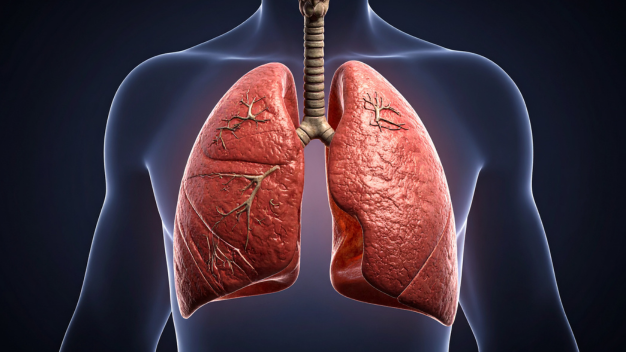

Ayurvedic Treatment for Breast Cancer
Discover Ayurvedic treatment for breast cancer, focusing on natural and alternative remedies. Learn how holistic approach, herbs, and lifestyle changes can support healing.
On This Page


-
 30
30
 Share
ShareSummarise this article using AI




Introduction
Breast cancer is the worldwide most common type of cancer and the current increase in the prevalence of breast cancer suggests understanding this cancer from both modern and Ayurvedic perspectives for making better diagnoses and treatment.
In 2023, the National Institute of Cancer estimated approximately 3 lakh new cases of breast cancer and approximately 43170 deaths. In Ayurvedic classical texts breast cancer is not mentioned directly but on the reference of the Stana Roga, Arbuda, Granthi and Shopha, the Nidana Panchaka of breast cancer can be formulated.
Types of Breast Cancer – As Per Modern Point of View
- Ductal carcinoma
- Lobular carcinoma
- Infiltrating (Invasive) breast cancer
- Inflammatory breast cancer
- Paget disease of the breast
- Angiosarcoma
- Phyllodes tumor
- Ductal Carcinoma – The most common type of breast cancer, approximately 85- 90 % of cancer of the breast is Ductal carcinoma. The cells that line the tissue and organs throughout the body are known as epithelial cells and the carcinoma which starts as a tumor in these epithelial cells is known as ductal carcinoma. This is a type of adenocarcinoma that starts in the milk ducts.
- Lobular Carcinoma – Lobular carcinoma is also the most common type of breast cancer. Approximately 8 % of breast cancers are lobular. This is also a type of adenocarcinoma that starts in the gland that produces milk in the breast i.e., lobules.
- Infiltrating (Invasive) Breast Cancer – Second most common type of breast cancer. In this type of cancer, nearby tissue of the breast is invaded. This cancer spreads from the original tumor site to other parts of the breast and even the body. This contributes to more than 100 subtypes of breast cancer as per the World Health Organization.
- Inflammatory Breast Cancer – The least common type of breast cancer but considered the most aggressive type of cancer. In this type of cancer instead of the formation of lumps, the formation of nests and sheets occurs. This cancer can start just beneath the skin, on the soft tissue of the skin, or even on the skin.
Signs and Symptoms of Breast Cancer
- Change in the texture and color of the nipple
- Thickening or lump formation in the breast or armpit
- Fluid from the nipple leaking (not milk)
- Pain in the breast and armpit that is unusual
- Breast skin irritation
- Redness and scaliness on the nipples and breast skin
- Change in the size and shape of the mature breast

Dr. Sahil Gupta utilizes carefully formulated Ayurvedic herbal combinations, selected based on classical principles and clinical experience, to support patients in the management of breast cancer.
This approach aims to improve overall quality of life, support metabolic balance, and complement Ayurvedic medical care where appropriate.
– Dr. Sahil Gupta (B.A.M.S., M.H.A.)
Ayurvedic Allergy Specialist
CEO & Founder of IAFA®
Ayurvedic Point of View of Breast Cancer
Possible relation of breast cancer in Ayurveda:-
- Combination of any three i.e., Shopha, Granthi, and Arbuda.
- Sthana Pidika
- Visarpa
- Kaksha
- Gandhnama
- Vidari
- Shopha
- Granthi
- Arbuda
Causes of Breast Cancer – According to Ayurveda
Probable causes of breast cancer (Stana Arbuda) as per Ayurveda are as follows:
- Neglecting suppurated swelling (Pakwa shopha) or not cutting open ripe swelling
- Neglecting Prachura Puya Vrana (Abundent pus)
- Patient Vrana taking unsuitable food and indulging in unsuitable activities
Dosha Involved in Breast Cancer (Stana Arbuda)
Without Vata, Shopha cannot be started. So Vata is surely involved in the Stana Arbuda. In most cases of breast cancer, Kpahaja Swabhava is dominantly seen. In later stages, as diseases are localized and become chronic all three doshas are considered to be involved in the case of breast cancer.



Committed to Holistic Healing through Alternative Medicine Since 2008
At Last, Easier Breast Cancer Management

Trusted by
More than 90,000 Patients

Convenient
at-Home Treatments

9.2 / 10
Customer Satisfaction Score
Poorva Rupa (Pre-Symptom) of Breast Cancer (Stana Arbuda)
- If there are any Vidridhi Lakshana with or without Strava that are not manifested, then they can be considered as pre- symptom or Purva Rupa of breast cancer.
- Along with this other symptoms like Aruchi (anorexia), Guruta (heaviness), Dourbalata (weakness), etc can be seen.
- Locally mild pain and itching can be seen as Purva Roopa in breast cancer.
Roopa (Symptoms) of Breast Cancer (Stana Arbuda)
- Granthi and Arbuda Lakshana
- Kaphaja Viddridhi Lakshana
- Ek Desho Uthith Shopha Lakshana, etc can be seen as symptoms.
Samprapti Ghataka of the Breast Cancer (Stana Arbuda)
Dosha – Tridoshaja (Vata and Kapha Pradhana)
Dushya – Tvaka, rakta, Mansa, Meda
Adhisthana – Amashaya
Strotas – Rasa Vaha Strotas, Rakta Vaha Strotas, Mansa Vaha Strotas, Medo Vaha Strotas
Stroto Dushti – Sanga
Agni – Visham Agni, Manda Agni
Roga Marga – Bahya
Upashaya of Breast Cancer (Stana Arbuda)
Ahara – Agni Deepaka, Na Ati Sanigdha, Ushana, Satmya Bhojana.
Vihara – Depending on the individual Bala, moderate activities can be done.
Shamana Aushadha – Tridosha Hara, Kapha Vata Hara, Ushana, Teekshana, Agni Deepaka, Ama Pachaka Dravya Can be given.
Shodhana Chikitsa – Sthanika Lepa, Sthanika Swedana, Vamana, Virechana, rakta Mokshana, Agni Karma, Shastra Karma, etc.
Herbs Used for Breast Cancer
Glycyrrhiza uralensis (Chinese licorice)
Part Used – Licorice root
Mode of Action – In human breast cancer cells it inhibits cell proliferation. Mainly licorice roots inhibit the proliferation of MCF- 7 cells in a time-dependent and dose-dependent manner. The extracts were fractionated in CHCl(3), EtOAc, C(6)H(14), and CH(3)OH-H(2)O (70:30), and these extracts of licorice root (50 micro g/mL) induced DNA fragmentation demonstrated by Hoechst 33258 staining. Apoptosis also determined the sub-G1 accumulation by flow cytometry analysis. These results were consistent with specific cleavage of PARP and antiapoptotic protein Bcl- 2 and up-regulation of proapoptotic protein Bax demonstrated by Western blotting. Our findings suggest that licorice root may have chemopreventive effects against human breast cancer through the modulation of the expression of the Bcl- 2/ Bax family of apoptotic regulatory factors.
Reference – Jo EH, Hong HD, Ahn NC, Jung JW, Yang SR, Park JS, Kim SH, Lee YS, Kang KS. Modulations of the Bcl- 2/ Bax family were involved in the chemopreventive effects of licorice root (Glycyrrhiza uralensis Fisch) in MCF- 7 human breast cancer cells. J Agric Food Chem. 2004 Mar 24; 52 (6):1715- 9. doi: 10. 1021/ jf035012t. PMID: 1503- 0235.
Nigella Sativa (Kalonji)
Part Used – Black seed extract.
Mode of Action – Black seed (N. Sativa L) is an oriental spice of the family Ranunculaceae that has long been rationally used as a natural medicine for the treatment of many acute as well as chronic conditions including cardiovascular disease and immunological disorders. It has been used in the treatment of diabetes, hypertension, and dermatological conditions. There have been very few studies on the effects of N. Sativa as a chemoprevention of chronic diseases as well as in cancer prevention and/or therapy. Oxidative stress is a condition that underlies many acute as well as chronic conditions. The combination and role of oxidative stress and antioxidants in vivo is still a matter of conjecture. Our objective for the present study was to expose MCF-7 breast cancer cells in vitro (as a chronic disease example) to aqueous and alcohol extracts and in combination with H[2]O[2] as an oxidative stressor. Measurement of cell survival under various concentrations and mixtures was conducted using standard cell culture techniques, exposure protocols in 96 well plates, and Fluorospectrosphotometry. Following cellular growth to 90 % confluency, exposure to water (WE) and ethanol (AE) extracts of N. sativa and H[2]O[2] was performed. Cell survival indices were calculated from percent survival using regression analysis. Results showed that the alcohol extract and its mixtures were able to influence the survival of MCF-7 cells (indices ranged from 357.15- 809. 50 mg/ ml in descending potency for H[2]O[2]+AE to the mix of 3). In contrast, H[2]O[2] alone reduced effectively the survival of MCF-7 cells and the least effective combinations in descending potency were AE+H[2]O[2], WE+H[2]O[2], AE+WE, and WE+AE+H[2]O[2]. Mixtures other than AE+H[2]O[2] showed possible interactions and loss of potency. In conclusion, N. Sativa alone or in combination with oxidative stress was found to be effective (in vitro) in influencing the survival of MCF-7 breast cancer cells, unveiling promising opportunities in the field of cancer chemoprevention and/or treatment.
Reference – Farah, Ibrahim. (2006). Assessment of Cellular Responses to Oxidative Stress using MCF-7 Breast Cancer Cells, Black Seed (N. Sativa L.) Extracts, and H2O2. International journal of environmental research and public health. 2. 411- 9. 10. 3390/ ijerph- 2005030005.
Rosmarinus officinalis (Rosemary)
Part Used – Crude ethanolic extract
Mode of Action – Crude ethanolic rosemary extract (RO) has differential anti-proliferative effects on human leukemia and breast carcinoma cells. The 50% inhibitory concentration (IC50) was estimated at 1/700, 1/400, 1/150 and 1/500 dilutions, for the HL60, K562, MCF7 and MDA- MB- 468 cells, respectively. Non-cytotoxic concentrations of RO at 1/1000 dilution minimally induced HL60 cell differentiation into granulocyte lineage at 9.5+/-2.2% compared to 2.8+/-0.8 % in the untreated control (p< 0.001) and did not induce HL60 cell differentiation into monocyte/ macrophage lineage. The 6- hydroxy- 2, 5, 7, 8- tetramethyl-chroman- 2- carboxylic acid (Trolox) equivalent antioxidant capacity assay showed that RO has substantial antioxidant activity with RO at 1/10 and 1/5 dilutions having 8.1 and 12.6 micron Trolox equivalents, respectively. RO at non-cytotoxic 1/ 2000 and 1/1000 dilutions did not affect nitric oxide (NO) production by non-stimulated RAW 264.7 cells. However, at the same dilutions, RO significantly reduced NO production by lipopolysaccharide (LPS)- activated cells in a dose-dependent manner from 32.6+/- 2.3 microns in the LPS- activated cells to 19.2+/- 2.2 microM (p< 0.01), and 7.7+/-1.2 microM (p<0.001), respectively. RT- PCR analyses showed that RAW 264.7 cells treated with 1/1000 and 1/500 dilutions for 5 h did not affect TNFalpha, IL-1beta, iNOS and COX-2 mRNA expression in these cells when compared to the untreated controls, nor did the 1/ 1000 dilution of RO affect TNFalpha, IL-1beta, iNOS and COX-2 mRNA expression in the LPS-activated cells. At 1/500 dilution, RO significantly reduced IL-1beta (p< 0.01) and COX-2 (p< 0.05) mRNA expression and non-significantly reduced TNF-alpha and iNOS mRNA expression in the LPS-activated cells.
Reference – Cheung S, Tai J. Anti-proliferative and antioxidant properties of rosemary Rosmarinus officinalis. Oncol Rep. 2007 Jun; 17 (6): 1525- 31. PMID: 1748- 7414.
Cannabis sativa
Part Used – Cannabinoids
Mode of Action – Delta (9)- Tetrahydrocannabinol (THC) exhibits antitumor effects on various cancer cell types, but its use in chemotherapy is limited by its psychotropic activity. We investigated the antitumor activities of other plant cannabinoids, i.e., cannabidiol, cannabigerol, cannabichromene, cannabidiol acid, and THC acid, and assessed whether there is any advantage in using Cannabis extracts (enriched in either cannabidiol or THC) over pure cannabinoids. Results obtained in a panel of tumor cell lines indicate that, of the five natural compounds tested, cannabidiol is the most potent inhibitor of cancer cell growth (IC(50) between 6.0 and 10.6 micro M), with significantly lower potency in non cancer cells. The cannabidiol-rich extract was equipotent to cannabidiol, whereas cannabigerol and cannabichromene followed in the rank of potency. Both cannabidiol and the cannabidiol-rich extract inhibited the growth of xenograft tumors obtained by s.c. injection into athymic mice of human MDA-MB- 231 breast carcinoma or rat v- K- ras- transformed thyroid epithelial cells and reduced lung metastases deriving from intrapaw injection of MDA- MB- 231 cells. Judging from several experiments on its possible cellular and molecular mechanisms of action, we propose that cannabidiol lacks a unique mode of action in the cell lines investigated. At least for MDA- MB- 231 cells, however, our experiments indicate that the cannabidiol effect is due to its capability of inducing apoptosis via direct or indirect activation of cannabinoid CB (2) and vanilloid transient receptor potential vanilloid type-1 receptors and cannabinoid/vanilloid receptor-independent elevation of intracellular Ca(2+) and reactive oxygen species. Our data support the further testing of cannabidiol and cannabidiol-rich extracts for the potential treatment of cancer.
Reference – Ligresti, Alessia & Moriello, Aniello & Starowicz, Katarzyna & Matias, Isabelle & Pisanti, Simona & De petrocellis, Luciano & Laezza, Chiara & Portella, Giuseppe & Bifulco, Maurizio & Di Marzo, Vincenzo. (2006). Antitumor Activity of Plant Cannabinoids with Emphasis on the Effect of Cannabidiol on Human Breast Carcinoma. The Journal of pharmacology and experimental therapeutics. 318. 1375- 87. 10. 1124/ jpet. 106. 105247.
Frequently Asked Questions
Q1. Can Breast Cancer Be Cured at Stage 4?
Ans. Generally, Stage 4 breast cancer is not curable, however, with various modern and Ayurvedic treatments, one can manage breast cancer and improve the quality and quantity of life.
Q2. How to Stop Breast Cancer from Spreading?
Ans. The most important points for preventing the spread of breast cancer are early detection, lifestyle and dietary modification, and appropriate treatment like surgery, chemotherapy, radiation therapy, etc. Along with this Ayurvedic treatment can help to slow down or stop the spread of breast cancer.
Q3. What are the Early Symptoms of Breast Cancer?
Ans. If an individual feels a lump in the breast or underarm or may see changes in breast shape, and size, discharge from the nipple, or persistent pain, it may be an early symptom of breast cancer.
Q4. What are the Risk Factors for Breast Cancer?
Ans. Genetic mutations like BRCA1, and BRCA2, hormonal disturbances, obesity, alcohol consumption, lack of physical activity, family history, and aging are the risk factors of breast cancer.
Q5. Can Men Get Breast Cancer?
Ans. Yes, men can get breast cancer though rare. It is typically presented with lumps or nipple changes.
Q6. Does Breastfeeding Reduce the Risk of Breast Cancer?
Ans. Yes, breastfeeding regulates hormones and reduces lifetime exposure to estrogen, so lowers the risk of breast cancer.
Q7. Can Breast Cancer Be Detected Early?
Ans. Yes, regular self-exams, clinical breast exams, etc. can detect breast cancer early.
Q8. What is the Survival Rate of Breast Cancer?
Ans. Survival rates of the breast cancer patient depend on the early stage, and early detection significantly.
Q9. Can Lifestyle Changes Help Prevent Breast Cancer?
Ans. Yes, regular physical activity, maintaining a healthy weight, a well-balanced diet, limiting alcohol, and avoiding smoking can reduce the risk of breast cancer.
Seek Expert Advice
At IAFA our approach is to combine Ayurvedic treatments like Panchakarma, Rasayana therapy, Yoga therapy, diet, and lifestyle modification with modern treatment to support your healing journey from breast cancer. With personalized treatment plans, dietary guidance, and stress management techniques, at IAFA Ayurveda we aim to enhance your recovery naturally through Ayurveda.
Take the first step towards better health, consult Dr. Sahil Gupta and his expert team today, and discover the power of Ayurveda healing in your fight against breast cancer!


Was this Page Helpful?
IAFA’s Root-Cause Management for Breast Cancer is Just 3 Steps Away!

01. Connect With Us
Share Your History of Illness or Book Your Appointment.

02. Consult With Us
Dr. Gupta A Certified Ayurvedic Practitioner.

03. Root Cause Management
Get An Accurate Diagnosis, Medicine, Diet & Lifestyle Guidance.
Real Case Studies – Successfully Treated Patients
Real Case Studies of Successfully Treated Patients from All Around the World by IAFA Ayurveda®
-

32-Year-Old Female Patient Recovered from Chronic Urticaria and Leaky Gut Syndrome – A Case Study
This case study highlights the successful Ayurvedic treatment of chronic urticaria associated…
-
5-Year-Old Shih Apso Dog Recovered from Canine Peripheral Neuropathy – A Case Study
This case study presents a 5-year-old Shih Tzu-Lhasa Apso crossbreed dog (pet)…
-
9 Year Old Female Patient Recovered from Chronic Allergic Bronchitis – A Case Study
This case study presents a 9-year-old female patient who has successfully recovered…
-
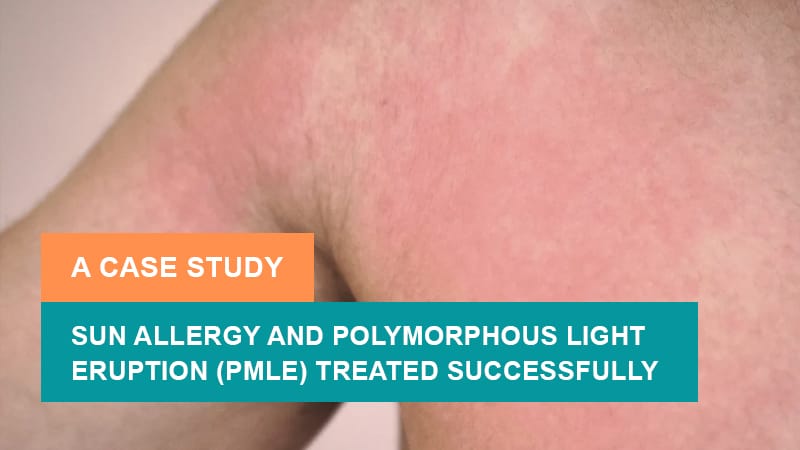
12-Year-Old Child Recovered from Solar Urticaria (Chronic Sun-Sensitivity) – A Sun Allergy Case Study
This is a case study of a 12-year-old child who has successfully…
Read More Articles
-
-

Breast Cancer
Discover Ayurvedic treatment for breast cancer, focusing on natural and alternative remedies.…