
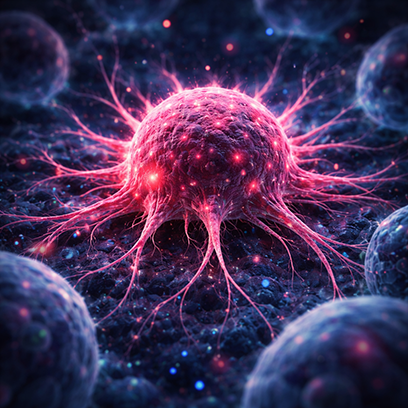
What is Cancer?
Understand what cancer is with this beginner-friendly explanation covering its types and available treatment. Book a consultation for in-depth guidance with our Ayurvedic practitioners.


-
 0
0
 Share
ShareSummarise this article using AI




Introduction
With new avenues of modern science and technology, life on the earth has been modernized. The modern world has gifted mankind with lots of comforts but along with this it also contributes to lots of consequences i.e., lifestyle disorders like obesity, diabetes, hypertension, cardiac disease, auto-immune disease, cancer, etc.
Among all the consequences mentioned above Cancer is of serious concern because its incidences are increasing throughout the world day by day and also it has high mortality and morbidity rates. A recent survey revealed that in the USA, cancer is the second leading cause of death behind heart disease. Not only in the USA but cancer is also the second leading cause of death worldwide.
Cancer word is derived from the Greek word crab. The word crab has been used in the medical sciences for a long time for Canker which means eroded ulcers. Cancer is mainly a genetic disorder that arises due to various reasons like malfunction of tumor suppressor genes, activation of oncogenes, and mutagenesis that occurs due to external factors. Along with this other factors like environmental factors, exposure to chemicals, lifestyle changes, ionizing radiation, etc also contribute as a causative factor of cancer.
In Modern science, approximately 70 % of cases of cancer are treated with radiotherapy alone or with chemotherapy or radiotherapy combined with surgery. In Ayurvedic classical literature, cancer can be correlated with the Arbuda. Arbuda is mainly considered as neoplasia, which can be malignant i.e., cancerous, or benign i.e. non- cancerous. Asadhya Vrana mentioned in Ayurveda is also labeled as clear malignancy.
In Ayurvedic classical texts, various types of treatment are mentioned for cancer like Shamana Chikitsa, Shodhana Chikitsa, Rasayana Chikitsa, etc. As in early detection of cancer surgical interventions give good results along with this or alone Ayurvedic treatment specially used of some specific herbs or formulations give marvelous results to cure cancer.
Ayurvedic drugs, if used in the recommended dosage act as anti-angiogenesis, trigger the apoptosis in the cancer cells, and are also helpful in destroying the cancer stem cell. So, in this article, we will find out the complete information on Cancer Ayurvedic and modern point of view.
Facts About Cancer Diseases
- According to a survey, in the last hundred years, the cases of cancer have increased by 20 times.
- Back in 1600 BC, in Edwin Smith Papyrus, the earliest description of cancer was described.
- In the last 10 years, according to a survey approximately 200 types and sub-types of cancer have been finding out.
- The Subterranean African mammal i.e. naked mole rat is immune to cancer due to hyaluronan present in them. This substance hyaluronan can be used in the future for cancer treatment in human beings.
- 13 % of the deaths i.e., approximately 10 million deaths occur every year worldwide due to cancer.
- As cancer is mainly a genetic disorder, approximately 5- 10 % of cases are genetic.
- According to the survey, cancer is the second leading cause of death worldwide and in the USA every year.
- In the 2012 survey, 14. 1 million new cases of cancer are present worldwide. Among these 14.1 million cases 53 % i.e., approximately 7.4 million cases are of men and 47 % i.e., approximately 6.7 million cases are of women.
- The most common cancer that is diagnosed worldwide is lung cancer which is 13 % of the total cancer cases diagnosed. Lung cancer is followed by breast cancer and after that,- rectum cancer.
- One out of 10 women get breast cancer. The prevalence of Left breast cancer is 5- 10 % than right breast cancer.
- Research revealed that approximately 40 % of cancer could be preventable by modifying risk factors like physical activity, poor diet, smoking, etc.
- Approximately 70% of deaths in the world due to cancer occur in low- and middle-income countries.e mustard oil, these are dietary for gout patients. The flesh of fishes is called turtle, shungi, etc.
What is Cancer?
Cancer is a very broad term that is used to define the disease which has cellular changes that cause uncontrollable division of cells and their growth. But there is also some kind of cancer in which there is a slow division of cells. Some growth of cancer is visible like in the case of the tumor while some growths of cancer are invisible like in leukemia.
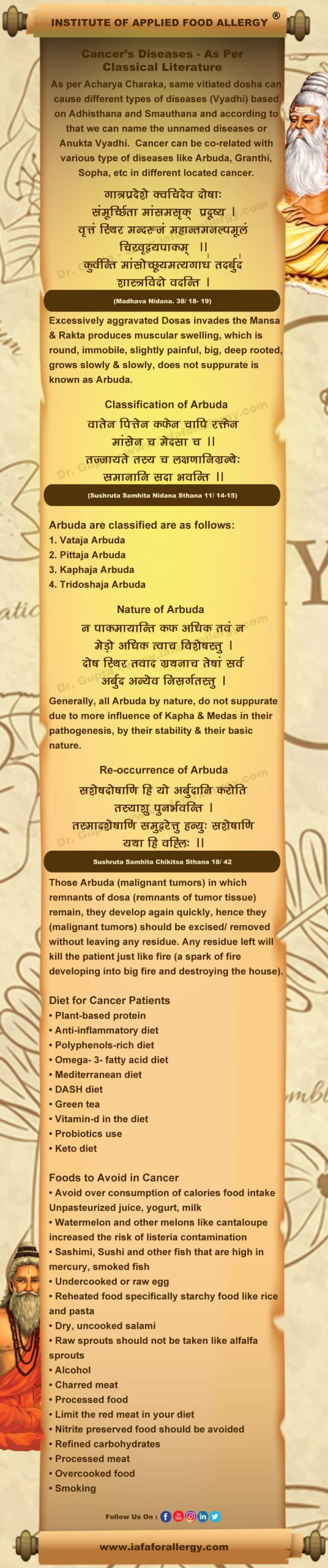
As per Ayurvedic classical texts, the root cause of cancer is the imbalance of the tridosha i.e. Vata, Pitta, and Kapha. Arbuda is related to cancer. According to the father of Surgery Acharya Sushruta, Arbuda is a mass or lump that is globular in shape, can occur in any part of the body, gives occasional pain, is fixed with a deeper structure, and gradually increases in size.
Cancer’s Disease – As Per Ayurveda Classical Literature

Have A Health Issue?
Consult Online
- Dr. Sahil Gupta (B.A.M.S., M.H.A.)
Ayurvedic Allergy Specialist
CEO & Founder of IAFA®
Top Common Cancers throughout the World
The list of the commonest type of cancer is made by the National Cancer Institute and this list was made based on the cancers that are diagnosed with the greatest frequency in the US. To qualify for the list of common cancers, the estimated annual incidence of that particular cancer should be more than 40, 000 or more.
- Breast cancer
- Prostate cancer
- Colon and rectal cancer
- Bladder cancer
- Endometrial cancer
- Pancreatic cancer
- Non-Hodgkin lymphoma
- Pancreatic cancer
- Thyroid cancer
- Melanoma
- Leukaemia
- Liver cancer
- Lung cancer
The National Cancer Institute estimated the numbers of new cases and deaths for common types of cancer type in 2023.
(Reference: Source credited to National Cancer Institute, Siegel RL, Miller KD, Wagle NS, Jemal A. Cancer statistics, 2023. CA: A Cancer Journal for Clinicians 2023; 73(1):17-48. Last accessed February 21, 2023.)
| Type of Cancer | Estimated New Cases | Estimated Death |
| Breast cancer | 297790 | 43170 |
| Lung cancer | 238340 | 127070 |
| Prostate cancer | 288300 | 34700 |
| Colon and rectal cancer | 153020 | 52550 |
| Bladder cancer | 82290 | 16710 |
| Kidney (renal) cancer | 81800 | 14890 |
| Endometrial cancer | 66200 | 13030 |
| Pancreatic cancer | 64050 | 50550 |
| Non-Hodgkin lymphoma | 80550 | 20180 |
| Thyroid cancer | 43720 | 2120 |
| Melanoma | 97610 | 7990 |
| Leukemia | 59610 | 23710 |
| Liver cancer | 41210 | 29380 |
Types of Cancer Diseases
Main Types of Cancer:-
First, we should know about cancer tumors. Cancer tumors are mainly divided into three groups:-
- Benign Tumor: Benign tumors grow very slowly; they are mainly non-cancerous and rarely threaten life. In benign tumor cell growth that occurs is similar to the growth of the healthy cell of the body and they do not spread to the other part of the body.
- Malignant Tumor: Malignant tumors can spread to the other parts of the body by breaking off from the primary tumor and they are faster-growing tumors than benign tumors. When these tumors spread to the other part of the body they grow and divide in that part and this second site of the growth is known as metastases and this type of cancer is known as metastatic cancer.
- Pre-cancerous Tumor: In this tumor a pre-cancerous cell is likely or may develop into cancer.
Types of Cancer- According to the Cells in Which they Start to Develop
The type of cancer that we can classify according to the cells in which they start to develop can be divided mainly into 5 types:-
- Brain and spinal cord cancer
- Carcinoma
- Sarcoma
- Leukemia
- Lymphoma and myeloma
Treatment Approaches for Cancer
- Tumor agnostic drugsubstance.
- Clinical trials
- Palliative care
- Use of biosimilar drugs
- Off-level drug use
- Personalized medicine
Conclusion
Frequently Asked Questions
Question 1. What is Cancer and How is it Defined?
Answer – Cancer is a broad group of diseases characterized by uncontrolled cell division and abnormal growth. It can form solid tumors or spread through blood in conditions like leukemia. In Ayurveda, cancer is correlated with Arbuda, a condition involving abnormal growth or lump formation caused by imbalance of the Tridoshas (Vata, Pitta, and Kapha).
Question 2. What are the Main Causes and Risk Factors of Cancer?
Answer – Cancer is primarily a genetic disorder caused by mutations in tumor suppressor genes and activation of oncogenes. Other risk factors include environmental exposure, lifestyle habits (poor diet, smoking, lack of exercise), ionizing radiation, and chemical exposure.
Question 3. What are the Most Common Types of Cancer Worldwide?
Answer – The most common cancers globally include lung cancer, breast cancer, prostate cancer, colorectal cancer, bladder cancer, pancreatic cancer, leukemia, liver cancer, and melanoma. Lung cancer remains the most frequently diagnosed cancer worldwide.
Question 4. What are the Types of Cancer Tumors?
Answer – Cancer tumors are mainly categorized into three types:-
1. Benign tumors: Non-cancerous, slow-growing, and rarely life-threatening.
2. Malignant tumors: Cancerous, fast-growing, and capable of spreading (metastasis).
3. Pre-cancerous tumors: Early abnormal cell changes that may develop into cancer.
Question 5. What are the Treatment Approaches for Cancer in Modern and Ayurvedic Systems?
Answer – Modern cancer treatment includes surgery, chemotherapy, radiotherapy, clinical trials, palliative care, biosimilar drugs, and personalized medicine. In Ayurveda, treatment approaches include Shamana Chikitsa, Shodhana Chikitsa, and Rasayana Chikitsa, often using herbal formulations that may support apoptosis, anti-angiogenesis, and immune modulation.
Suggestive Readings of Cancer
- Mani, Vino & V, Nithya. (2021). Evaluation of the anticancer activity of Plectranthus Amboinicus with Cow ark against CCl4 Induced Hepatocellular carcinoma – In Vivo. Annals of the Romanian Society for Cell Biology. 25. 19406-19414.
- Babji, Deepa & Babaji, Harsha & Hosmani, Jagadish & Wahab, Abdul & Alamir, H & Mushtaq, Shazia & Raj, A. Thirumal & Patil, Shankargouda. (2019). Effect of Tinospora cordifolia- Derived Phytocomponents on Cancer: A Systematic Review. Applied Sciences. 9. 1- 10. 10. 3390/ app9235147.
- Bala, Manju & Pratap, Kunal & Verma, Praveen & Singh, Bikram & Padwad, Yogendra. (2015). Validation of ethnomedicinal potential of Tinospora cordifolia for anticancer and immunomodulatory activities and quantification of bioactive molecules by HPTLC. Journal of Ethnopharmacology. 175. 131- 137. 10. 1016/ j. jep. 2015. 08. 001.
- Kumar, R & Sridevi, K & Kumar, N & Nanduri, Srinivas & Rajagopal, Sriram. (2004). Anticancer and immunostimulatory compounds from Andrographis paniculata. Journal of Ethnopharmacology. 92. 291- 5. 10. 1016/ j. jep. 2004. 03. 004.
- Pammi, S. & Giri, Archana. (2021). In vitro cytotoxic activity of Phyllanthus amarus Schum. & Thonn. World Journal of Biology Pharmacy and Health Sciences. 6. 034-042. 10. 30574/ wjbphs. 2021. 6. 2. 0050.
- Saahene, Roland & Agbo, Elvis & Barnes, Precious & Yahaya, Ewura & Amoani, Benjamin & Nuvor, Samuel Victor & Okyere, Perditer. (2021). A Review: Mechanism of Phyllanthus urinaria in Cancers- NF-κB, P13K/ AKT, and MAPKs Signaling Activation. Evidence-based complementary and alternative medicine: eCAM. Volume 2021. 10. 1155/ 2021/ 4514342.
- Shanmugam, Rajeshkumar & Nagalingam, & Ponnanikajamideen, Mohemedibrahim & Vanaja, Mahendran & Chelladurai, Malarkodi. (2015). ANTICANCER ACTIVITY OF ANDROGRAPHIS PANICULATA LEAVES EXTRACT AGAINST NEUROBLASTIMA (IMR-32) AND HUMAN COLON (HT-29) CANCER CELL LINE. WORLD JOURNAL OF PHARMACY AND PHARMACEUTICAL SCIENCES.
- Singh, Siddhartha & Mehta, A. & Baweja, S. & Ahirwal, Laxmi & Mehta, P. (2013). Anticancer Activity of Andrographis paniculata and Silybum marianum on Five Human Cancer Cell Lines. Journal of Pharmacology and Toxicology. 8. 42- 48. 10. 3923/ jpg. 2013. 42. 48.
- Abdel-Sattar, Ola & Allam, Rasha & Al-Abd, Ahmed & Avula, Bharathi & Katragunta, Kumar & Khan, Ikhlas & Eldesoky, Ahmed & Mohamed, Shanaz & el halawany, Ali & Abdel-sattar, Essam & Meselhy, Meselhy. (2023). Cytotoxic and chemomodulatory effects of Phyllanthus niruri in MCF-7 and MCF-7 breast cancer cells. Scientific Reports. 13. 10. 1038/ s41598- 023- 29566- 0.
- Puspita, Nanda. (2019). The effect of Phyllanthus niruri L extracts on human leukemic cell proliferation and apoptosis induction. 30. 10. 14499/ indonesianjpharm- 30iss4pp- % 25p.
- Raja, Wasim & Dubey, Amit & Patel, Mahesh. (2019). Antitumour Activity of Phyllanthus Niruri Root Extract Against 7, 12-Dimethylbenz (A) Anthracene Induced Mouse Skin Carcinogenesis. European Journal of Pharmaceutical Sciences. 4. 471- 477.
- Tang, Yin- Quan & Sekaran, Shamala. (2011). Evaluation of Phyllanthus, for Its Anti-Cancer Properties. 10. 5772/ 27296.
- Junior, Raimundo & Souza, Tatiane & Pires, Julia & Soares, Luiz & Araújo, Aurigena & Petrovick, Pedro & Mâcedo, Helainy & Oliveira, Ana & Guerra, Gerlane. (2012). A dry extract of Phyllanthus niruri protects normal cells and induces apoptosis in human liver carcinoma cells. Experimental biology and medicine (Maywood, N.J.). 237. 1281- 8. 10. 1258/ ebm. 2012. 012130.
- Rajeshkumar, N.V. & Joy, K.L. & Kuttan, Girija & Ramsewak, Russel & Nair, Muraleedharan & Kuttan, Ramadasan. (2002). Antitumour and anticarcinogenic activity of Phyllanthus amarus extract. Journal of Ethnopharmacology. 81. 17- 22. 10. 1016/ S0378- 8741 (01) 00419- 6.
- Motghare, Apeksha & Katolkar, Parimal & Lichade, Tina & Baheti, Jagdish. (2023). In-Silico Prediction of Phytoconstituents from Phyllanthus niruri for Anticancer Activity against Prostate Cancer Targeting PIM-1 Kinase. International Journal of Ayurvedic Medicine. 14. 114- 120. 10. 47552/ ijam. v14i1. 3407.
- Padmapriya, N. & Poonguzhali, T. V. (2015). Evaluation of the anticancer activity of flavonoid isolated from the acetone extract of the aerial parts of Phyllanthus niruri against human lung cancer cell line (A549). International Journal of Pharma and Bio Sciences. 6. P296- P304.
- Charak, Sandeep & Sharma, Monika & Porte, Sharad. (2021). In Vitro Evaluation of Anticancer Activity (Efficacy) of a Novel Ayurvedic Polyherbal Formulation on Human Oral Carcinoma Cell Line SCC-40. South Asian Journal of Cancer. 10. 10. 1055/ s- 0041- 1735335.
- Porwal, K.P. & Kumar, K. & Jain, Niyati & Pathak, K.A. & Jain, P. (2010). Evaluation of the antitumour activity of Berberis aristata DC. Indian Drugs. 47. 17- 20.
- Puspita, Nanda & Alhebshi, Hasen. (2019). The effect of Phyllanthus niruri L extracts on human leukemic cell proliferation and apoptosis induction. Indonesian Journal of Pharmacy. 30. 241. 10. 14499/ indonesianjpharm- 30iss4pp241.
- Salomi, M & Panikkar, K & Kesavan, M & Donata, K & Rajagopalan, K. (1989). Anticancer activity of Nigella sativa. Ancient science of life. 8. 262- 6.
- Das, Srishti & Das, M.K. & Mazumder, P.M. & Basu, S.P. (2009). Cytotoxicity activity of methanolic extract of Berberis aristata DC on colon cancer. Global Journal of Pharmacology. 3. 137- 140.
- Mazhar, Mohd & Agrawal, S. (2021). Standardization of Berberis aristata DC and Nigella sativa L. Using HPTLC and GCMS and Their Antineoplasia Activity in 7,12-Dimethylbenz[a]anthracene-Induced Mouse Models. Frontiers in Pharmacology. 12. 10. 3389/ fphar. 2021. 642067.
- Hade, Swati & Joshi, Prachi & Pilley, Harshda & Wadegaonkar, Varsha & Wadegaonkar, Prasad. (2016). Evaluation of Crataeva nurvala extracts as antioxidant, antiproteolytic, and cytotoxic against hepato-carcinoma and mouse melanoma cell lines. Journal of Applied Pharmaceutical Science. 6. 189- 196. 10. 7324/ JAPS. 2016. 60928.
- Binoy, Maksud & Sarker, Arjyabrata & Islam, Md. Al Foyjul & Faruk, Md & Barua, Anindya & Choudhuri, Shahabuddin. (2015). Study on the anticancer effect of “Amlaki Rasayan” in the Ehrlich Ascites Carcinoma bearing mice.
- Pai K, Sreedhara & Srilatha, P & Kumar, Suryakant & Manganahalli, Manjunath & Nayak, Pawan & Rao, Chamallamudi & Baliga, Shrinath. (2011). Anticancer activity of Berberis aristata in Ehrlich ascites carcinoma-bearing mice: A preliminary study. Pharmaceutical biology. 50. 270- 7. 10. 3109/ 13880209. 2011. 599035.
- LI, MengFei & Ge, Li & Kang, Tianlan & Sun, Ping & Yang, Delong & Pare, Paul. (2018). High-elevation cultivation increases anti-cancer podophyllotoxin accumulation in Podophyllum hexandrum. Industrial Crops and Products. 121. 338- 344. 10. 1016/ j. and crop. 2018. 05. 036.
- Balamurugan, Vadivel & Revathi, E & Kamalakkannan, Jeyanthi & Sundaresan, Arjunan. (2019). Anticancer Activity of Methanol Extract of Crataeva nurvala in HeLa cell Line.
- Moudi, Maryam & Go, Rusea & Yong, Christina & Nazre, M. (2013). Vinca Alkaloids. International journal of preventive medicine. 4. 1231- 1235.
- Arora, Rajesh & Malhotra, Poonam & Mathur, Ajay & Mathur, Archana & Govil, CM & Ahuja, PS. (2009). Anticancer Alkaloids of Catharanthus roseus: Transition from Traditional to Modern Medicine. 10. 5005/ jp/ books/ 11166_ 21.
- Serasanambati, Mamatha & Chilakapati, Shanmuga Reddy & Manikonda, Pavan Kumar & Jagadeeswara Reddy, Kanala. (2020). Anticancer Activity of Methanolic Extract of Berberis aristata in MCF-7 Human Breast Cancer Cell Lines.
- Ali, Sekendar & Dey, Antu & Sayeed, Mohammed & Rahman, Aziz & Kuddus, Md. Ruhul & Rashid, Mohammad. (2014). In vivo Sedative and Cytotoxic Activities of Methanol Extract of Leaves of Crataeva nurvala Buch-Ham. Pakistan journal of biological sciences: PJBS. 17. 439- 42. 10. 3923/ pjbs. 2014. 439. 442.
- Islam, A. & Selvan, T. & Mazumder, Kishor & Gupta, Mayank & Ghosal, S.. (2008). Antitumor effect of Phyllanthin and Hypophyllanthin from Phyllanthus amarus against Ehrlich Ascites Carcinoma in mice. Pharmacologyonline. 2. 796- 807.
- Jose, Jeena & Kuttan, Girija & Kuttan, Ramadasan. (2001). Antitumor activity of Emblica officinalis. Journal of Ethnopharmacology. 75. 65- 9. 10. 1016/ S0378- 8741(00)00378- 0.
- Taher, Zarani & Agouillal, Farid & R, Lim & Marof, Aina & Joe Dailin, Daniel & Nurjayadi, Muktiningsih & Razif, Ezzaty & Gomaa, Sara & El Enshasy, Hesham. (2019). Anticancer Molecules from Catharanthus roseus. Indonesian Journal of Pharmacy. 30. 147. 10. 14499/ indonesianjpharm- 30iss3pp147.
- Saha, Aloke & Moitra, Susmita & Sanyal, Tanmay. (2022). Anticancer And Antidiabetic Potential of Phytochemicals Derived from Catharanthus roseus: A Key Emphasis to Vinca Alkaloids. 10. 52756/ bhietm. 2022. e01. 001.
- Kumar, Dugganaboyana & Deepa, Purandekkattil & Rathi, Muthaiyan & Meenakshi, Periasamy & Gopalakrishnan, Velliyur Kanniappan. (2012). Modulatory effects of Crataeva nurvala bark against testosterone and N-methyl-N-nitrosourea-induced oxidative damage in the prostate of male albino rats. Pharmacognosy magazine. 8. 285- 291. 10. 4103/ 0973- 1296. 103654.
- Sharma, Neha & Singh, Indranil & Ajee, Rohit & Kaushik, Shuchi. (2022). Catharanthus Roseus: A Source of Anticancer Phytomedicines. 10. 1007/ 978- 3- 030- 89269- 2_ 2.
- Bala, Madhu. (2019). Anti-Cancer Activity of Cantharanthus Roseus in HEp-2 Cell Line. International Journal for Research in Applied Science and Engineering Technology. 7. 2895- 2900. 10. 22214/ ijraset. 2019. 4487.
- AH, Irshad & Ahmad, S. & Noor, Farida & Fahelboum, Ibrahim & Awen, Bahlul. (2010). Anticancer activity of Vinca Alkaloids.
- Liu, Xiaoli & Zhao, Mouming & Wu, Kegang & Chai, Xianghua & Yu, Hongpeng & Tao, Zhihua & Wang, Jinshui. (2012). Immunomodulatory and anticancer activities of phenolics from emblica fruit (Phyllanthus emblica L.). Food Chemistry. 131. 685– 690. 10. 1016/ j. foodchem. 2011. 09. 063.
- Martino, Emanuela & Giuseppe, Casamassima & Sonia, Castiglione & Cellupica, Edoardo & Pantalone, Serena & Francesca, Papagni & Marta, Rui & Siciliano, Angela Marika & Collina, Simona. (2018). Vinca alkaloids and analogues as anti-cancer agents: Looking back, peering ahead. Bioorganic & Medicinal Chemistry Letters. 28. 10. 1016/ j. bmcl. 2018. 06. 044.
- Patel, Janki. (2016). ANTICANCER & CYTOTOXIC POTENTIAL OF AQUEOUS EXTRACT OF TRITICUM AESTIVUM ON HELA CELL LINE. Journal of Drug Delivery and Therapeutics. 6. 10. 22270/ jddt. v6i3. 1211.
- Adhiya, Jinal. (2017). Investigation of cytotoxic activity of Triticum aestivum (Wheatgrass).
- Tandon, Simran & Arora, Amrita & Singh, Sonali & Monga, Jitender & Arora, Shagun. (2011). Antioxidant Profiling of Triticum aestivum (wheatgrass) and its Antiproliferative Activity In MCF-7 Breast Cancer Cell Line. Journal of Pharmacy Research.
- Palmieri, Annalisa & Scapoli, Luca & Iapichino, Anastasia & Mercolini, Laura & Mandrone, Manuela & Poli, Ferruccio & Giannì, Aldo & Baserga, Camilla & Martinelli, Marcella. (2019). Berberine and Tinospora cordifolia exert a potential anticancer effect on colon cancer cells by acting on specific pathways. International Journal of Immunopathology and Pharmacology. 33. 205873- 841985556. 10. 1177/ 20587384- 19855567.
- Ali, Huma & Dixit, savita. (2013). Extraction Optimization of Tinospora cordifolia and Assessment of the Anticancer Activity of Its Alkaloid Palmatine. The Scientific World Journal. 2013. 376216. 10. 1155/ 2013/ 376216.
- Patil, Shankargouda & Ashi, Heba & Hosmani, Jagadish & Almalki, Abdulrahman & Alhazmi, Yaser & Mushtaq, Shazia & Parveen, Sameena & Baeshen, Hosam & Varadarajan, Saranya & Raj, A. Thirumal & Patil, Vikrant & Vyas, Nishant. (2021). Tinospora cordifolia (Thunb.) Miers (Giloy) inhibits oral cancer cells in a dose-dependent manner by inducing apoptosis and attenuating epithelial-mesenchymal transition. Saudi Journal of Biological Sciences. 28. 10. 1016/ j. sjbs. 2021. 04. 056.
- Hattarki, Sanjeevini & Bogar, Chetana & Bhat, Kishore. (2020). Triticum aestivum (wheatgrass) Exhibited Anticancer Activity in the Oral Cancer (KB) Cell Line. International Journal of Pharma Research and Health Sciences. 8. 3220- 3224. 10. 21276/ ijprhs. 2020. 05. 01.
- Nafiujjaman M, Nurunnabi M, Saha SK, Jahan R, Lee YK, Rahmatullah M. Anticancer activity of Arkeshwara Rasa – A herbs-metallic preparation. Ayu. 2015 Jul- Sep; 36 (3): 346- 350. doi: 10. 4103/ 0974- 8520. 182757. PMID: 27313425; PMCID: PMC- 4895765.
References
- Tripathi Brahmanand and Pandey G.S, Charaka Samhita of Agnivesa with Charaka Chandrika Hindi Commentory, 6th Ed.,Varanasi: Chaukhamba SurbharatiPrakashan., (Vol-1), 1999.
- Tripathi Brahmanand and Pandey G.S, Charaka Samhita of Agnivesa with Charaka Chandrika Hindi Commentory, 6th Ed., Varanasi: Chaukhamba SurbharatiPrakashan., (Vol-II), 1999.
- Shastri K. Ambikadatta, Sushruta Samhita of Maharsi Sushrut edited with Ayurveda Tattva Sandipika Hindi Commentary, 13th Ed., Varanasi: Chaukhamba Sanskrit Bhawan., (Vol-1), 2000.
- Shastri K. Ambikadatta, Sushruta Samhita of Maharsi Sushrut edited with Ayurveda Tattva Sandipika Hindi Commentary, 13th Ed., Varanasi: Chaukhamba Sanskrit Bhawan.,(Vol-II), 2000.
- Vagbhatta Astanga Hridaya, Nidana sthana, edited by Y. Upadhaya, Chaukambha Prakashan, Varanasi, 2012.
- Textbook of pathology by Harsh Mohan: seventh edition.
- Brahmanant Tripati, Madhava Nidana Chukambha surabharati prakashan,Edition, 2012.
- Shri Shashtri. S, Madava Nidanam of Madavakara with Madhukosha Sanskrit Commentary, Chaukhamba Sanskrit Sansthan,Varanasi:, 2003
- Dr. P. S. Byadgi, Dr. A. K. Pandey. A textbook of Kaya Chikitsa, reprint 2017, Chaukambha publication, Vol. II.
- Dr. Nisha Kumari, A textbook for Roga Nidana and Vikruthi Vigyana, First edition 2017, Chaukambha Orientalia, Vol. II.
- Dr. P. S. Byadgi, Ayurvediya Vikriti Vijana, and Roga Vijanana, reprint 2016, Chaukambha publication, Vol. II.
- Sandhya A Kamath, S. N. S., Milland Y Nadkar, Edition 11, Vol. II, Published by the association of physicians of India.
- Rajesh Arora- Herbal medicine cancer chemopreventive and therapeutic perspective first edition- Jan 2010.
- Dr. Michael Tierra treating cancer with herbs- an integrative approach.
- Donald R. Yance, Jr. C. N. MH. A. H. G with Arlene Valentine- Herbal medicine, healing and cancer.
- Chanchal Cabrera, Holistic cancer care- a herbal approach to prevent cancer, helping patients thrive during treatment and minimizing the risk of recurrence.
- Prasad GC, Sahu M, Deshpande PJ. Concept of cancer in Ayurveda. Anc Sci Life. 1982 Jan; 1 (3): 172- 6. PMID: 22556485; PMCID: PMC 3336678.
- Dhruva A, Hecht FM, Miaskowski C, Kaptchuk TJ, Bodeker G, Abrams D, Lad V, Adler SR. Correlating traditional Ayurvedic and modern medical perspectives on cancer: results of a qualitative study. J Altern Complement Med. 2014 May; 20 (5): 364- 70. doi: 10.1089/ acm. 2013. 0259. Epub 2013 Dec 17. PMID: 24341342; PMCID: PMC- 4011424.
- Jain R, Kosta S, Tiwari A. Ayurveda, and cancer. Pharmacognosy Res. 2010 Nov; 2 (6): 393- 4. doi: 10. 4103/ 0974- 8490. 75463. PMID: 21713145; PMCID: PMC- 3111701.
- Arnold JT. Integrating ayurvedic medicine into cancer research programs part 2: Ayurvedic herbs and research opportunities. J Ayurveda Integr Med. 2023 Mar-Apr; 14 (2): 100677. doi: 10. 1016/ j. jaim. 2022.100677. Epub 2022 Dec 16. PMID: 36529638; PMCID: PMC 10307689.
- Arnold JT. Integrating Ayurvedic medicine into cancer research program’s part 1: Ayurveda background and applications. J Ayurveda Integr Med. 2023 Mar-Apr; 14 (2): 100676. doi: 10. 1016/ j. jaim. 2022. 100676. Epub 2022 Dec 19. PMID: 36543691; PMCID: PMC- 10307688.
- Sumantran VN, Tillu G. Cancer, inflammation, and insights from Ayurveda. Evid Based Complement Alternat Med. 2012; 2012: 306346. doi: 10. 1155/ 2012/ 306346. Epub 2012 Jul 4. PMID: 22829853; PMCID: PMC- 3398688.
- Aku AM, Patil A. Understanding cancer etiology: A review of the evidence-based Ayurvedic framework of cancer etiologies. Ayu. 2022 Jan-Mar; 43 (1): 1- 7. doi: 10. 4103/ ayu. ayu_ 318_ 21. Epub 2023 Jun 24. PMID: 37554416; PMCID: PMC- 10405889.
- Khoobchandani M, Katti KK, Karikachery AR, Thipe VC, Srisrimal D, Dhurvas Mohandoss DK, Darshakumar RD, Joshi CM, Katti KV. New Approaches in Breast Cancer Therapy Through Green Nanotechnology and Nano-Ayurvedic Medicine – Pre-Clinical and Pilot Human Clinical Investigations. Int J Nanomedicine. 2020 Jan 13; 15: 181- 197. doi: 10. 2147/ IJN. S219042. PMID: 32021173; PMCID: PMC- 6970107.
- Saggam A, Kale P, Shengule S, Patil D, Gautam M, Tillu G, Joshi K, Gairola S, Patwardhan B. Ayurveda-based Botanicals as Therapeutic Adjuvants in Paclitaxel-induced Myelosuppression. Front Pharmacol. 2022 Feb 22; 13: 835616. doi: 10. 3389/ fphar. 2022. 835616. PMID: 35273508; PMCID: PMC- 8902067.
- Ibanez B, Melero A, Montoro A, Merino-Torres JF, Soriano JM, San Onofre N. A Narrative Review of the Herbal Preparation of Ayurvedic, Traditional Chinese, and Kampo Medicines Applied as Radioprotectors. Antioxidants (Basel). 2023 Jul 17; 12 (7): 1437. doi: 10. 3390/ antiox- 12071437. PMID: 37507975; PMCID: PMC- 10376155.
- Adhvaryu MR, Reddy N, Parabia MH. Anti-tumour activity of four Ayurvedic herbs in Dalton lymphoma ascites bearing mice and their short-term in vitro cytotoxicity on DLA- cell- line. Afr J Tradit Complement Altern Med. 2008 Jun 18; 5 (4): 409- 18. doi: 10. 4314/ ajtcam. v5i4. 31297. PMID: 20161965; PMCID: PMC- 2816583.
- Narayan Bendale Y, Kadam A, Patil A, Kantilal Birari-Gawande P. Complete tumor regression with exclusive Ayurvedic Rasayana regimen in high-grade diffuse large B-cell lymphoma: A case report. Clin Case Rep. 2022 Apr 14; 10 (4): e05696. doi: 10. 1002/ ccr3. 5696. PMID: 35441028; PMCID: PMC9010597.
So, IAFA’s Root-Cause Management for Cancer is Just 3 Steps Away!

01. Connect With Us
Share Your History of Illness or Book Your Appointment.

02. Consult With Us
Dr. Gupta A Certified Ayurvedic Practitioner.

03. Root Cause Management
Get An Accurate Diagnosis, Medicines, Diet & Lifestyle Changes.
Real Case Studies – Successfully Treated Patients
Real Case Studies of Successfully Treated Patients from All Around the World by IAFA Ayurveda®
-

32-Year-Old Female Patient Recovered from Chronic Urticaria and Leaky Gut Syndrome – A Case Study
This case study highlights the successful Ayurvedic treatment of chronic urticaria associated…
-
5-Year-Old Shih Apso Dog Recovered from Canine Peripheral Neuropathy – A Case Study
This case study presents a 5-year-old Shih Tzu-Lhasa Apso crossbreed dog (pet)…
-
9 Year Old Female Patient Recovered from Chronic Allergic Bronchitis – A Case Study
This case study presents a 9-year-old female patient who has successfully recovered…
-
12-Year-Old Child Recovered from Solar Urticaria (Chronic Sun-Sensitivity) – A Sun Allergy Case Study
This is a case study of a 12-year-old child who has successfully…