
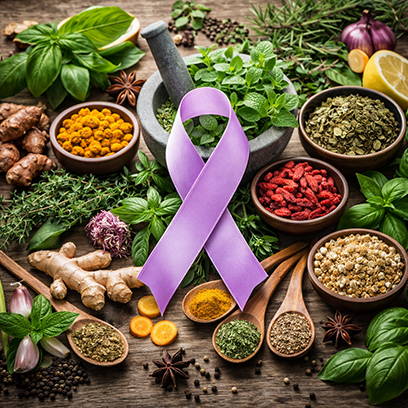
Herbs for Cancer
Discover powerful Ayurvedic herbs like turmeric, garlic, and grapes for cancer prevention and treatment. Learn how natural compounds help fight tumor growth and boost overall health.


-
 0
0
 Share
ShareSummarise this article using AI




Introduction
Cancer remains a leading global health challenge, prompting exploration of plant-based therapies with scientific backing. Various medicinal herbs such as Curcuma longa, Allium sativum, and Vitis vinifera have shown promising anticancer properties in recent studies.
These herbs act through multiple mechanisms including apoptosis induction, inhibition of proliferation, and suppression of angiogenesis, offering potential complementary approaches in cancer management.
Herbs for Colon Cancer
Herbs that can be used for Colon Cancer with a recent study:-
1. Curcuma longa
Part Used – Curcumin.
Mode of Action – Curcumin is a polyphenol derived from Curcuma longa. Over the last few years, several studies have provided evidence of its main pharmacological properties including chemo-sensitizing, radio-sensitizing, wound healing activities, antimicrobial, antiviral, antifungal, immunomodulatory, antioxidant, and anti-inflammatory. More recent data provide interesting insights into the effect of this compound on cancer chemoprevention and chemotherapy. Preclinical studies have shown its ability to inhibit carcinogenesis in various types of cancer including colorectal cancer (CRC). Curcumin can interact with multiple molecular targets affecting the multistep process of carcinogenesis. Also, curcumin can arrest the cell cycle, inhibit the inflammatory response and oxidative stress, and induce apoptosis in cancer cells. Likewise, it has been shown to possess marked antiangiogenic properties. Furthermore, curcumin potentiates the growth inhibitory effect of cyclo-oxygenase (COX)- 2 inhibitors and traditional chemotherapy agents implicating another promising therapy regimen in the future treatment of CRC. However, its clinical advance has been hindered by its short biological half-life and low bioavailability after oral administration. This review is intended to provide the reader with an update on the bioavailability and pharmacokinetics of curcumin and describes the recently identified molecular pathways responsible for its anticancer potential in CRC.
Reference – Villegas, Isabel & Sánchez-Fidalgo, Susana & Lastra, Catalina. (2008). New mechanisms and therapeutic potential of curcumin for colorectal cancer. Molecular nutrition & food research. 52. 1040-61. 10. 1002/ mnfr. 200700280.
Active Ingredients – Curcumin, tannic acid, gallic acid, resveratrol.
Mode of Action – A dose-escalation pilot study of a novel standardized Curcuma extract in proprietary capsule form was performed at doses between 440 and 2200 mg/ day, containing 36- 180mg of curcumin. Fifteen patients with advanced colorectal cancer refractory to standard chemotherapies received Curcuma extract daily for up to 4 months. The activity of glutathione S- -transferase and levels of a DNA adduct (M (1) G) formed by malondialdehyde, a product of lipid peroxidation and prostaglandin biosynthesis, were measured in patients’ blood cells. Oral Curcuma extract was well tolerated, and dose-limiting toxicity was not observed. Neither curcumin nor its metabolites were detected in blood or urine, but curcumin was recovered from faces. Curcumin sulfate was identified in the feces of one patient. Ingestion of 440 mg of Curcuma extract for 29 days was accompanied by a 59 % decrease in lymphocytic glutathione S- S-transferase activity. At higher dose levels, this effect was not observed. Leukocytic M (1) G levels were constant within each patient and unaffected by treatment. Radiologically stable disease was demonstrated in five patients for 2- 4 months of treatment. The results suggest that (a) Curcuma extract can be administered safely to patients at doses of up to 2.2 g daily, equivalent to 180 mg of curcumin.
Reference – Sharma RA, McLelland HR, Hill KA, Ireson CR, Euden SA, Manson MM, Pirmohamed M, Marnett LJ, Gescher AJ, Steward WP. Pharmacodynamic and pharmacokinetic study of oral Curcuma extract in patients with colorectal cancer. Clin Cancer Res. 2001 Jul; 7 (7): 1894- 900. PMID: 11448902.
2. Allium sativum
Active Ingredient – Diallyl sulfide (DAS)
Mode of Action – Chemoprevention is regarded as one of the most promising and realistic approaches in the prevention of human cancer. Diallyl sulfide (DAS), an organosulfur component of garlic has been known for its chemopreventive activities against various cancers and also in recent years, numerous investigations have shown that sulfur-containing compounds induce apoptosis in multiple cell lines and experimental animals. Thus the present study was focused on elucidating the anticancerous effect and the mode of action of DAS against Colo 320 DM colon cancer cells. DAS-induced apoptosis in Colo 320 DM cells was revealed by flow cytometer analysis and phosphatidyl serine exposure. DAS also promoted cell cycle arrest substantially at the G2/ M phase in Colo 320 DM cells. The production of reactive oxygen intermediates, which were examined by 2,7-dichlorodihydrofluorescein diacetate (H2DCF-DA), increased with time, after treatment with DAS. The activities of alkaline phosphatase (ALP) and lactate dehydrogenase (LDH) were decreased upon DAS treatment, which shows antiproliferative and cytotoxic effects, respectively. The expression of NF-kappaB was upregulated in DAS-treated cells, compared to normal cells. Further, DAS promoted the expression of caspase- 3 and suppression of Extracellular Regulatory Kinase-2 (ERK-2) activity in Colo 320 DM cells that was determined by Western blot analysis. In conclusion, DAS increased the production of ROS, caused cell cycle arrest, decreased cell proliferation, and induced apoptosis in Colo 320 DM cells. Thus, this study put forward DAS as a drug that can be used to treat cancers.
Reference – Narayanan, Sriram & Srinivasan, Kalayarasan & Pandurangan, Ashok & Anandasada Gopan, Suresh Kumar. (2008). Diallyl sulfide induces apoptosis in Colo 320 DM human colon cancer cells: Involvement of caspase-3, NF- B, and ERK- 2. Molecular and cellular biochemistry. 311. 10. 1007/ s11010- 008- 9706- 8.
Herbs for Gastric / Stomach Cancer
Herbs that can be used for Gastric / Stomach Cancer with a recent study:-
Tulsi
Part Used – Leaf extract.
Mode of Action – Intragastric administration of MNNG-induced well-differentiated squamous cell carcinomas that showed increased cell proliferation, and angiogenesis with evasion of apoptosis, as revealed by the upregulation of proliferating cell nuclear antigen (PCNA), glutathione S-transferase-pi (GST-pi), Bcl- 2, cytokeratin (CK) and vascular endothelial growth factor (VEGF) and with downregulation of Bax, cytochrome C, and caspase 3 protein expression. Administration of ethanolic OS leaf extract reduced the incidence of MNNG-induced gastric carcinomas. This was accompanied by decreased expression of PCNA, GST-pi, Bcl- 2, CK, and VEGF, and overexpression of Bax, cytochrome C, and caspase 3. This study provides evidence that, in MNNG-induced gastric carcinogenesis, the key proteins involved in the proliferation, invasion, angiogenesis, and apoptosis, are viable molecular targets for chemoprevention using ethanolic OS leaf extract.
Reference – Manikandan P, Vidjaya Letchoumy P, Prathiba D, Nagini S. Proliferation, angiogenesis, and apoptosis-associated proteins are molecular targets for chemoprevention of MNNG-induced gastric carcinogenesis by ethanolic Ocimum sanctum leaf extract. Singapore Med J. 2007 Jul; 48 (7): 645- 651. PMID: 17609827.

Have A Health Issue?
Consult Online
- Dr. Sahil Gupta (B.A.M.S., M.H.A.)
Renowned Ayurvedic Practitioner
CEO & Founder of IAFA®
Herbs for Prostate Cancer
Herbs that can be used for Prostate Cancer with a recent study:-
1. Vitis vinifera
Part Used – Resveratrol.
Mode of Action – Treatment with resveratrol (0-50 micromol/ L for 24 hours) resulted in a significant (a) decrease in cell viability, (b) decrease of clonogenic cell survival, (c) inhibition of androgen (R1881)- stimulated growth, and (d) induction of apoptosis in androgen-responsive human prostate carcinoma (LNCaP) cells. Interestingly, at similar concentrations, resveratrol treatment did not affect the viability or rate of apoptosis in normal human prostate epithelial cells. Furthermore, our data showed that resveratrol- treatment resulted in significant dose-dependent inhibition in the constitutive expression of phosphatidylinositol 3′-kinase and phosphorylated (active) Akt in LNCaP cells. Resveratrol treatment for LNCaP cells was also found to result in a significant (a) loss of mitochondrial membrane potential, (b) inhibition in the protein level of antiapoptotic Bcl-2, and (c) increase in proapoptotic members of the Bcl- 2 family, i.e., Bax, Bak, Bid, and Bad. Taken together, our data suggested that resveratrol causes inhibition of phosphatidylinositol 3′-kinase/Akt activation that, in turn, results in modulations in Bcl-2 family proteins in such a way that the apoptosis of LNCaP cells is promoted. Based on these studies, resveratrol could be developed as an agent for the management of prostate cancer.
Reference – Aziz MH, Nihal M, Fu VX, Jarrard DF, Ahmad N. Resveratrol-caused apoptosis of human prostate carcinoma LNCaP cells is mediated via modulation of phosphatidylinositol 3′-kinase/Akt pathway and Bcl-2 family proteins. Mol Cancer Ther. 2006 May; 5 (5): 1335- 1341. doi: 10. 1158/ 1535- 7163. MCT- 05- 0526. PMID: 16731767.
2. Nigella sativa
Part Used – Thymoquinone.
Mode of Action – thymoquinone exhibited inhibitory effects on cell proliferation of many cancer cell lines and hormone-refractory prostate cancer by suppressing androgen receptors and E2F-1. Whether thymoquinone inhibits tumor angiogenesis, the critical step of tumor growth and metastasis is still unknown. In this study, we found that thymoquinone effectively inhibited human umbilical vein endothelial cell migration, invasion, and tube formation. Thymoquinone inhibited cell proliferation and suppressed the activation of AKT and extracellular signal-regulated kinase. Thymoquinone blocked angiogenesis in vitro and in vivo, prevented tumor angiogenesis in a xenograft human prostate cancer (PC3) model in mice, and inhibited human prostate tumor growth at low dosage with almost no chemotoxic side effects. Furthermore, we observed that endothelial cells were more sensitive to thymoquinone-induced cell apoptosis, cell proliferation, and migration inhibition compared with PC3 cancer cells. Thymoquinone inhibited vascular endothelial growth factor-induced extracellular signal-regulated kinase activation but showed no inhibitory effects on vascular endothelial growth factor receptor 2 activation. It indicates that thymoquinone inhibits tumor angiogenesis and tumor growth and could be used as a potential drug candidate for cancer therapy.
Reference – Yi T, Cho SG, Yi Z, Pang X, Rodriguez M, Wang Y, Sethi G, Aggarwal BB, Liu M. Thymoquinone inhibits tumor angiogenesis and tumor growth through suppressing AKT and extracellular signal-regulated kinase signaling pathways. Mol Cancer Ther. 2008 Jul;7(7):1789-96. doi: 10. 1158/ 1535- 7163. MCT- 08- 0124. PMID: 18644991; PMCID: PMC- 2587125.
3. Brahma Rasayana (Formulation)
Mode of Action – Brahma rasayana for the inhibition of tumor development and prevention of metastasis in vivo using Copenhagen rats and MAT-LyLu cell model system. Copenhagen rats injected with MAT-LyLu cells were treated with Brahma rasayana once daily. This treatment was followed from the second day of cell inoculation until the end of the experiment. The study comprises a comparison of survival time, body weight, tumor incidence, tumor size, tumor weight, histopathological examination of the lung metastasis, and serum testosterone levels between rasayana-treated and control animals. Brahma Rasayana treatment resulted in a 25-37% decrease in palpable tumor incidence, a delay of 1-2 weeks in the tumor occurrence, lower mean tumor volumes, by as much as 14-35%, and a significant reduction in tumor weight and lung metastasis in comparison to untreated controls. The Ayurvedic poly herbal preparation, Brahma rasayana may play a beneficial role in preventing tumor incidence, tumor growth, and metastatic spread. These are inexpensive preparations that have little or no adverse side effects with potential as lead chemopreventive compounds and which might prove useful for the treatment of disorders such as human prostate cancer.
Reference – Gaddipati JP, Rajeshkumar NV, Thangapazham RL, Sharma A, Warren J, Mog SR, Singh AK, Maheshwari RK. Protective effect of a polyherbal preparation, Brahma rasayana against tumor growth and lung metastasis in rat prostate model system. J Exp Ther Oncol. 2004 Oct; 4 (3): 203- 12. PMID: 15724840.
Herbs for Liver Cancer
Herbs that can be used for Liver Cancer with a recent study:-
Coffea arabica
Part Used – Cafestol, kahucol, diterpenes active principles
Mode of Action – the influence of K/C on potentially carcinogen-activating hepatic cytochrome P450 (CYP450) and sulfotransferase (SULT). Male F344 rats received 0.2 % K/ C (1: 1) in the diet for 10 days or unfiltered and/or filtered coffee as drinking fluid. Consequently, K/C decreased the metabolism of four resorufin derivatives representing CYP1A1, CYP1A2, CYP2B1, and CYP2B2 activities by approximately 50 %. For CYP1A2, inhibition was confirmed at the mRNA level, accompanied by decreased CYP3A9. In contrast to K/C, coffee increased the metabolism of the resorufin derivatives up to 7-fold which was only marginally influenced by filtering. CYP2E1 activity and mRNA remained unchanged by K/C and coffee. K/C but not coffee decreased SULT by approximately 25 %. In summary, K/C inhibited CYP450s by tendency but not universally. Inhibition of CYP450 and SULT may contribute to chemoprevention with K/C but involvement in the protection of coffee drinkers is unlikely.
Reference – Huber WW, Rossmanith W, Grusch M, Haslinger E, Prustomersky S, Peter-Vorosmarty B, Parzefall W, Scharf G, Schulte- Hermann R. Effects of coffee and its chemo-preventive components kahweol and cafestol on cytochrome P450 and sulfotransferase in rat liver. Food Chem Toxicol. 2008 Apr; 46 (4): 1230- 8. doi: 10. 1016/ j. fct. 2007. 09. 094. Epub 2007 Sep 25. PMID: 17983700.
Herbs for Skin Cancer
Herbs that can be used for Skin Cancer with a recent study:-
Mangifera indica
Part Used – Pentacyclic triterpene (lupeol)
Mode of Action – Mutations that occur through DNA strand breaks are the precursors of a variety of genetic disorders including cancer. Lifestyle and dietary habits are considered major determinants in the causation and prevention of genetic diseases. Epidemiological and laboratory studies suggest that plant-derived compounds have the potential to prevent several genetic diseases. Therefore, the use of nutraceuticals can be an important and convenient tool for chemoprevention. Polyphenolic phytochemicals such as epigallocatechin gallate flavonoids quercetin, genistein, curcumin, and resveratrol constitute a class of nutraceuticals with notable efficacy in preclinical models of carcinogenesis. Lupeol, a pentacyclic triterpene present in mango, is a biologically active compound that has been reported to possess several pharmacological properties in vivo and in vitro studies. In the present study, we investigated the effects of lupeol on 7,12- dimethylbenzl anthracene (DMBA), induced DNA strand breaks in mouse skin, using an alkaline unwinding assay. Increasing doses of lupeol (50-200 microg/ mouse) were given topically, before or after the single topical application of DMBA (100 microg/mouse) with a sampling time of 24, 48, 72, and 96 h, respectively. Both pre and post-treatment of lupeol showed significant (p< 0.001) preventive effects in DMBA-induced DNA strand breaks in the dose and time-dependent manner. The pre-treatment of lupeol at the dose of 200 micro g/mouse showed 56.05 % prevention, and post-treatment at the same dose showed 43.26 % prevention, at 96 h time interval, against DMBA-induced DNA strand breakage. The results suggest preventive effects of lupeol on DMBA-induced DNA alkylation damage in Swiss albino mice.
Reference – Nigam, Nidhi & Prasad, Sahdeo & Shukla, Yogeshwer. (2007). Preventive effects of lupeol on DMBA-induced DNA alkylation damage in mouse skin. Food and chemical toxicology: an international journal published for the British Industrial Biological Research Association. 45. 2331- 5. 10. 1016/ j. fct. 2007. 06. 002.
Herbs for Cervical Cancer
Herbs that can be used for Cervical Cancer with a recent study:-
Curcuma longa
Parts Used – Curcumin active ingredients.
Mode of Action – The pretreatment of two cervical carcinoma cell lines, HeLa and SiHa, with curcumin before ionizing radiation (IR) resulted in significant dose-dependent radio sensitization of these cells. It is noteworthy that curcumin failed to radio-sensitize normal human diploid fibroblasts. Although in tumor cells, curcumin did not significantly affect IR-induced activation of AKT and nuclear factor- kappa B, we found that it caused a significant increase in the production of reactive oxygen species, which further led to a sustained extracellular signal-regulated kinase (ERK) 1/2 activation. The antioxidant compound N-acetylcysteine blocked the curcumin-induced increased reactive oxygen species (ROS), sustained activation of ERK1/2, and decreased survival after IR in HeLa cells, implicating a ROS-dependent mechanism for curcumin radiosensitivity. Moreover, PD98059 (2′-amino-3′-methoxyflavone)-, PD184352- [2- (2- chloro- 4- iodo-phenylamino)- N- cyclopropylmethoxy- 3, 4- difluoro- benzamide], and U0126 [1, 4- diamino-2, 3- dicyano- 1, 4- bis (2- aminophynylthio) butadiene]- specific inhibitors of mitogen-activated protein kinase kinase 1/ 2 (MEK1/ 2) blocked curcumin-mediated radiosensitization, demonstrating that the sustained ERK1/2 activation resulting from ROS generation leads to curcumin-mediated radiosensitization. Together, these results suggest a novel mechanism for curcumin-mediated radiosensitization involving increased ROS and ERK1/2 activation and suggest that curcumin application (either systemically or topically) may be an effective radiation-modifying modality in the treatment of cervical cancer.
Reference – Javvadi P, Segan AT, Tuttle SW, Koumenis C. The chemopreventive agent curcumin is a potent radiosensitizer of human cervical tumor cells via increased reactive oxygen species production and overactivation of the mitogen-activated protein kinase pathway. Mol Pharmacol. 2008 May; 73 (5): 1491- 501. doi: 10. 1124/ mol. 107. 043554. Epub 2008 Feb 5. PMID: 18252805; PMCID: PMC- 3400533.
Herbs for Brain Cancer / Brain Tumor
Herbs that can be used for Brain Cancer / Brain Tumor with a recent study:-
Cannabis sativa
Part Used – Cannabinoids.
Mode of Action – C6 cells were exposed to a synthetic cannabinoid, WIN 55,212-2, which produced down-regulation of the Akt and Erk signaling pathways prior to the appearance of any sign of apoptosis. We hypothesized that cannabinoid-induced cell death may be mediated by a Bcl-2 family member–Bad, whose function is hampered by these kinases due to control of its phosphorylation state. Using Western blot analysis, we found that levels of phosphorylated Bad, but not total Bad protein, decreased under exposure to WIN 55, 212- 2. WIN 55,212- 2 treatment further resulted in mitochondrial depolarization and activation of caspase cascade. Thus, we suggest that the increase of proapoptotic Bad activity is an important link between the inhibition of survival pathways and the onset of the execution phase of cannabinoid-induced glioma cell death.
Reference – Ellert- Miklaszewska A, Kaminska B, Konarska L. Cannabinoids down-regulate PI3K/ Akt, and Erk signalling pathways and activate the proapoptotic function of Bad protein. Cell Signal. 2005 Jan; 17 (1): 25- 37. doi: 10. 1016/ j. cellsig. 2004. 05. 011. PMID: 15451022.
Mode of action – THC action on the length of survival and various tumour-cell parameters. A dose escalation regimen for THC administration was assessed. Cannabinoid delivery was safe and could be achieved without overt psychoactive effects. The median survival of the cohort from the beginning of cannabinoid administration was 24 weeks (95% confidence interval: 15-33). Delta(9)-Tetrahydrocannabinol inhibited tumor-cell proliferation in vitro and decreased tumour-cell Ki67 immunostaining when administered to two patients. The fair safety profile of THC, together with its possible antiproliferative action on tumor cells reported here and in other studies, may set the basis for future trials aimed at evaluating the potential antitumoral activity of cannabinoids.
Reference – Guzman M, Duarte MJ, Blazquez C, Ravina J, Rosa MC, Galve-Roperh I, Sanchez C, Velasco G, Gonzalez-Feria L. A pilot clinical study of Delta9-tetrahydrocannabinol in patients with recurrent glioblastoma multiforme. Br J Cancer. 2006 Jul 17; 95 (2): 197- 203. doi: 10. 1038/ sj. bjc. 6603236. Epub 2006 Jun 27. PMID: 16804518; PMCID: PMC- 2360617.
Herbs for Multiple Types of Cancers
Herbs that can be used for Multiple Types of Cancers with a recent study:-
1. Commiphora Mukul
Part Used – Guggulsterone
Mode of Action – Guggulsterone steroid has been shown to bind to the farnesoid X receptor and modulate expression of proteins with antiapoptotic (IAP1, XIAP, Bfl-1/A1, Bcl-2, cFLIP, survivin), cell survival, cell proliferation (cyclin D1, c-Myc), angiogenic, and metastatic (MMP-9, COX-2, VEGF) activities in tumor cells. Guggulsterone mediates gene expression through the regulation of various transcription factors, including NF-kappaB, STAT-3, and C/EBPalpha, and various steroid receptors such as androgen receptors and glucocorticoid receptors. Modulation of gene expression by guggulsterone leads to inhibition of cell proliferation, induction of apoptosis, suppression of invasion, and abrogation of angiogenesis. Evidence has been presented to suggest that guggulsterone can suppress tumor initiation, promotion, and metastasis.
Reference- Shishodia S, Harikumar KB, Dass S, Ramawat KG, Aggarwal BB. The guggul for chronic diseases: ancient medicine, modern targets. Anticancer Res. 2008 Nov- Dec; 28 (6A): 3647- 64. PMID: 19189646.
2. Boswellia serrata
Part Used – Acetyl-11-keto-beta boswellic acid (AKBA)
Mode of Action – Activation of signal transducers and activators of transcription-3 (STAT-3) has been linked with survival, proliferation, chemoresistance, and angiogenesis of tumor cells, including human multiple myeloma (MM). Thus, agents that can suppress STAT3 activation have potential as cancer therapeutics. In our search for such agents, we identified acetyl-11-keto-beta-boswellic acid (AKBA), originally isolated from Boswellia serrata. Our results show that AKBA inhibited constitutive STAT3 activation in human MM cells. AKBA suppressed IL-6-induced STAT3 activation, and the inhibition was reversible. The phosphorylation of both Jak 2 and Src, constituents of the STAT3 pathway, was inhibited by AKBA. Interestingly, treatment of cells with pervanadate suppressed the effect of AKBA to inhibit the phosphorylation of STAT3, thus suggesting the involvement of a protein tyrosine phosphatase. We found that AKBA induced Src homology region 2 domain-containing phosphatase 1 (SHP-1), which may account for its role in the dephosphorylation of STAT3. Moreover, deletion of the SHP-1 gene by small interfering RNA abolished the ability of AKBA to inhibit STAT3 activation. The inhibition of STAT3 activation by AKBA led to the suppression of gene products involved in proliferation (cyclin D1), survival (Bcl-2, Bcl-xL, and Mcl-1), and angiogenesis (VEGF). This effect correlated with the inhibition of proliferation and apoptosis in MM cells. Consistent with these results, overexpression of constitutively active STAT3 significantly reduced the AKBA-induced apoptosis. Overall, our results suggest that AKBA is a novel inhibitor of STAT3 activation and has potential in the treatment of cancer.
Reference – Kunnumakkara AB, Nair AS, Sung B, Pandey MK, Aggarwal BB. Boswellic acid blocks signal transducers and activators of transcription 3 signaling, proliferation, and survival of multiple myeloma via the protein tyrosine phosphatase SHP-1. Mol Cancer Res. 2009 Jan; 7 (1): 118- 128. doi: 10. 1158/ 1541- 7786. MCR-08- 0154. Retraction in: Mol Cancer Res. 2018 Sep; 16 (9):1444. PMID: 19147543; PMCID: PMC- 2677182.
Conclusion
Herbal compounds demonstrate significant anticancer potential through diverse molecular pathways such as cell cycle arrest, apoptosis, and inhibition of tumor growth and metastasis. While preclinical and early clinical studies are promising, limitations like bioavailability and lack of large-scale trials remain. Integrating these herbs with conventional therapies may enhance outcomes, but further research is essential for safe and effective clinical application.
For more guidance and personalized management, book an appointment with our experienced Ayurvedic practitioners today.
Frequently Asked Questions
Q1. Which Herbs are Most Effective for Cancer Prevention?
Ans. Herbs like turmeric (curcumin), garlic (diallyl sulfide), and tulsi have shown strong anticancer properties in studies by reducing inflammation and inhibiting tumor growth.
Q2. How does Curcumin Help in Cancer Treatment?
Ans. Curcumin works by inducing apoptosis, reducing oxidative stress, and blocking cancer cell proliferation and angiogenesis.
Q3. Can Herbal Medicine Replace Chemotherapy?
Ans. Herbal therapies are supportive and complementary. They should not replace conventional treatments but may enhance their effectiveness.
Q4. What are the Limitations of Herbal Anticancer Treatments?
Ans. Key limitations include low bioavailability, lack of large human trials, and variability in dosage and preparation.
Q5. Are Herbal Treatments Safe for All Cancer Patients?
Ans. Some herbs may interact with medications, so medical consultation is essential before use.
So, IAFA’s Root-Cause Management for Cancer is Just 3 Steps Away!

01. Connect With Us
Share Your History of Illness or Book Your Appointment.

02. Consult With Us
Dr. Gupta A Certified Ayurvedic Practitioner.

03. Root Cause Management
Get An Accurate Diagnosis, Medicine, Diet & Lifestyle Guidance.
Real Case Studies – Successfully Treated Patients
Real Case Studies of Successfully Treated Patients from All Around the World by IAFA Ayurveda®
-

32-Year-Old Female Patient Recovered from Chronic Urticaria and Leaky Gut Syndrome – A Case Study
This case study highlights the successful Ayurvedic treatment of chronic urticaria associated…
-
5-Year-Old Shih Apso Dog Recovered from Canine Peripheral Neuropathy – A Case Study
This case study presents a 5-year-old Shih Tzu-Lhasa Apso crossbreed dog (pet)…
-

9 Year Old Female Patient Recovered from Chronic Allergic Bronchitis – A Case Study
This case study presents a 9-year-old female patient who has successfully recovered…
-
12-Year-Old Child Recovered from Solar Urticaria (Chronic Sun-Sensitivity) – A Sun Allergy Case Study
This is a case study of a 12-year-old child who has successfully…